
Jharkhand miners’ anger boils over as DA slashed despite soaring inflation
SUBHASH MISHRA Dhanbad, June 12: Central trade unions have erupted in protest over the Central Government’s decision to slash the dearness…
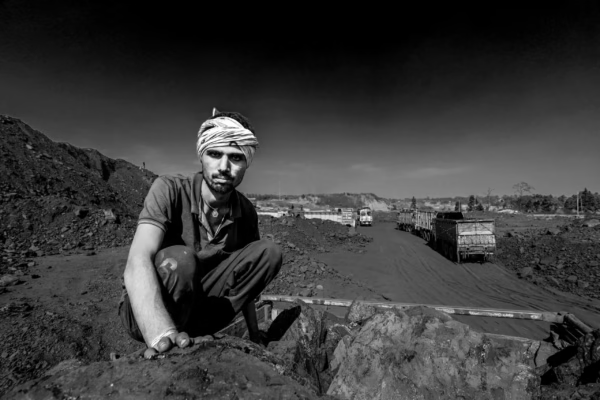
SOURCE: THE INDIA FORUM
SUBHASH MISHRA
Dhanbad, June 12: Central trade unions have erupted in protest over the Central Government’s decision to slash the dearness allowance (DA) for Coal India miners for the second quarter of the financial year, despite a visible rise in inflation.
Coal India Limited (CIL) has fixed the DA at 20.02% for the period 1 June to 31 August, down from 21.03% in the previous quarter (1 March to 31 May). The move will affect over 2.5 lakh permanent workers across the country, including those in Jharkhand’s key subsidiaries—Bharat Coking Coal Limited (BCCL), Central Coalfields Limited (CCL), and Eastern Coalfields Limited (ECL).
Trade union leaders have slammed the reduction as unjust and illogical. They argue that the cost of living has increased, making the cut even more difficult for working-class families to bear.
‘Govt Blind to Workers’ Realities’
A.K. Jha, General Secretary of the Rashtriya Colliery Mazdoor Sangh (RCMS) under the INTUC, said: “It’s incomprehensible. Prices have gone up since March, yet DA has been cut. The government should’ve at least studied the cost of a basic lunch plate before making such a decision. This BJP-led government has no concern for the hardworking miners—it only serves the interests of capitalists.”

Blame Lies with Centre, Not Coal India: AITUC
Lakhan Lal Mahto, senior leader of AITUC, echoed similar sentiments but directed blame squarely at the Central Government rather than CIL:
“Coal India merely implements the DA fixed by the Centre. The root problem lies in the flawed All India Consumer Price Index mechanism used to calculate inflation. It fails to reflect the ground realities faced by workers.”
Quarterly Review, But Little Relief
The DA is reviewed every three months, supposedly in line with inflation rates. However, union leaders say the process lacks transparency and fairness, leaving workers at the mercy of an outdated and biased system.

With unrest building across mining belts, unions have hinted at the possibility of broader protests if the decision is not reversed.