Jharkhand charts bold path in cow service and livestock development
THE JHARKHAND STORY NETWORK Ranchi, June 19: With a clear focus on ecological sustainability and rural empowerment, the Jharkhand Gau Seva…
THE JHARKHAND STORY NETWORK
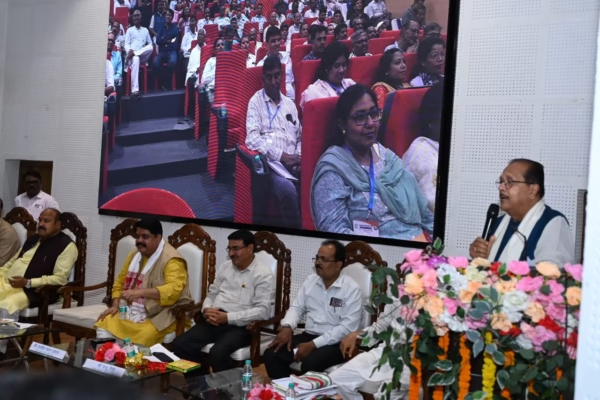
Ranchi, June 19: With a clear focus on ecological sustainability and rural empowerment, the Jharkhand Gau Seva Commission, under the Department of Agriculture, Animal Husbandry and Cooperatives, inaugurated a two-day national workshop on cow service and livestock development today at the Pashupalan Bhawan in Hesag, Ranchi.
The event was graced by dignitaries including Agriculture and Animal Husbandry Minister Shilpi Neha Tirkey, Finance Minister Radhakrishna Kishore, Commission Chairman Rajiv Ranjan Prasad, and a host of experts and stakeholders from across the country.
Jharkhand Gau Seva Will Be Further Strengthened: Shilpi Neha Tirkey
During the inaugural session, Shilpi Neha Tirkey praised the proactive efforts of the Jharkhand Gau Seva Commission and reaffirmed the government’s commitment to improving livestock infrastructure.
“There are Gau Seva Commissions in other states too, but they do not seem to be active. Even if they are active, the will to work is not visible. In Jharkhand, the Chairman and Vice Chairman of the Commission are working with a vision,” she stated.
Also Read: Jharkhand CM Hemant Soren launches sweeping campaign on World Sickle Cell Awareness Day
She highlighted the importance of self-reliance in cow service and acknowledged the potential of purchasing bio-fertiliser from cow shelters. She also admitted that while cow shelters are yet to receive expected levels of support, Jharkhand is ahead of other states—providing ₹100 per cow per day, compared to ₹30–₹40 elsewhere.

Finance Minister Highlights Cows’ Role in National Economy
Finance Minister Radhakrishna Kishore, speaking during a technical session on cow entrepreneurship, underscored the pivotal role cows have played in India’s economy and civilisation: “Our economy and culture have been developing so much because of cows… Every Indian has as much love for his country as he has for cows.”
He reflected on his decades-long political career and observed the significant role of livestock in nations like Canada, Switzerland, and France. In contrast, he lamented the historical lack of a livestock roadmap in Jharkhand—a gap now being addressed by the Hemant Soren government.
Towards Self-Reliant Cow Shelters: Vision of the Commission
Chairman Rajiv Ranjan Prasad outlined the Commission’s transformative approach: “Earlier, the work of the Gau Seva Commission here was limited to giving grants… But now in the Hemant Soren government, an initiative is also being taken to make cow shelters self-reliant.”
The Commission has physically inspected shelters across the state and is now introducing structured efforts like Jharkhand Go Gram and training programmes aimed at economic empowerment, particularly of women.
Women Empowerment Through Cow-Based Enterprise
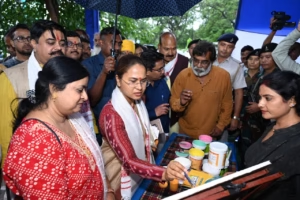
Vice Chairman Raju Giri credited the Agriculture Secretary for his guidance in organising the workshop. He detailed how training programmes have already benefitted 200 women, enabling them to create eco-friendly products like lamps and incense sticks from cow dung—with plans to expand training to over 5,000 women.
Ecological Sustainability Through Livestock Development
Abu Bakar Siddique, Secretary of the Agriculture and Animal Husbandry Department, linked livestock development to broader environmental goals:
“Environmental protection can also be helped through the conservation and promotion of animals and birds. Livestock is also important in strengthening the eco system.”
He also noted that the state government had doubled fodder allowances to ₹100 per animal.
Experts Call for Commercial Use of Cow Byproducts
Former Union Minister Dr Vallabhbhai Kathiria, along with experts like Sunil Mansinghka and Dr Satyaprakash, advocated for increased commercial utilisation of cow dung and urine. They cited health, agricultural, and economic benefits, pointing to successful start-ups and innovations emerging across the country.