Breaking News: EC set to drop 12 lakh names from Jharkhand voter list in SIR drive
Ranchi, Oct 16: The Election Commission (EC) has flagged around 12 lakh names for deletion from Jharkhand’s electoral rolls ahead of the…
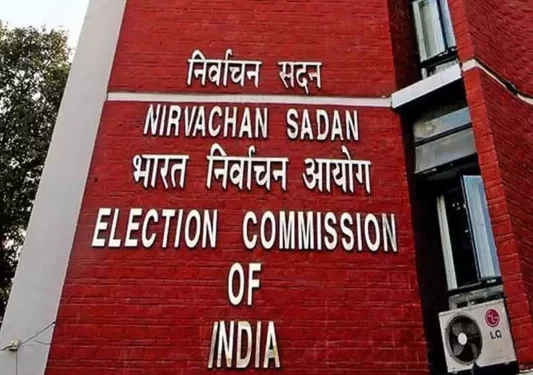
Ranchi, Oct 16: The Election Commission (EC) has flagged around 12 lakh names for deletion from Jharkhand’s electoral rolls ahead of the Special Intensive Revision (SIR). The deletions stem from groundwork initiated in July, targeting entries linked to deaths, changes of residence, and duplicate records.
The state’s current rolls list approximately 2.64 crore voters. Officials say the SIR may commence in December, likely after Bihar’s assembly elections conclude, to complete the exercise by March next year.
“The election machinery, right down to the booth level, is ready to launch the SIR as soon as it receives the green signal from New Delhi. There is now greater clarity on the exercise after it withstood the Supreme Court test in Bihar,” said an official, adding that they are fully prepared to dispel any misinformation about the SIR spread by political parties.
“In fact, we have learnt a great deal from the controversies stirred up by various parties in Bihar,” he added.
Though aware of the prevalence of fake birth certificates and Aadhaar cards in Jharkhand, EC sources emphasised that the SIR is not a citizenship test. “Our mandate under Article 326 of the Constitution is to register all eligible Indian citizens aged 18 and above, regardless of religion, caste, or social status. The documents requested — such as Aadhaar or birth certificates — are intended solely to verify birthplace and date of birth, not to determine citizenship status. “So, we will not be identifying who is an illegal Bangladeshi or Nepali national in Jharkhand,” he added.

ALSO READ: Jharkhand News: Doctors resign from Dhanbad Sadar Hospital over salary delays
Citizenship Rules: Three Key Timeframes
To clarify eligibility, EC sources outlined three distinct timelines under the Citizenship Act, 1955 (as amended):
Born between January 26, 1950 and July 1, 1987: Such persons are deemed Indian citizens by birth, without any parental conditions.

Born between July 1, 1987 and December 2, 2004: Citizenship by birth applies if at least one parent was an Indian citizen at the time of birth.
Born on or after December 3, 2004: Citizenship by birth requires both parents to be Indian citizens, or one parent to be Indian and the other legally documented (with a valid passport or visa) at the time of birth.
This 2004 amendment may pose difficulties for individuals born to illegal Bangladeshi migrants and local tribal residents in Jharkhand.
In all cases, persons born abroad to non-Indian parents may later acquire Indian citizenship by registration or naturalisation, where applicable.
What Changes Under the New SIR
Under the EC survey, roughly 29 per cent of Jharkhand’s voters already appeared on the 2003 rolls; these individuals will be exempted from resubmitting documents.
The process will unfold in two phases — first, enumeration of existing voters, followed by the inclusion of newly eligible entrants. They need to submit documents in support of their birthplace and birthdate.
ALSO READ: Ghatshila By-Election: BJP and JMM to hold power shows on Oct 17
Unlike previous SIR rounds, where a self-declaration was sufficient, this time documentary proof will be required to substantiate claims of residency and citizenship.
Remedies
To address public concerns, the EC has clarified that:
Eligible citizens not yet listed may apply for inclusion.
Under Section 24 of the Representation of the People Act, 1950, aggrieved individuals may file a first appeal with the Deputy Commissioner and a second appeal before the State’s Chief Electoral Officer.
Opposition Softens After Bihar Experience
The issue of migration and illegal settlers — particularly Bangladeshi migrants in Santhal Pargana — remains politically sensitive. Prime Minister Narendra Modi has previously invoked it in his speeches, alleging that such migration harms tribal populations.
The Jharkhand Mukti Morcha (JMM) and Congress, which head the state’s coalition government, had initially opposed the SIR exercise in strong terms. In August, the Jharkhand Assembly even passed a resolution against it, calling the exercise unnecessary and potentially discriminatory against poor and tribal voters who might lack the required documents.
However, the political heat around the issue appears to have cooled in recent weeks. Observers note that after the SIR controversy in Bihar failed to gain traction — despite Congress leader Rahul Gandhi’s “SIR balloon” campaign — Jharkhand’s ruling parties have largely stopped pressing the matter.
“Though the JMM and Congress were initially vocal, the issue has faded from the political spotlight following Bihar’s muted response,” a senior political analyst in Ranchi said.