
Jharkhand HC@25 | How bail twice changed the course of State politics
In constitutional theory, bail is supposed to be modest. It neither cleanses guilt nor confers honour. It simply restores liberty until…
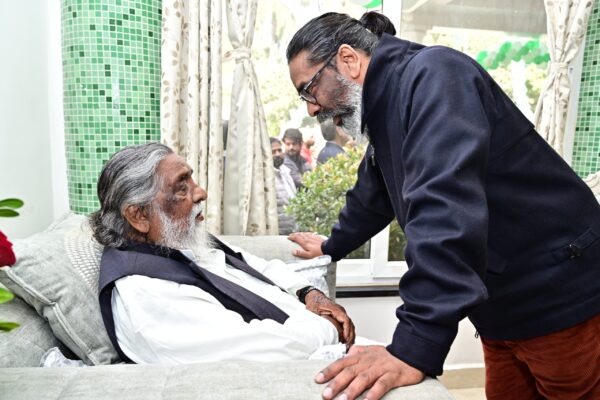
In constitutional theory, bail is supposed to be modest. It neither cleanses guilt nor confers honour. It simply restores liberty until trial. But in the real world of politics—especially in fragile, personality-driven states—bail can become something else entirely. It can decide who is present when history turns.
Jharkhand has lived this truth twice.
Once in 2004, when Shibu Soren was pulled into custody on the strength of a long-dormant warrant in the Chirudih massacre case, only to re-emerge through bail and reclaim political relevance. And again in 2024, when his son, Hemant Soren, arrested under the Prevention of Money Laundering Act, returned to public life through a carefully reasoned bail order that reshaped both institutional behaviour and electoral outcomes.
Between these two moments lies not just a legal story, but a political inheritance of absence, survival, and return.
Chirudih: A Case That Refused to Die
The Chirudih massacre of January 23 1975, in which eleven people were killed in Jamtara district, remained an open wound in Jharkhand’s collective memory. Shibu Soren was accused of inciting a mob during a movement aimed at driving away dikus—outsiders perceived to be dispossessing tribal land.

A non-bailable warrant issued in 1984 lay largely dormant for two decades. Its sudden revival in July 2004, when Soren was serving as Union Coal Minister in the Manmohan Singh government, transformed an old criminal case into a national political crisis.
The Bharatiya Janata Party, then in opposition at the Centre but in power in Jharkhand, mounted a sustained political offensive. Parliament was paralysed. Soren was portrayed as a fugitive protected by the ruling coalition. The narrative was relentless: a mass murderer shielding himself behind ministerial privilege.
Under mounting pressure, Soren resigned from the Cabinet and surrendered before a Jamtara court. He was taken into custody, even as the case against him had not advanced to a conclusion in nearly thirty years.

Bail as Judicial Restraint, Not Vindication (2004)
On September 3 2004, the Jharkhand High Court granted Shibu Soren bail.
The order did not absolve. It did not editorialise. It addressed a narrow but profound question: Can the criminal process itself become punitive when delay becomes permanent?
The Court noted the extraordinary passage of time, the stagnation of the trial, and the constitutional imperative that pre-trial incarceration cannot become a substitute for conviction. In doing so, it reaffirmed a principle older than the State itself: liberty cannot be hostage to prosecutorial inertia.
ALSO READ: Jharkhand HC@25: How a 30-year legal battle changed the fate of Santhali women
The BJP’s criticism intensified. The bail was described as judicial indulgence; the JMM as beneficiaries of institutional softness. Yet the Court remained silent.
Four years later, in March 2008, a fast-track court would acquit Shibu Soren in the Chirudih massacre case, citing lack of evidence and granting him the benefit of doubt. The political noise of 2004 dissolved into legal finality—but the High Court’s intervention had already served its purpose: preventing irreversible injustice.
From Jail to Government: Bail and the 2005 Election
When Jharkhand went to the polls in February 2005, the electorate delivered another hung Assembly. The BJP emerged as the single largest party, but could not command a majority.
Shibu Soren, now on bail, was once again central to government formation. Despite fierce BJP opposition, the Congress–JMM alliance was invited to form the government. Though Soren’s first ministry lasted only nine days, the episode demonstrated a crucial truth: bail did not create political power; it merely prevented its premature extinction.
A Second Arrest, A Familiar Script (2024)
In January 2024, history returned with an altered vocabulary but familiar structure. Hemant Soren, the sitting Chief Minister, was arrested by the Enforcement Directorate under the Prevention of Money Laundering Act in connection with the alleged illegal acquisition of land.
Once again, the BJP led a forceful political campaign portraying the arrest as overdue accountability. Once again, the Jharkhand Mukti Morcha described it as coercive federal overreach. And once again, incarceration preceded adjudication.
The Lok Sabha election was conducted while Hemant Soren remained in custody.
Absence and Emergence: Kalpana Soren
Hemant Soren’s imprisonment created a vacuum—but unlike in 2004, the vacuum did not silence the party. It gave rise to Kalpana Soren.
Initially stepping in to sustain morale, she rapidly evolved into a principal campaigner. Her speeches blended grievance with resolve, and her presence ensured continuity rather than collapse. The JMM discovered not merely a substitute, but a new political figure.
After Hemant Soren’s release, Kalpana Soren would go on to be elected as an MLA, emerging as an influential leader in her own right—an unintended political consequence of incarceration.
The Bail Order of 2024: Law in Its Most Classical Form
When the Jharkhand High Court examined Hemant Soren’s bail application, it did so not as an arbiter of politics but as a constitutional court bound by statute and precedent.
Drawing from the prosecution complaint and supplementary complaint:
- The alleged 8.86 acres of land were not reflected in official revenue records in Hemant Soren’s name.
- The case relied substantially on Section 50 PMLA statements, whose evidentiary value is a matter for trial.
- No conclusive material demonstrated possession, concealment, or enjoyment of proceeds of crime.
- The investigation had culminated in a filed complaint; continued custody was not shown to be necessary.
Applying the twin conditions under Section 45 PMLA, the Court held that there were reasonable grounds to believe that the accused was not guilty at that stage, and that further incarceration would amount to pre-trial punishment.
The order did not dilute the statute. It applied it.
Bail, Elections, and Institutional Quiet
Hemant Soren’s release preceded the 2024 Jharkhand Assembly election, in which the JMM-led alliance delivered a decisive defeat to the BJP. The political narrative shifted decisively.
Equally significant was what followed institutionally. Enforcement action in Jharkhand slowed. Senior officers were transferred. Investigations continued—but without the earlier intensity. Bail had not curtailed statutory power; it had reintroduced judicial proportion.
What the Jharkhand High Court Demonstrated
Across two decades, two bail orders illustrate the same judicial ethic:
- Bail is not endorsement
- Custody is not adjudication
- Delay cannot defeat liberty
In both cases, the BJP’s political campaign against the JMM was loud and sustained. In both cases, the Court declined to respond in kind. It spoke only through reasoned orders.
Bail as Institutional Memory
For a High Court still young by historical standards, these moments form part of its constitutional memory. They show a court resisting the temptation to either validate or neutralise political conflict—choosing instead to preserve the conditions under which democracy can function.
Bail, in these cases, did not decide history.
It merely ensured that history would not be decided in jail.