Jharkhand CM Hemant Soren at Assam tribal meet backs rights and unity
Ranchi, February 1: Chief Minister Hemant Soren today participated in the 21st Tribal Mahasabha–2026, organised by the All Assam Tribal Students Association…
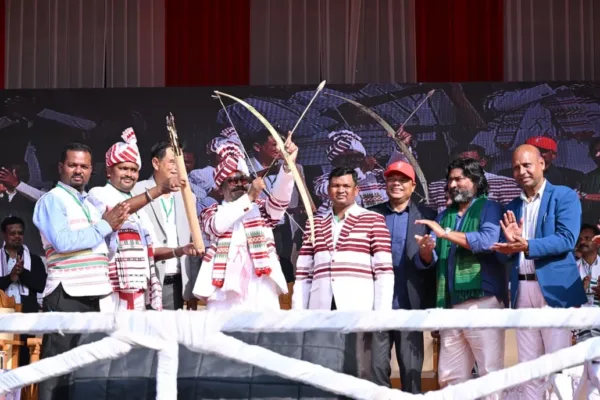
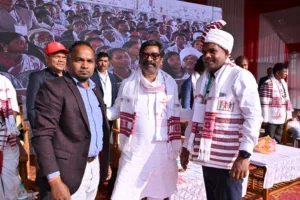
Ranchi, February 1: Chief Minister Hemant Soren today participated in the 21st Tribal Mahasabha–2026, organised by the All Assam Tribal Students Association (AATSA) in Tinsukia district of Assam, and said that Jharkhand will always stand with the tribal community of Assam in both joy and hardship.
Addressing the gathering, the Chief Minister said that tribal unity is their identity and stressed the need to ensure that government welfare schemes reach every section of society.
Historical Roots and Shared Struggles
Soren said he was interacting with members of the tribal community who have been living in Assam for nearly one and a half centuries, many of whom share deep historical links with Jharkhand. He said he had come to listen to the problems, suffering, and challenges faced by tribal and indigenous communities from Jharkhand who have settled in Assam for livelihood.
He recalled Jharkhand’s long history of resistance, stating that even before India’s independence, tribal ancestors fought the British. He referred to the contributions of Birsa Munda, Sido Kanhu, and Tilka Manjhi, saying their sacrifices for land, forests, water, and future generations can never be forgotten.
Marginalisation of Tribal Communities
The Chief Minister raised concerns over the continued marginalisation of tribals, indigenous people, Dalits, and backward classes, calling them among the weakest sections of society. He questioned why tribal communities across the country continue to struggle for rights and recognition, and said serious reflection is required as many tribal groups are being pushed to the margins.
On the occasion, Soren paid tribute to Pradeep Nag, a prominent tribal leader of Assam, and singer Zubeen Garg.
Jharkhand Statehood and Governance
Soren recalled the movement for a separate Jharkhand state, saying that despite ridicule, the dream became reality in 2000 due to mass unity and struggle. He said that although Jharkhand was formed with the expectation that tribal and indigenous people would benefit, the state was pushed backwards for over 15 years, leading to widespread hardship.

He said that after his government assumed office, efforts were made within five years to reverse the situation by taking welfare schemes to people who had never accessed government offices or officials.
Welfare Schemes and Tribal Rights
The Chief Minister said that despite constitutional protections and decades of independence, tribal communities continue to face exploitation by powerful interests. He warned that efforts are being made to keep tribals economically and intellectually weak so that they cannot claim their rights over land, forests, and resources.
He said that if required, Jharkhand’s tribal community will stand united with tribals living in Assam. He reiterated that unity across communities strengthens the country, but added that divisive forces have been working to weaken this unity.
Women Empowerment and Economic Contribution
Soren said Jharkhand is among the states contributing significantly to the national economy, and his government has decided to ensure that the people of the state receive the benefits of its resources.
He said that under a tribal Chief Minister, Jharkhand made its presence felt for the first time at the World Economic Forum, conveying the state’s message at the global level.
Highlighting women empowerment, Soren said that around 55 lakh women receive Rs 2,500 every month under the Chief Minister’s Maiyaan Samman Yojana, which has been running continuously for the past two years. He added that other states are now replicating Jharkhand’s development model.
The Chief Minister said that ambitious schemes have been launched for the youth of Jharkhand, including education loans up to Rs 15 lakh without a guarantee for higher studies.
Dignitaries Present
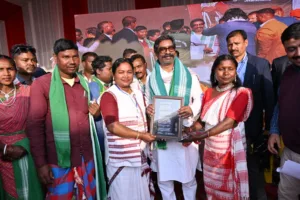
Minister Chamra Linda, MP Vijay Hansda, MLA Mohd Tajuddin alias MT Raja, AATSA Central Committee President Rejan Horo, Vice President David Tirkey, Amarjeet Kerketta, Albert Oria, and other members were present. A large number of women, men, youth, and children from tribal communities across Assam also attended the event.