Why India stayed civilian while Pakistan slipped into Khaki rule
The story of India and Pakistan since 1947 is often told in terms of wars, crises, and economic comparisons. Yet beneath the…


The story of India and Pakistan since 1947 is often told in terms of wars, crises, and economic comparisons. Yet beneath the headlines lies a quieter, structural drama: why did India remain a civilian-led democracy while Pakistan repeatedly succumbed to military rule? The answer lies not in chance but in the architecture of institutions, the choices made in the early years, and the cultural DNA each nation inherited.
The Uneven Starting Line
At independence, both nations inherited armies forged under British rule. But the political institutions they paired with those armies were vastly different. India’s Congress Party had been organising since 1885, building cadres, debating rights, and practising mass mobilisation for decades. By 1947, it was a mature political organism. Pakistan’s Muslim League, by contrast, had only truly mobilised in the 1940s. It was a seven-year-old institution trying to govern a brand-new state.
This imbalance created what scholars call a “Maturity Gap.” In Pakistan, the military looked at the fledgling civilian leadership and saw amateurs. In India, the military was younger than the political class, and that hierarchy mattered. Soldiers were conditioned to see themselves as subordinate to a political leadership that had already earned legitimacy through decades of struggle.
A constitution is more than parchment—it is a barrier against coups. India drafted its constitution in less than three years, ratifying it in 1950. Pakistan took nine years, finally producing one in 1956. By then, the military had already internalised the idea that politicians were fumbling. The 1958 coup was almost inevitable.
India’s rapid codification tethered the military to a clear legal hierarchy. Pakistan’s delay left a vacuum, and vacuums invite intervention.

Nehru’s Quiet Architecture
Jawaharlal Nehru understood that symbols matter as much as structures. He abolished the British-era Commander-in-Chief post, splitting authority among three service chiefs who reported to a civilian defense minister. He even moved into Teen Murti Bhavan, the old residence of the Commander-in-Chief. It was a subtle but profound message: the civilian executive now sat where the generals once ruled.
Diversity as a Defense
India’s army retained the British legacy of regiments divided by region and ethnicity—Jat, Sikh, Rajput, Assam, and Bihar. This fragmentation made it logistically impossible for the military to act as a unified political bloc. Pakistan’s army, dominated by Punjabis and bound by a singular religious identity, was far easier to mobilise as a political force.
In India, diversity became a defence mechanism. Local grievances could flare, but they rarely metastasised into national revolts.

Referees of Democracy
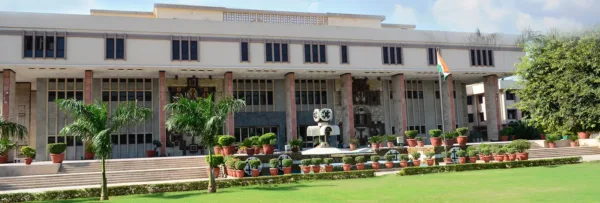
Institutions like the judiciary and the Election Commission became India’s referees. In 1975, the Allahabad High Court invalidated Indira Gandhi’s election, proving that the judiciary—not the military—was the ultimate arbiter of legitimacy. The Election Commission, meanwhile, managed the logistical miracle of conducting elections for hundreds of millions, ensuring peaceful transfers of power.
These institutions meant that when politics faltered, the military wasn’t invited to “fix” things.
Stress Tests
India’s system has faced stress tests. In 1967, journalist Neville Maxwell predicted a coup after Nehru and Shastri’s deaths. Instead, elections were held and respected. In 1984, Operation Blue Star created deep tensions among Sikh soldiers, but the regimental system prevented a broad fracture. Even in 2012, when rumours spread of unauthorised troop movements toward Delhi, civilian intelligence contained the scare.
Each time, the guardrails held.
Pakistan’s Divergent Path
Pakistan’s identity was tied to religion, not to a long struggle for rights and procedure. When Jinnah died, the state lost its ideological anchor. The military stepped in, becoming the only stable pillar. Without a constitutionally entrenched civilian supremacy, coups became a recurring feature.
The Three Pillars of India’s Stability
India’s democratic resilience rests on three pillars:
- Political Seniority– A political party older and more mature than the military.
- Structural Decentralisation– Dilution of military power through reforms and regimental diversity.
- Independent Agencies– Judiciary and Election Commission as arbiters of legitimacy.
India’s democracy is noisy, often frustrating, and sometimes chaotic. But its survival is not an accident. It is the result of deliberate choices made in the early years—choices about who sits in the seat of power, how authority is fragmented, and which institutions are trusted to referee the game.
Pakistan’s repeated military interventions were not inevitable either, but they were made more likely by the absence of those guardrails.
The destinies of India and Pakistan diverged because one built strong civilian guardrails while the other left gaps the military could fill. India’s architects understood that democracy needed more than ideals—it needed structures, symbols, and institutions that could withstand crises.
Today, as both nations face new challenges, the lesson endures: democratic stability is not a matter of luck. It is the outcome of early structural decisions. India’s survival as a republic is the deliberate result of an institutional design that prioritised civilian legitimacy over military expediency.
(The writer is Assistant Professor of Political science Delhi University. She can be contacted at drrachnaprasad24@gmail.com)