434 mineral blocks auctioned across India, only 3 in Jharkhand: Marandi questions government
THE JHARKHAND STORY NETWORK Ranchi, July 16: Leader of the Opposition Babulal Marandi on Thursday questioned the Jharkhand government’s mining policy, alleging…
THE JHARKHAND STORY NETWORK
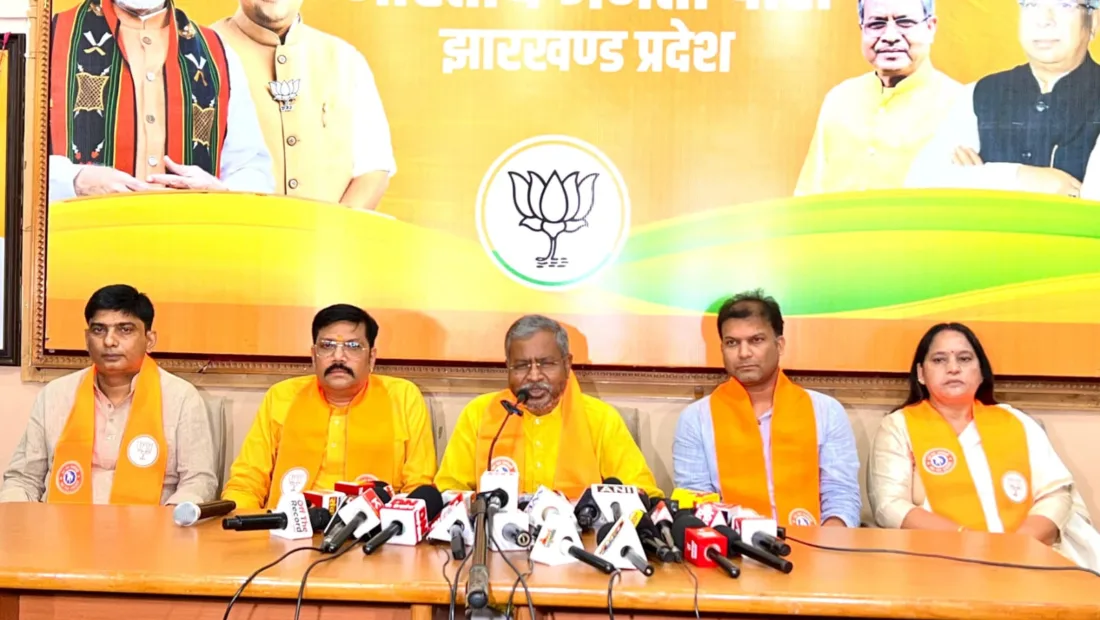
Ranchi, July 16: Leader of the Opposition Babulal Marandi on Thursday questioned the Jharkhand government’s mining policy, alleging that despite being India’s most mineral-rich state, Jharkhand has auctioned only three mineral blocks since 2019-20, compared to 434 mineral blocks auctioned across the country during the same period.
Calling the figures “deeply alarming”, the BJP leader demanded that the state government explain why Jharkhand has lagged so far behind other mineral-rich states in auctioning mines.
“Across the country, 434 mineral blocks have been auctioned since 2019-20. Odisha alone auctioned 45 blocks and Chhattisgarh 41, while Jharkhand managed only three. The government must explain why,” Marandi said.
‘Policy failure has hurt jobs and economy’
Marandi alleged that administrative inefficiency, policy paralysis and the absence of transparency have prevented Jharkhand from fully utilising its mineral wealth.
He said that although Jharkhand possesses nearly 40 per cent of India’s mineral resources, it continues to lag in mineral production, revenue generation and employment.

According to him, the failure to auction mines has directly affected industrial growth, reduced government revenue and denied employment opportunities to thousands of local youths.
Closed mines affecting Saranda region
Referring to his recent visit to the Saranda region of West Singhbhum, Marandi said several iron ore mines have remained closed for years because their leases were neither renewed nor auctioned after expiry.

He said the prolonged closure has triggered unemployment, migration and an economic slowdown in mining-dependent areas.
Marandi noted that Jamda, once a bustling commercial centre, is witnessing declining business activity as reduced mining has impacted transport operators, hotels, retailers and other small businesses.
Drawing a comparison with nearby Barbil in Odisha, barely 20 kilometres away, he said timely auctions there have boosted mining activity, employment and local economic growth.
Jharkhand lags in production and revenue
The BJP leader claimed Jharkhand has failed to translate its mineral wealth into economic gains.
He said Odisha’s iron ore production increased from 120 million tonnes in 2018-19 to 180 million tonnes in 2024-25, whereas Jharkhand’s production remained stagnant at around 23 million tonnes.
He also claimed that Jharkhand generated around ₹22,000 crore in mining revenue in 2025-26, while Odisha earned ₹46,000 crore, despite having a much smaller share of the country’s mineral resources.
Questions over DMFT fund utilisation
Marandi also questioned the utilisation of the District Mineral Foundation Trust (DMFT) fund in West Singhbhum.
He alleged that nearly ₹3,700 crore had accumulated in the district between 2016 and 2026, but annual reports, budgets and project details had not been made public.
He claimed that the DMFT website had not been updated since 2018, leaving mining-affected communities unaware of how the funds were being spent.
Seeks revival of mining sector
Marandi demanded immediate auction of all closed mines and stone quarries, revival of mining operations, a time-bound roadmap to increase mineral production and complete transparency in the utilisation of DMFT funds.
He also expressed concern over the proposed closure of the ACC cement plant at Jhinkpani on August 16, saying it could affect nearly 1,600 families.
“Jharkhand’s mineral wealth belongs to its people. The government must explain why, despite possessing such enormous natural resources, the state continues to lag in development, employment and industrial growth,” he said.
State BJP Media In-charge Yogendra Pratap Singh and party spokespersons Sandeep Verma, Shobha Yadav and Mrityunjay Sharma were also present during the press conference.