XLRI students take financial literacy beyond classroom through ‘Money Mantra’ workshop
PINAKI MAJUMDAR Jamshedpur, November 16: XLRI – Xavier School of Management, Jamshedpur, organised , a two-hour financial literacy workshop as part of…
PINAKI MAJUMDAR
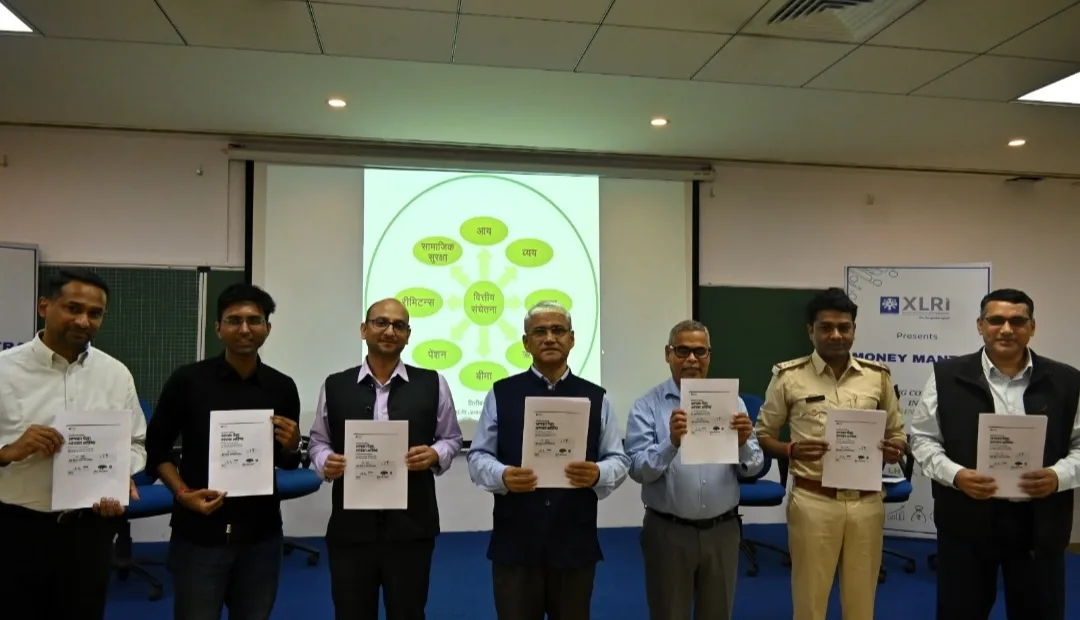
Jamshedpur, November 16: XLRI – Xavier School of Management, Jamshedpur, organised , a two-hour financial literacy workshop as part of its Social Finance course, developed and led by Prof. H. K. Pradhan.


The initiative brought together more than 300 participants, including approximately 180 campus support staff and over 140 students from the Business Management (BM) and Human Resource Management (HRM) programmes.
Taking classroom learning into the community, the initiative aimed to strengthen financial awareness among the people who support the day-to-day functioning of the XLRI campus. It also provided students with an opportunity to understand the financial challenges faced by underserved communities and explore ways to make financial services more accessible and relevant to their needs.
Students survey financial habits of campus workers
As part of the preparatory exercise, students conducted a survey among campus support staff, including cleaners, gardeners, cooks, plumbers, electricians, security personnel, and housekeeping, maintenance and mess workers.
The survey examined their saving habits, financial planning for important life-cycle needs, access to healthcare financing, awareness of insurance and old-age pension products, and familiarity with government welfare schemes such as the Pradhan Mantri Jeevan Jyoti Bima Yojana (PMJJBY), Pradhan Mantri Suraksha Bima Yojana (PMSBY) and Ayushman Bharat – Pradhan Mantri Jan Arogya Yojana (PM-JAY).

The findings offered students insights into the gap between access to formal banking services and their effective utilisation.
Many of the workers, who are employed through contractors, receive their wages through State Bank of India (SBI) accounts, including Jan Dhan accounts. However, having a bank account does not necessarily translate into informed or regular use of financial products and services.
Workshop focuses on practical financial management
During the workshop, students interacted individually with the workers and discussed practical aspects of financial management, including ATM and RuPay card usage, regular savings, recurring deposits, insurance, old-age pension schemes and responsible borrowing.

Representatives from the Jharkhand Cybersecurity Cell, Kunal Raja and Srinivas Kumar, also joined the initiative and sensitised participants about online financial fraud, cyber safety and secure digital banking practices.
Speaking about the initiative, Prof. H. K. Pradhan said, “Financial inclusion is about enabling people to use financial services and improve their well-being. I want students to hear directly from the underserved why a product that looks sensible on paper often goes unused and why product design matters, including the behavioural constraints that technology can help address.”
He added that the exercise reflects the underlying purpose of XLRI’s Social Finance course: connecting financial concepts with social realities and helping students understand how finance can contribute to the greater good.
Students highlight value of community engagement
Reflecting on the experience, Chaitanya Jhunjhunwala, a second-year student, said, “Some of the most meaningful lessons in management education come from engaging with the people and communities we seek to serve. Grateful to XLRI and everyone who made this initiative a success.”
The workshop was also attended by Fr. Alwin Rodrigues, Dean – Administration and Finance, XLRI Delhi; Fr. Joseph Mathew, Chair Professor of Business Ethics; Prof. Himanshu Sekhar; and Prof. Trilochan Tripathy of XLRI Jamshedpur.
Through initiatives such as Money Mantra, XLRI continues to emphasise experiential learning and social engagement, encouraging students to apply management knowledge to real-world challenges.
The initiative underscores the importance of financial awareness and responsible financial behaviour in strengthening individual well-being and advancing inclusive development.