Palamu registers 2.32 lakh workers under G RAM G; Rs 38.69 crore allocated for wages
THE JHARKHAND STORY NETWORK DALTONGANJ, November 19: Palamu district is steadily implementing the Viksit Bharat Guarantee Rozgar Ajivika Mission Gramin (VB-G RAM…
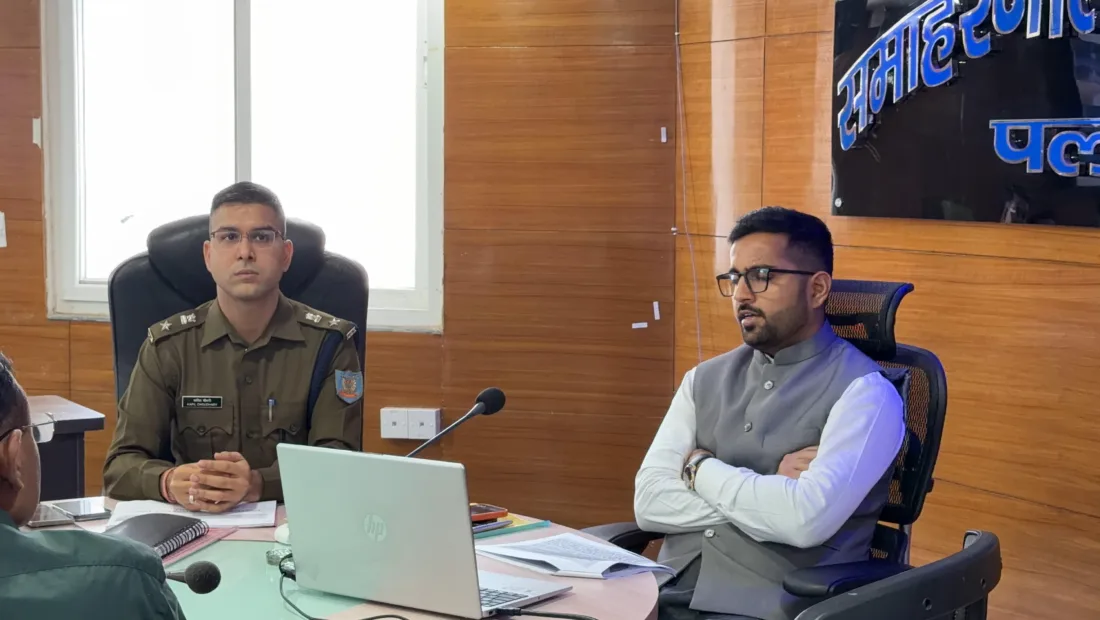
DC Palamu Dilip Pratap Singh Shekhawat and SP Kapil Chaudhary (file photo).
THE JHARKHAND STORY NETWORK
DALTONGANJ, November 19: Palamu district is steadily implementing the Viksit Bharat Guarantee Rozgar Ajivika Mission Gramin (VB-G RAM G), with 2,32,710 unskilled workers registered under the Gramin Rozgar Guarantee Card (GRGC), according to officials at the District Rural Development Office.
However, officials have cautioned that registration figures alone do not indicate the scheme’s acceptance among rural workers. Their actual participation in employment activities will be the more meaningful measure of its success.
“A mere registration is no indicator of the acceptability of the G RAM G scheme. It’s labours’ active participation in it” an official of the District Rural Development Office said.
The official also highlighted the experience of the Mahatma Gandhi National Rural Employment Guarantee Act (MGNREGA), under which job cards became common among rural households, but labour participation was reportedly below 25 per cent.
Deputy Commissioner Dilip Pratap Singh Shekhawat said the new scheme had replaced MGNREGA from July 1, 2026, and the district had completed the transition.

“G RAM G has replaced MGNREGA on/ from July 1, 2026. There, we had a transition phase. We are now fully migrated to G RAM G,” Shekhawat told this correspondent.
He said the scheme provides for 125 days of employment to each adult person in a financial year, at a daily wage of Rs 300.
“There is a provision of 125 days of employment per adult person in one financial year @ of rupees 300 as daily wages,” the Deputy Commissioner said.

Administrative sources said the daily wage rate varies across states. They cited rates of Rs 300 in Jharkhand and several other states, including Manipur, Mizoram, Meghalaya, Nagaland and Rajasthan. The rates cited for other states included Rs 360 in Punjab, Rs 409 in Haryana, Rs 345 in Tamil Nadu and Rs 382 in Karnataka.
Rs 38.69 crore allocated for wages
Director of the District Rural Development Agency Ratan Kumar Singh said Rs 38.69 crore had been allocated for wage payments under G RAM G.
“38.69 crore was allocated for wages in G RAM G,” Singh said.
“Till date, its expenditure is 5.84 crore,” he added.
The scheme also has a separate allocation for material costs. According to the official, Rs 1.76 crore has been allocated under this head, of which Rs 1.01 lakh has been utilised so far.
Existing MGNREGA job cards remain valid
Several unskilled workers holding MGNREGA job cards have sought clarification on whether their existing cards would allow them to seek employment under G RAM G.
Administrative sources said workers would not be denied employment because they did not yet possess the new GRGC.
“The MGNREGA job card will do. In the meantime, one can apply for GRGC. It’s mandated to come free within 15 days,” officials said.
They added that the existing MGNREGA job card could be used while a worker applied for the new card. The GRGC is to be issued free of cost within 15 days, according to the officials.
A GRGC will remain valid for three years and can be renewed. Officials also said duplicate cards would be issued if an original card was lost or damaged by water, fire or other causes.
60-day pause during peak agricultural season
One of the provisions of G RAM G is a 60-day ‘Pause’ period during the peak agricultural season, covering important activities such as sowing and harvesting.
According to the scheme notification, registered unskilled workers will not be entitled to employment or wages under the programme during this period.
This means the stipulated 125 person-days of employment will have to be availed during the remaining 305 days of the year.
Some workers pointed out that, after accounting for the 125 employment days and the 60-day pause, they would have to find alternative work for the remaining 180 days of the year.
The provision has raised questions among workers about the availability of alternative employment during the period when the scheme does not provide work.
Workers compare scheme wages with private employment
At the Sadik Manzil Mazdoor Bazar, several unskilled workers said the daily wage of Rs 300 offered under G RAM G was less attractive than the earnings available through private construction work.
“We are told about 300 ₹ a day in G RAM G . But it’s 600 rupees per day for house construction work like sifting sand (balu chalna), carrying brick, preparing cement concrete mortar etc. We are no much interested in this,” some workers said.
Their remarks indicate that the wage rate and availability of work in the private sector could influence workers’ participation in the scheme.
Digital attendance and direct bank transfers
Workers also raised questions about the process of marking attendance at work sites and the timely payment of wages.
Administrative sources said attendance under G RAM G would be recorded digitally and wages transferred directly to beneficiaries through Direct Benefit Transfer (DBT).
The district administration’s challenge, officials indicated, will be to translate the large registration base into active participation and ensure that eligible workers can access employment and receive their wages without difficulty.
Keywords: Palamu G RAM G, VB-G RAM G, Viksit Bharat Guarantee Rozgar Ajivika Mission Gramin, MGNREGA, Gramin Rozgar Guarantee Card, GRGC, Palamu district, Dilip Pratap Singh Shekhawat, Ratan Kumar Singh, rural employment, 125 days employment, Rs 300 daily wage, Jharkhand rural development, Daltonganj