






SUMAN K SHRIVASTAVA
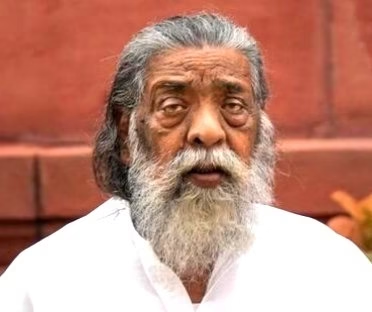
Ranchi, August 8: The recent passing of Shibu Soren, the revered “Dishom Guru” or “Guruji” of the Jharkhand movement, prompted an outpouring of tributes across India’s national media, highlighting his pivotal role in tribal politics and advocacy for statehood.
Editorial Tributes
- The Millennium Post honoured Soren as “A People’s Leader”, portraying him as the embodiment of tribal resistance and dignity who rose from the forests of Ramgarh to the national stage. The editorial highlighted his unwavering loyalty to the poor and dispossessed, urging the current leadership to uphold his vision for tribal empowerment.
Feature Essays and In-depth Profiles
- Outlook India cast Soren as the “Lenin of the Jharkhand Movement”, lauding his fiery grassroots speeches and grassroots unification of tribal communities. While acknowledging controversies, the narrative highlighted his enduring legacy in tribal identity politics.
- LiveMint described Soren as Jharkhand’s “tribal icon”, central to the statehood and identity politics of the region. His journey from a modest Santali village to becoming a national figure was chronicled, capturing both his influence and the complexities of his leadership.
- India Today reflected on Soren as the chieftain who shaped Jharkhand’s destiny, noting his staunch advocacy and gritty oratory. It also remarked how his legal tribulations, including a high-profile criminal conviction and subsequent acquittal, complicated his public image yet did not diminish his grassroots appeal.
News Reports and Immediate Coverage
- The Times of India and The Tribune emphasised Soren’s stature as a lifelong champion of tribal rights and regional autonomy, highlighting his seminal role in the Jharkhand movement and the deep sorrow felt across political lines.
- Business Standard carried vivid coverage of leaders from across the spectrum—including Prime Minister Modi, President Murmu, Defence Minister Rajnath Singh, and others—paying respects and praising Soren’s dedication to marginalized communities.
- The Indian Express offered a poignant personal reflection, calling Soren “the leader of a people”, and capturing the emotional gravitas he inspired even in his later years.
Educational Legacy and Future Remembrance
- Times of India reported that Congress leaders and educational groups proposed institutional tributes—such as naming a university after Soren, turning his residence into a museum, and including his life story in school textbooks—to ensure his legacy endures in Jharkhand’s collective memory.
Reflections in Urdu Media
- Leading Urdu outlets focused more on the emotional scene and public response. Qaumi Awaaz reported: thousands gathered to see his body in Ranchi as it was transported there for final rites in his home village Nemra, where he was cremated on August 5.
The tone in reportage emphasised communal mourning and reverence for the tribal leader’s final journey.
Tributes from Bangla Press
- BangaNews shared formal condolences from President Murmu and noted his passing at Sir Ganga Ram Hospital in Delhi due to kidney issues. The narrative gave prominence to his lifelong advocacy for tribal identity and incorporation in his final statements.
- Indian Express (Bangla) referred to him as “Jharkhand-er atmar rupkar” (“The architect of Jharkhand’s soul”)— echoing the sentiment that a foundational chapter of the state’s history was ending. The article highlighted deep personal and cultural grief from political leaders like Mamata Banerjee.
- Bartaman Patrika succinctly noted his instrumental role in state formation and the sadness expressed by Mamata Banerjee, underlining the regional political respect he commanded.
Summary
Across editorials, feature essays, and news stories, Shibu Soren was universally remembered as a towering tribal leader whose efforts helped birth Jharkhand and centre social justice in Indian politics. Media reflections combined admiration for his grassroots leadership with calls to sustain his vision through tangible memorials, ensuring that “Guruji’s” legacy remains alive in policy and public consciousness.