







THE JHARKHAND STORY DESK
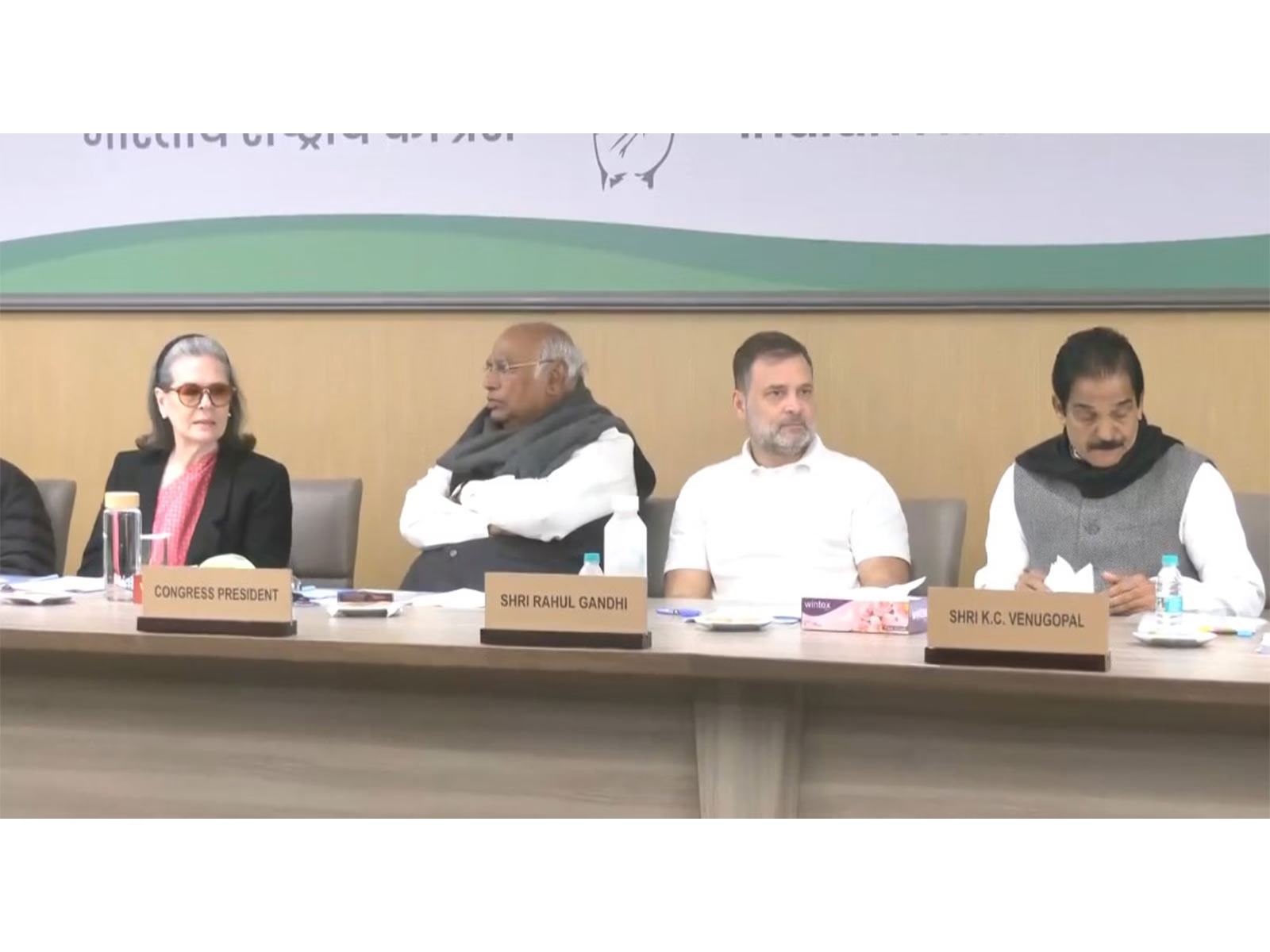
New Delhi, Dec 27: The Congress Working Committee (CWC) met on Saturday at Indira Bhawan in New Delhi. This was the first meeting of the CWC after the party’s defeat in the Bihar elections.
The meeting was attended by Congress president Mallikarjun Kharge, Sonia Gandhi, Rahul Gandhi, K.C. Venugopal and several other senior leaders. Notably, Shashi Tharoor was also present at the meeting, after having remained absent from several key party meetings in recent months.

Also Read- RIMS JDA opposes 5-year MBBS bond policy of Jharkhand Govt
Chief ministers from Congress-ruled states also participated in the meeting. Telangana Chief Minister Revanth Reddy, Karnataka Chief Minister Siddaramaiah and Himachal Pradesh Chief Minister Sukhvinder Singh Sukhu were among those present.
Senior leaders including Deepender Singh Hooda, Digvijaya Singh, Sachin Pilot, Veerappa Moily, Gaurav Gogoi, Kumari Selja, Charanjit Singh Channi and Abhishek Manu Singhvi also attended the CWC meeting. In addition, presidents of various Pradesh Congress Committees (PCCs) were present.
Sources said the CWC opposed the Centre’s new law, officially referred to as the “Viksit Bharat–Guarantee for Rozgaar and Ajeevika Mission (Gramin) Act,” also known as the VB G RAM G Act. The party termed the legislation anti-poor and described the government’s stand on the Aravalli range as dangerous.
The VB G RAM G Act has been introduced to replace the Mahatma Gandhi National Rural Employment Guarantee Act (MGNREGA). The Bill was recently passed during Parliament’s Winter Session.
The legislation has already received the assent of President Droupadi Murmu. The Congress and other opposition parties have raised strong objections to the new law.
Also Read- Cold wave, foggy mornings to continue across Jharkhand
They have alleged that removing Mahatma Gandhi’s name from MGNREGA is not only an insult to Gandhi but also a direct attack on the rights of the rural poor.
The opposition has also argued that the law will increase the financial burden on states, as they will be required to bear 40 per cent of the expenditure under the new framework.
