







THE JHARKHAND STORY NETWORK
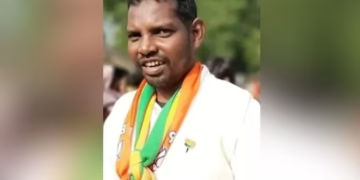
Ranchi, Sept 4: The family of Surya Hansda, a four-time election candidate killed in a police shootout in Godda on August 11, 2025, has turned to the Jharkhand High Court seeking justice. His wife Sushila Murmu and mother Neelmuni Murmu have filed a criminal writ petition through advocate Kumar Harsh, branding the incident a staged “encounter” and urging a Central Bureau of Investigation (CBI) inquiry. The petition names several high-ranking officials, including the Chief Secretary, Home Secretary, DGP, and Godda and Deoghar SPs, as respondents.
Alleged Encounter: Police Version vs Family’s Claims
Police say Hansda was arrested on the evening of August 10 from Nawadih village (Mohanpur PS, Deoghar), and taken to Lalmatia Dhamani Pahad (Boarijor PS, Godda) on information about a weapon cache. They claim Hansda grabbed a policeman’s weapon and attempted to flee, prompting them to shoot him in self-defence. The family, however, disputes this account, alleging Hansda was ill and incapable of escape, as well as raising questions over procedure, such as a lack of magistrate presentation and the haste of the alleged operation.
Institutional Scrutiny Intensifies
NHRC Registers Case and Seeks Report
In response to a complaint by a lawyer from Sahibganj civil court, Sant Kumar Ghosh, the National Human Rights Commission (NHRC) has registered the complaint and flagged inconsistencies in the police’s narrative. Ghosh highlighted discrepancies such as the arrest location versus the encounter site, suggesting the incident could be a staged event.
The NHRC directed the Godda Deputy Commissioner and SP on September 3 to submit an action-taken report within four weeks, citing prima facie human rights violations. Authorities were also required to explain why the commission wasn’t informed of the incident promptly.
NCST Intervenes, Demands Prompt Response and Site Visit
Earlier, the National Commission for Scheduled Tribes (NCST), acting on a complaint by Rajya Sabha MP Deepak Prakash, issued notices on August 18 to the Chief Secretary, DGP, Godda DC, and SP. Officials were asked to appear before the commission within three days or risk personal summons.
ALSO READ: Jharkhand Weather: IMD warns of thunderstorms, gusty winds till Sept 7
A seven-member NCST team, led by Asha Lakra, later visited Hansda’s family at Dacaita village (Dumka) and inspected the encounter site at Kamardori Hill near Dhamni. They also met with Godda’s senior officials. The visit was marred by criticism of the administration’s lack of cooperation, with NCST calling their approach “defiant” due to absences during scheduled inspections.
Wider Backlash and Demands for Accountability
Political and tribal groups alike have decried the incident as a “cold-blooded murder” rather than a legitimate law enforcement act:
- The BJP demanded either a CBI probe or an investigation under a sitting High Court judge.
- A candlelight march in Ranchi saw tribal organisations demand justice, pointing to Hansda’s social contributions—like free education for disadvantaged children—and alleging a broader conspiracy.
- Protests also took place at Raj Bhavan, with local leaders insisting Hansda was silenced for championing tribal rights.
Background: Political Career of Surya Hansda
Surya Narayan Hansda contested the Borio Assembly seat four times:
- 2009 & 2014: Jharkhand Vikas Morcha (JVM) ticket
- 2019: BJP candidate, finished second
- 2024: After resigning from BJP, contested on Jharkhand Kranti Lok Morcha (JKLM) ticket, again unsuccessful
He faced multiple criminal cases, including FIRs in Mirza Chowki (Sahibganj) and Lalmatia (Godda), and was allegedly involved in internal violent incidents.
What Lies Ahead
The High Court will now consider the criminal writ petition and decide whether a CBI probe is warranted. Meanwhile, both the NHRC and NCST continue their scrutiny—NHRC is awaiting reports by early October, and NCST awaits compliance from state officials under its constitutional powers.
The confluence of legal action, institutional oversight, protests, and political pressure suggests the case could prompt significant scrutiny of police procedures and rights safeguards, particularly concerning tribal communities.
