Foundation stone for Mahi Banswara Rajasthan Nuclear Project to be laid on Sept 25
THE JHARKHAND STORY DESK New Delhi, Sept 20: In a significant stride toward boosting India’s clean energy capacity, the foundation stone…
THE JHARKHAND STORY DESK
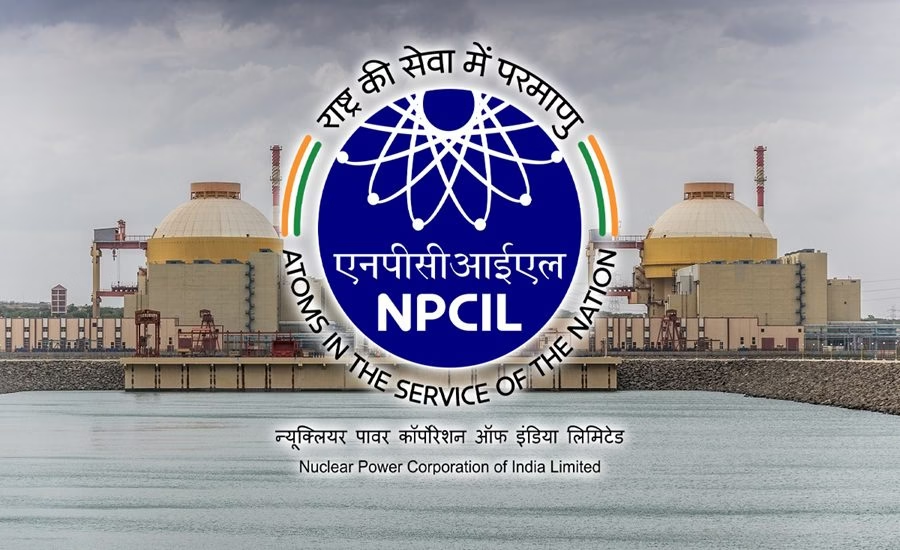
New Delhi, Sept 20: In a significant stride toward boosting India’s clean energy capacity, the foundation stone for the Mahi Banswara Rajasthan Atomic Power Project (MBRAPP) will be laid on September 25. This ambitious project, jointly developed by Nuclear Power Corporation of India Ltd (NPCIL) and NTPC Ltd under the joint venture Anushakti Vidhyut Nigam Limited (ASHVINI), marks a critical milestone in India’s plan to expand its nuclear power capacity to 100 GW by 2047.
Located in the Banswara district of Rajasthan, the MBRAPP will feature four indigenously developed 700 MW Pressurised Heavy Water Reactors (PHWRs), collectively offering a total installed capacity of 2,800 MW. This large-scale nuclear power project is a key addition to India’s energy portfolio, enhancing the country’s capabilities in domestic nuclear technology.
Also Read- Jharkhand News: Doctors strike at SNMMCH after MP’s aide assaults woman intern
Investment and Project Timeline
The total investment in the MBRAPP is estimated at Rs 42,000 crore. The government expects the commissioning of the first reactor unit by 2031, with subsequent units being operationalized in phases over the following years. This timeline aligns with India’s strategic vision of substantially increasing its nuclear power output in the coming decades.
Current Nuclear Capacity and Future Growth
Presently, India has an installed nuclear capacity of 8.8 GW. The MBRAPP project is set to more than triple this capacity, significantly increasing nuclear energy’s share in the national electricity mix. This expansion supports the government’s commitment to transitioning to cleaner, low-carbon sources of energy while maintaining grid reliability.

Strategic Importance and Socio-Economic Impact
Officials highlight that MBRAPP will not only advance India’s energy goals but also generate thousands of direct and indirect jobs, fostering socio-economic growth in the Banswara region. Enhanced infrastructure development around the project site is anticipated to benefit local communities.
The use of indigenously designed PHWR technology demonstrates India’s growing self-reliance and technical prowess in the nuclear sector, reducing dependency on foreign technology and boosting national security.
Also Read- Jharkhand News: Minor girls rescued from South Bihar Express amid conversion suspicions
Government Support and Long-Term Vision
The Union Budget recently allocated around Rs 20,000 crore to support nuclear power capacity expansion, underscoring the government’s focus on nuclear energy as a key pillar of India’s energy transition. Nuclear power’s ability to provide reliable baseload electricity with minimal emissions positions it as a vital complement to renewable energy sources.

Looking ahead, India aims to build a sustainable, low-carbon energy system by 2047, with nuclear power playing a pivotal role. The MBRAPP project is a landmark step towards achieving the target of 100 GW of installed nuclear capacity, contributing to the nation’s energy security and environmental goals.
(For more such stories you may visit indianmasterminds.com)