







THE JHARKHAND STORY NETWORK
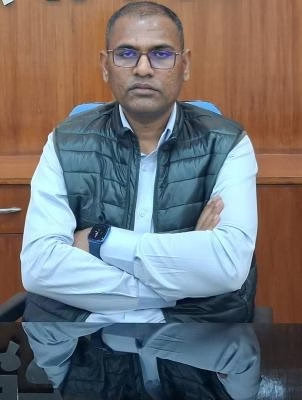
Daltonganj, Nov 2: The Medininagar Forest Division is proving that it’s much more than a “podha ropan vibhag” (plantation department). Under the leadership of Divisional Forest Officer Satyam Kumar, a 2015 batch Indian Forest Service (IFS) officer, the division has redefined forestry through community participation, innovative conservation, and proactive wildlife management.
In an exclusive conversation with The Jharkhand Story Network, Satyam Kumar shared insights into how his team is addressing issues ranging from human–wildlife conflict to sustainable water resource management across the region.

Q: Wild boars are as big a menace as nilgais. Have cultivators approached you about crop destruction caused by wild boars?
A: Wild boars are indeed present in our forest areas, but interestingly, no cultivator has come to me, my office, or any of our range offices with complaints about wild boars damaging crops or vegetables.
Q: It’s often said that applying for compensation for crop or vegetable loss caused by animals is a tedious process. Is that true?
A: Not at all. The application process is very simple — just a one-page format. It covers compensation for damaged houses, destroyed food grains, loss of livestock, or ruined crops and vegetables. Even sharecroppers (bataidars) can apply if they have suffered losses due to animal activity.
Q: Many say certification for compensation claims is tough. What’s your take?
A: That’s a misconception. Certification can be done by the Halka Karamchari; there’s no need to approach the Circle Officer (CO). The member secretary or president of the Gram Van Parbandhan Samiti or even the mukhiya can certify claims.
Q: Do you come across fake claims for compensation?
A: Yes, occasionally. Sometimes, after crops have been harvested or vegetables consumed, false claims are made alleging damage by animals. However, our field staff remain vigilant to verify such cases.
Q: The forest department is often seen as active only during the monsoon plantation drives. How have you gone beyond that perception?
A: We’ve diversified our activities significantly. For instance, we’ve constructed a low-cost earthen water harvesting structure in Paton and are planning nine more across areas from Mohammadganj to Kundri. Funds for these have already been sanctioned.
Q: Have catchment areas been identified for these water bodies?
A: Yes. Our team conducts proper and meaningful appraisals of rain catchment areas before initiating such projects.
Q: How do these water bodies benefit people living near forest areas?
A: Managing surface water helps recharge groundwater tables, reducing water scarcity for both humans and wildlife. These water bodies also discourage animals from straying into human settlements and enhance grazing meadows for cattle.
Q: The Malay Dam attracts migratory birds. Does your division have plans beyond promoting water tourism there?
A: Absolutely. We’re considering regular patrols using mechanised boats to curb bird poaching. Our goal is to balance eco-tourism with wildlife protection.
Q: Will there be plantation work around these water bodies?
A: Yes. We plan to plant along about a 2 km stretch around these water bodies. The plantation will be people-friendly and fruit-based, benefiting both humans and animals. For example, kathal (jackfruit) is a perfect choice — loved by elephants and people alike.
