







SANOBAR MASOOD, K. JENI & AMISHA KUMARI

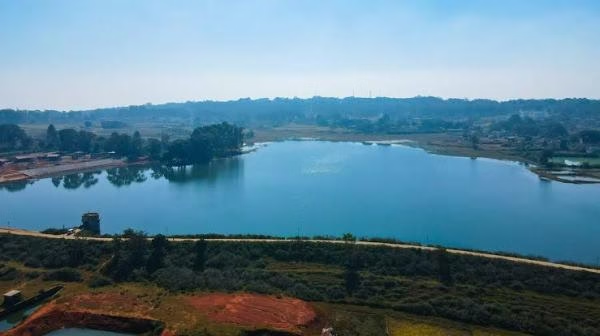
Located deep within the Chotanagpur Plateau, approximately 153 kilometers from Ranchi, lies Netarhat—often fondly referred to as the “Queen of Chotanagpur.” Known for its misty mornings, crisp air, lush green valleys, and dense sal forests, this serene hill station is one of Jharkhand’s most enchanting destinations. It offers a perfect escape for nature lovers, peace seekers, and adventure enthusiasts alike.
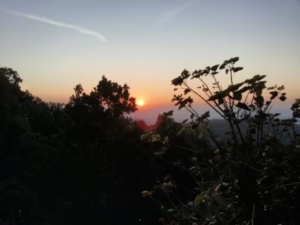
The visual charm of Netarhat lies in its picturesque sunrises and sunsets, particularly at Magnolia Point and the Sunrise Point near Mountail Eco Resort, where the golden hues dance over the hills, leaving lasting impressions on all who visit. Dense pine woods, game sanctuaries, cascading waterfalls, and tranquil weather enhance the ethereal beauty of the plateau, making it a haven for those seeking refuge from the dust and heat of the plains.

Ecological Richness and Biodiversity
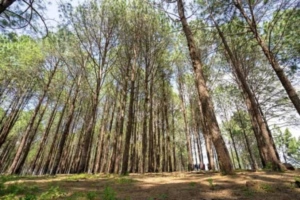
Beyond its aesthetic appeal, Netarhat holds immense ecological significance. The region is blanketed with tropical dry deciduous forests dominated by sal, mahua, bamboo, and pine trees. These forests form the backbone of a vibrant ecosystem that supports a range of wildlife, including monkeys, deer, wild pigs, snakes, and occasional sightings of elephants, tigers, and the elusive Indian wolf.
Adding to this natural richness are seasonal streams and natural springs that feed majestic waterfalls like Upper and Lower Ghaghri. These water bodies sustain riparian habitats vital for amphibians, aquatic insects, and migratory birds, while also helping to regulate the local microclimate. Together, these ecosystems maintain biodiversity and serve as ecological buffers that protect against erosion and climate extremes.
Netarhat also acts as a critical wildlife corridor, linking prominent protected areas such as Palamu Tiger Reserve, Betla National Park, and Mahuadanr Wolf Sanctuary. This connection facilitates the free movement of animals and maintains genetic diversity, which is essential for species survival.
Current Environmental Threats
However, despite its beauty and ecological value, Netarhat today faces severe environmental challenges. Rampant deforestation and illegal logging have emerged as major threats, depleting the sal forests and endangering wildlife habitats. Unchecked timber extraction and land conversion for agriculture, infrastructure, and tourism are accelerating forest degradation.
Illegal bauxite mining in parts of the Netarhat Plateau, particularly in Gumla and Lohardaga districts, is another pressing concern. This destructive activity has polluted air and water sources, reduced soil fertility, and posed severe health risks—especially to the indigenous Asur community, which relies heavily on agriculture and forest-based livelihoods.
Climate change has further compounded these issues. The region is witnessing erratic rainfall patterns, prolonged dry spells, and sudden, heavy downpours. These disruptions have led to soil erosion, lower groundwater recharge, and agricultural losses, placing both wildlife and local communities under stress. Rising temperatures also increase the risks of forest fires and pest outbreaks, which threaten the already fragile ecosystems.
Human-wildlife conflict is an emerging and deeply concerning issue in Netarhat. As natural habitats are encroached upon, animals like elephants, leopards, wild boars, and monkeys are increasingly entering farmlands and villages in search of food and water. This has led to crop destruction, livestock attacks, and occasional human injuries. In retaliation, villagers resort to harmful deterrents such as electric fencing or noise-based methods, which often escalate tensions and pose dangers to both humans and animals.
In response to these growing conflicts, the state has launched eco-cultural tourism and grassroots conservation initiatives. The Jharkhand government is promoting tribal homestays in villages inhabited by Asur and Birjia communities. These programs aim to balance conservation with livelihood generation, empowering locals while preserving cultural heritage and environmental integrity.
The indigenous tribes of the region—particularly the Asur, Birjia, and Oraon—have long coexisted with the forest, relying on it for food, medicine, and economic sustenance. Conservation policies have granted these communities legal rights to manage forest resources, recognising their vital role in sustainable development. Sal forests yield essentials like mahua flowers, tendu leaves, medicinal herbs, and bamboo, forming the basis of traditional livelihoods that are now under threat.
Impact on Local Communities and Indigenous Tribes
The Netarhat Plateau, located in Latehar district, Jharkhand, is home to biodiversity-rich forests and several Adivasi communities like the Asur, Birjia, and Oraon. These indigenous groups rely on forests for sal leaves, mahua, lac, medicinal herbs, and traditional farming.
However, the proposal to set up the Netarhat Field Firing Range by the Indian Army in 1994 threatened to displace over 245 villages. If implemented, it would have meant large-scale displacement, cultural loss, and livelihood destruction.
Locals feared losing access to sacred groves, community forests, and traditional practices. The Netarhat Field Firing Range Virodhi Jan Sangharsh Samiti emerged as a strong grassroots movement that has, to date, successfully stalled the project.
Legal and Administrative Oversight
Despite legal protections, state response has been weak or inconsistent.
- The Forest Rights Act (FRA), 2006 and PESA Act, 1996 guarantee forest-dwellers’ rights and make Gram Sabha consent mandatory before land acquisition.
- In Netarhat, many villages still lack Community Forest Rights (CFR) titles.
- The field firing range was notified without proper consent, violating PESA.
- Local protests, petitions, and Gram Sabha resolutions have often been ignored or delayed.
“There is no shortage of laws—only a shortage of will,” says Sita Devi, a local teacher and activist.
Conservation programs remain minimal and often exclude Adivasi knowledge systems in forest management.
Voices from the Ground
Behind the statistics and policies are the real stories of Netarhat’s people—its tribal communities, forest dwellers, and youth who are living the crisis every day.
“This forest is our mother,” says Kamli Devi, a local Oraon woman. “When the trees go, our lives go with them.” Her family, like many others, depends on minor forest produce for food, medicine, and livelihood.
Villagers recount how they have resisted military field exercises in the past, forming human chains and organizing peaceful sit-ins.
What’s at Stake: The Future of Netarhat
If the current trajectory continues, Netarhat risks ecological collapse. Its Sal forests, vital for climate regulation and water retention, are thinning. Endangered species face extinction, and entire ecosystems are at risk of fragmentation. The erosion of biodiversity here mirrors the larger crisis facing India’s natural heritage.
Yet, there is hope. Netarhat holds immense potential for eco-tourism, community-led conservation, and sustainable livelihoods. With proper planning and investment in green infrastructure, it could become a model for balancing development with nature. Saving Netarhat is not just about preserving one plateau—it’s about defending the future of India’s biodiversity.
Call to Action
Preserving Netarhat demands urgent and united efforts. The government must halt exploitative projects and ensure strict enforcement of forest protection laws. Environmental clearances must be transparent and community-driven.
But this isn’t just a bureaucratic task—it’s a people’s movement. Citizens, students, and the media must amplify voices from Netarhat. Social media campaigns, petitions, and environmental journalism can push accountability. Supporting NGOs working in the region, donating to conservation drives, or simply staying informed can create ripples of change.
Let Netarhat not be a forgotten forest. Let it be a living legacy of resistance, resilience, and renewal.
