
No proof of cruelty or mental disorder: Jharkhand High Court dismisses divorce appeal
THE JHARKHAND STORY NETWORK Ranchi, November 12: The Jharkhand High Court has dismissed a husband’s appeal seeking divorce on grounds of cruelty…
THE JHARKHAND STORY NETWORK
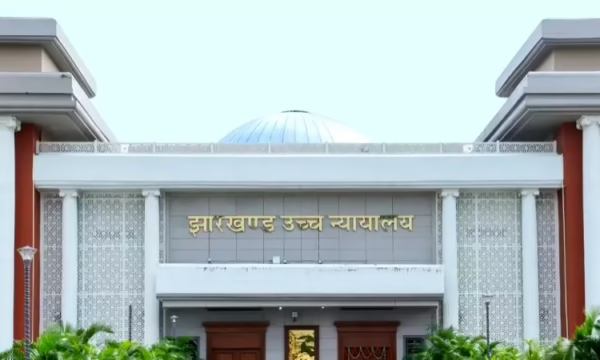
Ranchi, November 12: The Jharkhand High Court has dismissed a husband’s appeal seeking divorce on grounds of cruelty and his wife’s alleged mental disorder, holding that the allegations were not supported by sufficient evidence.
A Division Bench comprising Justice Sujit Narayan Prasad and Justice Akhil Kumar upheld the Dhanbad Family Court’s decision to reject the divorce petition filed by Mayank Kumar against his wife, Somya Kumari.
In its judgment pronounced on November 5, 2026, in First Appeal No. 85 of 2025, the court held that the husband had failed to establish either cruelty under Section 13(1)(i-a) or incurable unsoundness of mind or mental disorder under Section 13(1)(iii) of the Hindu Marriage Act, 1955.
The Bench observed that the allegations of violent behaviour, attacks with a kitchen knife and attempts to commit suicide had not been corroborated by independent witnesses, medical records, police reports or contemporaneous documents.
Husband alleged wife suffered from schizophrenia
The couple married on July 14, 2021, in Dhanbad according to Hindu customs. After their marriage, they began their married life in the United States. They have no children.

The husband alleged that his wife had displayed abnormal behaviour soon after the marriage and had told him that she had married under pressure from her parents and relatives.
According to his petition, she remained aloof, confined herself to a room and reacted violently when he or his family members tried to speak to her. He further alleged that her parents subsequently disclosed that she had suffered from a mental disorder since childhood and had received treatment from doctors in Mumbai.
The husband also claimed that his wife had attacked him with a kitchen knife and attempted to take her own life. He alleged that she was diagnosed with psychotic disorder and anaemia at a hospital in the US in January 2023 and was subsequently diagnosed with paranoid schizophrenia during another hospitalisation in February 2023.

On these grounds, he sought dissolution of the marriage under the provisions relating to cruelty and mental disorder.
The wife denied the allegations, claiming that she was being subjected to mental pressure and harassment by her husband and his family. She maintained that she did not suffer from any mental disorder and was willing to continue the marital relationship.
High Court finds allegations of cruelty unsubstantiated
The High Court examined the testimonies of the witnesses and the documents placed before the Family Court.
The husband had examined himself as PW1 and Chandra Bhushan Prasad Srivastava as PW2. The wife appeared as DW1, while her father, Raj Kumar Prasad, was examined as DW2.
The husband relied on WhatsApp chats, an air ticket and a hospital discharge slip. The wife produced marriage photographs, educational certificates, passport and visa documents, travel records, bank statements and other documents.
The Bench noted that PW2 had not personally witnessed any alleged incident of cruelty. During cross-examination, he admitted that he had heard about the alleged mistreatment and could not recall when the alleged mental illness had been discussed.
The court observed that such hearsay evidence could not form the basis for establishing matrimonial cruelty.
It also took note of the husband’s admissions during cross-examination that the couple had remained in regular contact after their engagement, that his wife had stayed at the matrimonial home with the consent of both families and that he had subsequently taken her to the United States, where they lived together until March 2023.
The Bench held that these admitted circumstances were inconsistent with the allegation that the husband had been subjected to such grave cruelty as would make continuation of the marriage impossible.
“The serious allegations regarding attack by knife, attempts to commit suicide and violent conduct have not been corroborated by any independent witness, medical record, police report or contemporaneous document,” the court observed.
Medical records did not establish schizophrenia
On the allegation of mental illness, the High Court emphasised that Section 13(1)(iii) of the Hindu Marriage Act requires proof not merely of a mental disorder but also that its nature and extent are such that the petitioner cannot reasonably be expected to live with the respondent.
The Bench observed that the provision covers incurable unsoundness of mind as well as continuous or intermittent mental disorder of such a kind and degree that continuing the marital relationship cannot reasonably be expected.
It held that the existence and severity of the alleged condition must be established through cogent evidence, including appropriate expert medical evidence.
The court pointed out that the husband had admitted during cross-examination that he had not produced the medical records of the doctors who treated his wife in the United States.
It further noted that the hospital discharge papers did not mention schizophrenia but recorded the condition as “Altered Mental Status Unspecified”. The documents referred to symptoms including insomnia, confusion and abdominal pain.
The Bench observed that no medical certificate establishing paranoid schizophrenia or any incurable psychiatric condition had been placed on record.
It further noted that the wife was a graduate of St Xavier’s College and had worked for several years in an airline organisation. There was no evidence to establish the husband’s allegation that she had been undergoing psychiatric treatment since childhood or that her parents had concealed any such condition before the marriage.
Mere existence of mental disorder not sufficient for divorce
Referring to Supreme Court judgments, including Kollam Chandra Sekhar v. Kollam Padma Latha, the High Court reiterated that the mere existence of a mental abnormality or psychiatric condition does not automatically constitute a ground for dissolving a marriage.
The court observed that the degree of the mental disorder must be such that the spouse seeking divorce cannot reasonably be expected to live with the other.
It also referred to the settled principle that the burden of proving the alleged mental disorder and its severity rests on the spouse seeking dissolution of the marriage.
The Bench emphasised that a person cannot be abandoned merely because he or she suffers from an illness.
Family Court judgment upheld
The High Court also examined whether the Family Court’s findings suffered from perversity or any legal error warranting appellate interference.
It observed that an appellate court can independently reassess both oral and documentary evidence in a first appeal. However, a finding cannot be termed perverse merely because another interpretation of the evidence is possible.
The Bench concluded that the Dhanbad Family Court had properly appreciated the evidence and that its findings did not suffer from perversity, illegality or jurisdictional error.
Holding that the husband had failed to establish either cruelty or the statutory ground of mental disorder, the Division Bench dismissed the appeal.
The judgment dated December 16, 2024, and the decree signed on December 21, 2024, passed by the Additional Principal Judge, Additional Family Court-II, Dhanbad, were upheld.