






THE JHARKHAND STORY DESK
New Delhi, July 11: The Supreme Court on Thursday began hearing a batch of petitions filed by opposition party leaders challenging the Special Intensive Revision (SIR) of the electoral rolls being carried out in Bihar ahead of the state assembly elections.
The Election Commission raised objections to the maintainability of the petitions, but the Court made it clear that the petitioners would be heard first before considering the Commission’s arguments.

A bench comprising Justices Sudhanshu Dhulia and Joymalya Bagchi is hearing the matter. During the proceedings, the Court questioned the Election Commission about the timing of the voter list revision and asked why the process had not been initiated earlier.
The bench also inquired whether the rules clearly specify when such revisions should be conducted. However, the Court acknowledged that conducting voter roll revisions is a constitutional responsibility of the Election Commission and that it is up to the Commission to decide the procedure.
Also Read- ACS Health steps in to tackle cadaver shortage in Jharkhand medical colleges
EC Defends Its Move, Says It’s a Constitutional Duty
Senior Advocate Rakesh Dwivedi, representing the Election Commission, told the bench that the Commission was acting in accordance with its constitutional obligations. He also raised preliminary objections to the petitions. In addition to Dwivedi, Senior Advocates K.K. Venugopal and Maninder Singh also appeared for the Election Commission.
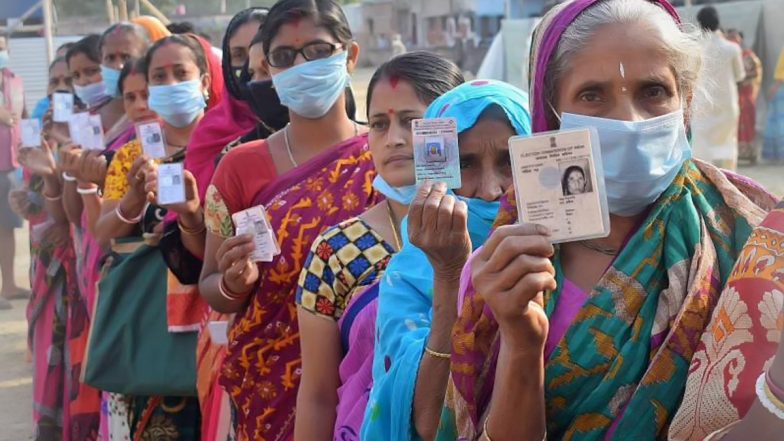
In response, the Court directed the petitioners to first establish that the Election Commission’s actions were unjustified. The petitioners alleged irregularities and arbitrariness in the ongoing voter list revision process in Bihar. They also questioned why Aadhaar and voter ID cards were not being accepted as valid proof during the process.
Petitioners Allege Discrimination, Procedural Lapses
Advocate Gopal Sankar Narayan, representing one of the petitioners, argued that the special revision drive was being carried out in a discriminatory and arbitrary manner, bypassing established legal norms. He claimed that individuals who registered to vote after January 1, 2003, were now being asked to submit additional documents—something not required of earlier registrants.
He further contended that the Election Commission plans to implement the SIR process nationwide, beginning with Bihar. In response, Justice Dhulia remarked that the Commission was simply fulfilling its constitutional duty and that the petitioners could not allege wrongdoing if the process was backed by law.
Also Read- Jharkhand News: Rising river levels trigger flood alert in Jamshedpur
Court Flags Democratic Concerns, Seeks Clarity on Aadhaar Use
The Supreme Court underscored that the matter raised in the petitions pertains to the very core of democracy and the right to vote. It noted that the petitioners were not only challenging the eligibility norms but also the timing and manner in which the revision process was being conducted.
When asked why Aadhaar is not being accepted as proof of identity, the Election Commission’s counsel responded that Aadhaar alone does not establish citizenship. The Court then pointed out that if the inclusion of a name in the voter list is made solely contingent on proving citizenship, it sets a very high bar—which falls under the domain of the Home Ministry, not the Election Commission.
The Commission’s counsel reassured the bench that the Election Commission, being a constitutional authority directly accountable to voters, has no intention—nor any legal mandate—to arbitrarily remove any individual from the voter list. He asserted that the Commission does not and cannot discriminate on the basis of religion, caste, or other such criteria.
Political Parties Join Legal Challenge
The legal challenge was first initiated by the Association for Democratic Reforms (ADR), which filed a petition on July 5. Following this, several opposition parties including the Rashtriya Janata Dal (RJD) and Congress, along with a total of nine political parties, approached the Supreme Court against the Election Commission’s ongoing revision process.
