







SUMAN K SHRIVASTAVA
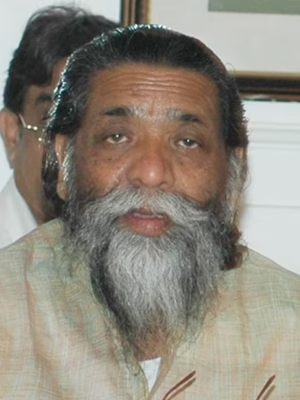
 Ranchi, August 4: Shibu Soren, a towering figure of the Jharkhand movement, former Chief Minister, and tireless advocate for tribal rights and social justice, left an indelible mark on the region’s political history. For nearly five decades—first in undivided Bihar, and later in the state of Jharkhand following its creation in 2000—he championed the cause of the marginalised with unflinching resolve and unshakeable purpose.
From Grassroots Agitator to State Architect
Soren’s political journey began not in parliament, but on the ground. He spearheaded a bold resistance against the exploitative Mahajani system, under which tribal communities were shackled by debt and land displacement. What started as a local grassroots campaign soon swelled into a broader regional movement, galvanising support across the Chotanagpur and Santhal Parganas regions and ultimately paving the way for the formation of Jharkhand in 2000. His transformation from village-level activist to architect of a new state remains one of Indian politics’ most remarkable evolutions.
A Complicated Yet Strategic Political Journey
Though deeply rooted in regional identity and tribal advocacy, Soren was no stranger to the corridors of national power. His relationship with the two main national parties—the BJP and the Congress—was marked by a blend of pragmatism and strategic calculation. He supported different governments at the Centre at various times, including stints as Union Coal Minister, often aligning based on what he believed would benefit Jharkhand’s interests. These political manoeuvres sometimes drew criticism, but his core support base remained largely intact.

Controversies and Enduring Popularity
Despite being embroiled in several controversies over the years, including legal battles, Soren’s popularity among Jharkhand’s tribal population endured. His unwavering focus on local issues and deep cultural connection to the land earned him a loyal following—one that even national parties struggled to dent.
A Cult Figure Among His People
During one of the election campaigns in the Santhal Pargana region, this writer witnessed a striking scene: tribal villagers, young and old, running with excitement just to catch a glimpse of Shibu Soren as he arrived at a rally—often ahead of his entourage. It was a moment that encapsulated his almost mythic status among the people. He was not merely a politician to them, but a symbol of their hopes, identity, and resistance.
Passing the Torch
In his later years, as his health began to decline, Soren gradually stepped back from active politics, handing over leadership of the Jharkhand Mukti Morcha (JMM) to his son, Hemant Soren. The 2019 Assembly elections, which marked the first time Shibu Soren did not campaign, saw Hemant lead the JMM to a decisive victory—demonstrating the strength of the political legacy he had inherited.
A Life of Simplicity and Principle
Away from the limelight, Shibu Soren was known for his austere lifestyle. A strict vegetarian and teetotaller, he lived modestly, often shunning the trappings of power that came with high office. His simplicity resonated with his supporters and further cemented his image as a leader who remained deeply connected to his roots.
The Lunchbox Leader
Despite being a Member of Parliament, Shibu Soren would often carry a simple home-cooked meal in a steel tiffin to the Lok Sabha. While others dined on catered spreads, he quietly opened his lunchbox, often sharing his food with aides and even fellow MPs, reflecting his grounded nature and humility.
An Echo That Will Still Guide Jharkhand
Though Shibu Soren is no longer with us, his ideals and enduring legacy will continue to shape the political landscape of Jharkhand and the vision of the JMM. His voice—once raised against exploitation and injustice—will still echo in the state’s political conscience, guiding a new generation towards dignity, equity, and self-determination.