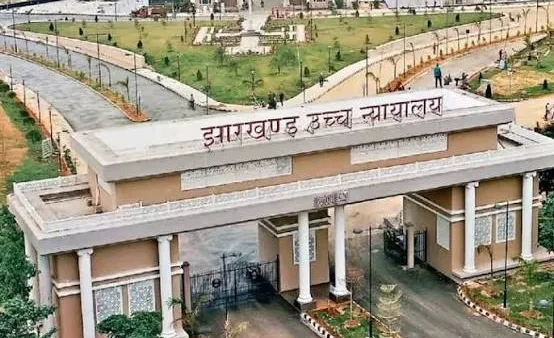
‘Shocked beyond words’: Jharkhand HC orders fresh probes in 262 custodial death cases
Ranchi, May 14: In a landmark judgment on custodial deaths and constitutional accountability, the Jharkhand High Court has directed fresh judicial inquiries…
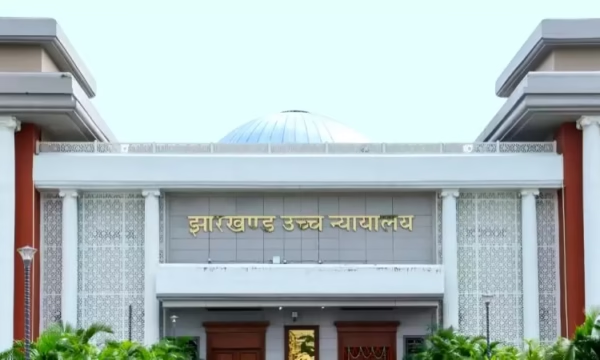
Ranchi, May 14: In a landmark judgment on custodial deaths and constitutional accountability, the Jharkhand High Court has directed fresh judicial inquiries into 262 custodial death cases where probes were conducted by Executive Magistrates instead of Judicial Magistrates, holding that such inquiries violated the statutory mandate under Section 176(1-A) of the Code of Criminal Procedure (CrPC) and Section 196(2) of the Bharatiya Nagarik Suraksha Sanhita (BNSS).
A Division Bench comprising Chief Justice M.S. Sonak and Justice Rajesh Shankar passed the order while disposing of a Public Interest Litigation filed by Md Mumtaz Ansari concerning alleged non-compliance in custodial death investigations across Jharkhand.

Court Expresses Shock Over Custodial Death Data
The High Court took serious note of figures disclosed by the State government in a supplementary affidavit dated March 13, 2026. According to the data placed before the court, Jharkhand recorded 427 custodial deaths from 2018 onwards. Of these, 262 inquiries were conducted by Executive Magistrates and 225 by Judicial Magistrates.
The court observed:
“On a perusal of this data, this Court is shocked beyond words.”
The Bench further said the State’s own figures revealed either “a fundamental misunderstanding or a total disregard for the law.”

‘Executive Magistrate Inquiry Cannot Replace Judicial Inquiry’
The High Court categorically held that inquiries conducted by Executive Magistrates cannot be treated as substitutes for judicial inquiries in custodial death cases.
The Bench observed:
“The legislative use of the term ‘shall’ in this context is an unequivocal command, signalling that the requirement is mandatory, non-discretionary, and admits of no executive substitution.”

The court said Parliament had intentionally transferred the power of inquiry from the Executive to the Judiciary through the 2005 amendment introducing Section 176(1-A) CrPC to ensure independent investigations in cases involving custodial deaths, disappearances, and custodial rape.
High Court Terms State’s Conduct a ‘Systemic Collapse’
The Bench strongly criticised the State government for what it described as “systemic non-compliance” and “utter disdain for statutory compliance.”
The court observed:
“Allowing these 262 inquiries to stand, or regarding them as substitutes for the legislatively mandated judicial enquiries, would validate a process that is void ab initio and permit the Executive to remain a judge in its own cause.”
It further said the failure to conduct judicial inquiries violated Articles 14 and 21 of the Constitution and amounted to “administrative lawlessness.”
Court Highlights Right to Life of Persons in Custody
Emphasising constitutional safeguards, the High Court reiterated that the right to life extends equally to persons in police or judicial custody.
The court observed:
“The right to life protected by our Constitution also extends to those in the custody of State Authorities, and those in Authority cannot, therefore, trample upon this right by disregarding, with impunity, the legal and Constitutional safeguards.”
The judgment extensively referred to Supreme Court rulings, including Nilabati Behera v. State of Orissa, D.K. Basu v. State of West Bengal, and In Re: Inhuman Conditions in 1382 Prisons.
Directions Issued by the High Court
The High Court issued a series of binding directions to the Jharkhand government and judicial authorities, including:
- Fresh de novo judicial inquiries in all custodial death cases where only Executive Magistrate inquiries were conducted.
- Completion of such inquiries within six months wherever practicable.
- Issuance of a government circular clarifying that only Judicial Magistrates have jurisdiction in custodial death inquiries.
- Mandatory intimation to NHRC, State Human Rights Commission, and Principal District Judges within 24 hours of custodial deaths, disappearances, or custodial rape.
- Preparation of a Standard Operating Procedure (SOP) by the Jharkhand Judicial Academy for uniform inquiry reports.
- Consideration of compensation for families of victims through District Victim Compensation Committees.
Court Questions Reliability of State Data
The Bench also pointed out inconsistencies in the State’s figures, noting that the total number of inquiries reported by the government exceeded the total number of custodial deaths.
The court said:
“This discrepancy not only reflects a systemic disregard for the law but also casts serious doubt on the State’s veracity and diligence in maintaining these records.”
PIL Filed Over Alleged Violations in Custodial Death Cases
The PIL was filed by petitioner Md. Mumtaz Ansari, who sought directions for mandatory judicial inquiries in all cases involving custodial deaths, disappearances, or custodial rape in Jharkhand. The plea relied on official disclosures showing 166 custodial deaths between 2019 and 2021.
The State had opposed the petition and termed it “frivolous” and “misconceived,” a stand strongly criticised by the High Court in the judgment.