







THE JHARKHAND STORY NETWORK
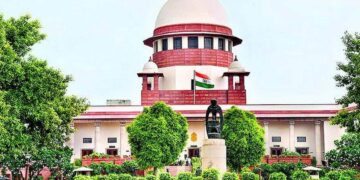
New Delhi, January 30: In a landmark judgment, the Supreme Court of India has declared that the right to menstrual health is an integral part of the right to life and dignity under Article 21 of the Constitution. The Court directed all States and Union Territories to ensure that free biodegradable sanitary napkins are provided to adolescent girls in all schools across India, both government-run and private.
Pan-India Implementation of Menstrual Hygiene Policy Ordered
A bench comprising Justice JB Pardiwala and Justice R Mahadevan ordered the nationwide implementation of the Union Government’s ‘Menstrual Hygiene Policy for School-going Girls’ for students from Classes 6 to 12.
The Court also directed that schools must be equipped with functional, hygienic and gender-segregated toilets, stressing that menstrual dignity is inseparable from equality, education, privacy, and bodily autonomy.
Key Directions Issued by the Supreme Court
The Supreme Court issued a detailed set of binding directions, including:
- All schools in urban and rural areas must have functional gender-segregated toilets with continuous water supply.
- Toilets must ensure privacy, accessibility, and inclusivity, including facilities for children with disabilities.
- Availability of soap, water, and washing facilities in all school toilets at all times.
- Free distribution of Oxo-biodegradable sanitary napkins compliant with ASTM D-6954 standards, preferably through vending machines inside toilets.
- Establishment of Menstrual Hygiene Management (MHM) corners in schools, stocked with spare uniforms, innerwear, disposable pads, and emergency supplies.
Directions on Sanitary Waste Disposal
The Court also issued strict guidelines on sanitary waste management, directing that:
- Every school must have a safe, hygienic, and environmentally compliant disposal mechanism in line with Solid Waste Management Rules.
- Each toilet unit must have covered waste bins, with regular cleaning and maintenance ensured.
Menstrual Health Linked to Equality and Education
Answering key constitutional questions, the Court held that the lack of menstrual hygiene facilities violates Articles 14, 21, and 21A of the Constitution.
The bench observed that menstrual poverty disproportionately affects adolescent girls, leading to absenteeism, humiliation, unsafe practices, and long-term educational exclusion. The absence of toilets, sanitary products, and awareness converts a biological reality into structural discrimination, the Court said.
“This Judgment Is for Every Girl Child”: Justice Pardiwala
Justice JB Pardiwala, who authored the judgment, said:
“This pronouncement is for classrooms where girls hesitate to ask for help, for teachers restrained by lack of resources, and for parents unaware of the cost of silence. A society’s progress is measured by how it protects its most vulnerable.”
The Court noted that poor menstrual hygiene can cause reproductive tract infections, infertility, and loss of bodily autonomy, further reinforcing the need for State intervention.
Background of the Case
The judgment was reserved on December 10, 2024, following a petition seeking free sanitary napkins and proper toilets in schools. Earlier, the Supreme Court had directed the Union Government to frame a National Policy on Menstrual Hygiene, involving coordination between the Ministry of Health, Jal Shakti, and the Ministry of Education.