ISRO Chairman and Astronaut Shukla highlight achievements of Axiom-4 Mission
THE JHARKHAND STORY DESK New Delhi, August 21: ISRO Chairman Dr. V. Narayanan and astronaut Group Captain Shubhashu Shukla addressed a press…
THE JHARKHAND STORY DESK
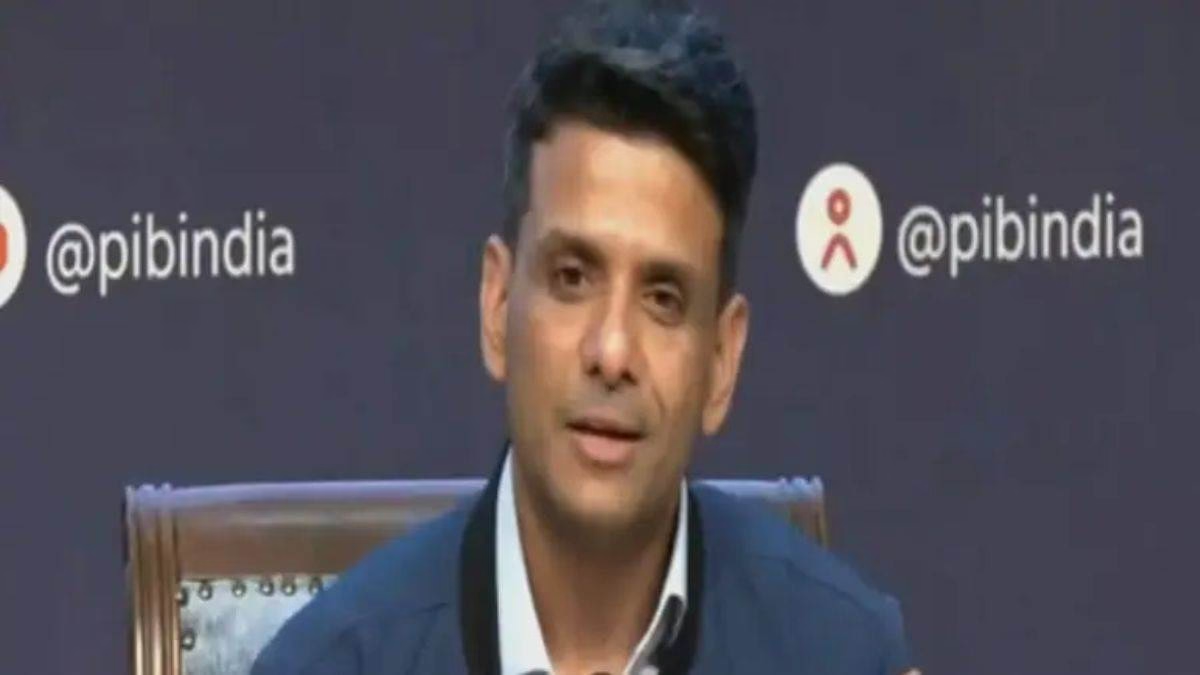
New Delhi, August 21: ISRO Chairman Dr. V. Narayanan and astronaut Group Captain Shubhashu Shukla addressed a press conference on Thursday to highlight the achievements of the Axiom-4 mission.

Expressing gratitude to the Government of India and ISRO, Shukla shared details of his role as the mission pilot aboard the Falcon 9 vehicle. He explained that the Crew Dragon spacecraft, which carries four astronauts, is one of only three vehicles capable of transporting humans into space.
He described the mission as highly successful, with all technical objectives achieved, providing valuable insights for future space programs. Shukla emphasized that human space missions offer benefits that go far beyond training. Living in space itself, he noted, provided invaluable knowledge.
Also Read- JMM urges Assembly to pass proposal for Bharat Ratna to Shibu Soren
The information gathered will significantly contribute to India’s upcoming projects, including Gaganyaan and the Indian Space Station. He explained that the human body undergoes several changes in space, with gravity adaptation becoming difficult after a 20-day stay.
India’s Space Future and National Pride
Reflecting on the future, Shukla said India will soon send astronauts aboard its own capsule and rocket, an experience distinct from ground-based training.

Sharing his personal perspective, he said that from space, India continues to appear as the most beautiful place on Earth. Earlier in the day, Shukla also met Defence Minister Rajnath Singh in New Delhi.
ISRO’s Decade of Unprecedented Growth
ISRO Chairman Dr. V. Narayanan underlined the agency’s remarkable progress over the past decade. He highlighted that missions conducted between 2015 and 2025 nearly doubled those completed in the previous ten years.
He described the Axiom-4 mission as prestigious, as it marked the first time an Indian was sent to the International Space Station and brought back safely.

In the last six months alone, ISRO completed three major missions. On July 30, the GSLV-F16 rocket successfully deployed the NASA-ISRO Synthetic Aperture Radar.
Narayanan announced that within the next two to three months, ISRO will launch a 6,500-kilogram U.S. communication satellite using its own launch vehicle.
Also Read- CJI warns: Judicial activism must not turn into ‘judicial terrorism’
Expanding Role of India in Global Space Collaboration
Narayanan also recalled that under Prime Minister Narendra Modi’s leadership, India built and launched the South Asia Satellite, gifting it to neighboring nations, and later developed a G-20 satellite for member countries.
Over the past decade, India’s space ecosystem has expanded rapidly—from a single startup to over 300 private space companies today.
Private enterprises have already conducted two sub-orbital missions, reflecting growing participation in the sector.