
Railways to deploy 10-km early-detection system to prevent elephant deaths on tracks
Jamshedpur, Nov 18: A worrying rise in elephant fatalities caused by speeding trains has become a major challenge for both the…
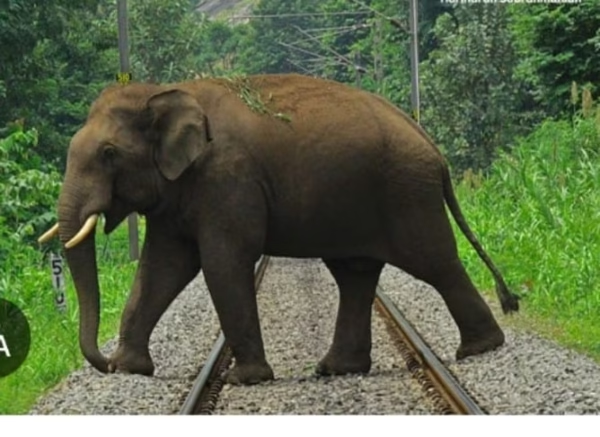
Jamshedpur, Nov 18: A worrying rise in elephant fatalities caused by speeding trains has become a major challenge for both the forest department and Indian Railways in the Tatanagar and East Singhbhum region.
Incidents of elephants being struck while crossing railway tracks have increased sharply, alarming conservationists and authorities and prompting urgent intervention to prevent further wildlife loss.
Collision Risk Growing Along Forested Rail Routes
Officials said elephant herds routinely move through forest corridors that intersect crucial railway lines.
Limited visibility at night, high train speeds and the unpredictable nature of herd movement have contributed to repeated accidents.
ALSO READ: JHALSA directs DLSAs to protect homeless during winter
Each collision not only results in the death of an elephant—an endangered and protected species—but also poses safety risks for passengers and disrupts train services for hours.

10 km Early-Detection System Planned
In response, the forest department and Railways are preparing to introduce a 10 km early-detection system along vulnerable stretches in East Singhbhum.
The advanced mechanism will detect elephant movement from up to 10 kilometres away, allowing railway control rooms and locomotive pilots sufficient time to slow down or halt trains.
Officials said the system will integrate infrared sensors, thermal cameras, AI-based motion detection and geo-fencing technology.
Once an elephant or herd enters the detection zone, automated alerts will be sent to nearby stations, forest outposts and locomotive drivers simultaneously.

Patrolling Intensified in High-Risk Zones
The forest department has increased patrolling teams and is working closely with railway authorities to map high-risk areas based on previous incidents. Awareness drives for train drivers and communities living near elephant corridors have also begun.
Experts Call for Long-Term Solutions
Experts believe the early-warning system could significantly reduce rail-elephant collisions if implemented across all sensitive zones. They also emphasise long-term measures such as habitat improvement, restoring traditional elephant pathways and stronger inter-departmental coordination.
With elephant deaths continuing to raise public concern, the proposed detection system is being viewed as a crucial step in protecting Jharkhand’s wildlife while ensuring safe and uninterrupted railway operations.