RSS Sarkaryavah flags ‘3-D problem’ threatening tribal society at Ranchi meet
Ranchi, January 12: Rashtriya Swayamsevak Sangh (RSS) Sarkaryavah Dattatreya Hosabale on Monday warned that tribal society in Jharkhand and other regions is…
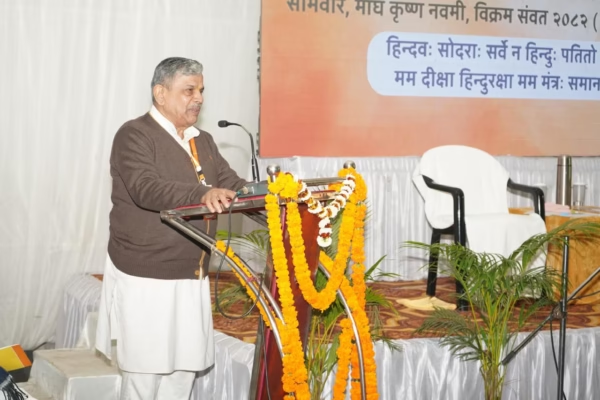
Ranchi, January 12: Rashtriya Swayamsevak Sangh (RSS) Sarkaryavah Dattatreya Hosabale on Monday warned that tribal society in Jharkhand and other regions is facing a serious “3-D problem” — religious conversion, DJ culture and alcohol, which is weakening social harmony and cultural roots.
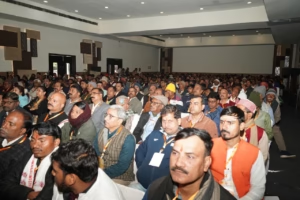
Addressing a Social Harmony Meeting in Ranchi attended by over 600 representatives from various social organisations, castes and communities, Hosabale said poverty, illiteracy and superstition are being exploited to fuel these challenges, particularly in tribal belts.
Conversion a Major Concern in Tribal Regions
Hosabale identified three regions where religious conversion remains a major issue — the Chota Nagpur region of Jharkhand, tribal areas of the northeastern states, and parts of southern India, including Kerala, Tamil Nadu, Andhra Pradesh and Telangana.
He alleged that organised efforts were made to influence tribal communities and restrict access to traditional Hindu religious leaders in these areas.
ALSO READ: Himachal Governor calls youth key to India’s economic rise

To counter conversions, Hosabale emphasised the need for:
- Strong social cooperation
- Ending caste discrimination and untouchability
- Removing feelings of superiority and inferiority
- Greater social awareness
On Ghar Wapsi, he said religious awakening is the responsibility of society and cannot be imposed externally.
Caste Equality and Women’s Respect
Speaking on casteism, Hosabale said birth-based identity should not become a basis for discrimination.

“The caste or family into which one is born is not in one’s control. No caste should be considered inferior or superior,” he said.
He also stressed the importance of respect and equality for women, stating that discrimination has no place when men and women work together.
Social Media, Children and Culture
Hosabale expressed concern over the impact of social media on children, noting that while it has positive aspects, it also exposes young minds to harmful influences.
He urged parents and society to connect children with Indian culture, stressing dialogue within families. Encouraging visits to temples, he said, helps reduce ego and brings mental peace.
Concern Over Social Ostentation
Hosabale also raised concerns over excessive spending on festival pandals, saying such practices should be viewed critically in the context of a growing entertainment-driven culture.
Recalling Swami Vivekananda on his birth anniversary, he urged the youth to follow the message:
“Think less, act more.”
Infiltration and Social Responsibility
On the issue of Bangladeshi infiltration, Hosabale said the problem has been politically exploited for years and pointed to the difficult situation of Hindus in Bangladesh.
He said border fencing remains a challenge and alleged that local support sometimes enables infiltration. He added that the government is attempting to address the issue through various measures, including SIR.
Meetings with Saints and Social Organisations
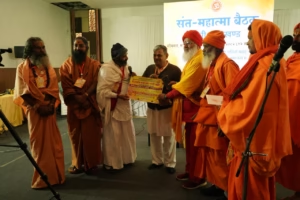
Hosabale also held a separate interaction with over 78 saints and spiritual leaders, where Section 342 — which allows tribal status benefits even after religious conversion — was discussed. Participants felt that repealing it could reduce conversions.
In another session with social and spiritual organisations, emphasis was laid on family values, women’s empowerment, protection of public property, use of Sanskrit, environmental awareness and social unity.
The meeting concluded with a call to strengthen not only India’s economic growth but also its social and spiritual foundations.