Swami Vivekananda’s vision of education: Empowerment through knowledge
Advertisement Swami Vivekananda, a prominent Indian philosopher and spiritual leader, was a major intellectual force behind Indian nationalism. His ideas…
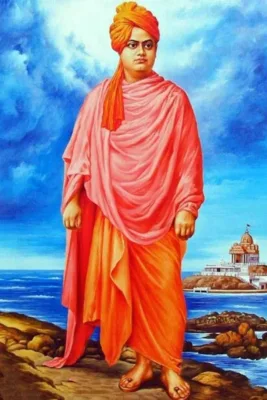

Swami Vivekananda, a prominent Indian philosopher and spiritual leader, was a major intellectual force behind Indian nationalism. His ideas deeply influenced the freedom movement and post-independence nation-building. His philosophy of spiritual nationalism, self-confidence, and service to the nation became a guiding force for leaders such as Mahatma Gandhi, Subhas Chandra Bose, Bal Gangadhar Tilak, and Aurobindo Ghosh.
Vivekananda’s educational philosophy emphasized holistic development by integrating physical, mental, and spiritual growth. He believed that education should not merely impart knowledge but also build character, instil confidence, and promote service to humanity. Advocating a blend of spiritual wisdom and scientific progress, his ideas remain relevant to modern education.
He envisioned an alternative education system that combined spiritual knowledge with scientific and practical learning. His model promoted self-reliance and moral integrity, enabling individuals to grow comprehensively—physically, mentally, and spiritually.
Core Principles of Vivekananda’s Educational Philosophy
Self-realization: Education should help individuals discover their inner strength and purpose. “Education is the manifestation of the perfection already in man.”

Character-building: Strong moral values such as truth, honesty, and discipline were central to his vision.
Spiritual and cultural grounding: Education must connect students to their spiritual heritage while embracing universal values.
Practical and vocational training: He emphasized skills and vocational education to ensure meaningful social contribution.

Inclusive education: He advocated education for all, regardless of gender, caste, or economic background.
Physical and mental development: Physical fitness was seen as essential for resilience and a healthy mind.
Holistic and Man-Making Education
Vivekananda believed education should go beyond intellectual growth to nurture the whole person. His emphasis on “man-making” and “character-building” highlighted values, ethics, and discipline alongside academics. He supported women’s education, social upliftment, and the empowerment of marginalized communities.
He rejected the colonial education system that produced clerks rather than thinkers, and instead envisioned an education that revived India’s cultural pride and promoted nation-building. He argued against rote learning and emphasized creativity, self-discovery, and spiritual growth.
Vivekananda’s philosophy integrated modern science with Indian spirituality. He encouraged the study of the Vedas, Upanishads, and Indian philosophical traditions alongside modern subjects. He believed true knowledge comes from within and promoted meditation, yoga, and self-inquiry as essential parts of learning.
Advocacy of Women’s Education
He was a strong advocate of women’s education, believing that society could not progress without empowering women. He supported equal opportunities for women in science, literature, and spiritual studies, seeing education as a tool for independence and leadership.
Vivekananda also emphasized practical knowledge in agriculture, trade, industry, and crafts, enabling individuals to live self-reliant lives and contribute meaningfully to society. His vision of education was inclusive, value-based, and transformative.
Influence on Freedom Movement and Youth
His teachings inspired major leaders of India’s freedom struggle, including Gandhi, Bose, and Tilak. His speeches motivated youth movements, encouraging service, courage, and sacrifice for the nation. He rejected colonial propaganda that Indians were weak, urging them to cultivate strength, fearlessness, and confidence.
Vivekananda’s famous call—“Be strong, my young friends, that is my advice to you. You will be nearer to heaven through football than through the study of the Gita”—emphasized the importance of physical and mental strength as the foundation of nation-building.
He saw youth as the driving force of India’s future, urging them to dedicate their lives to patriotism, service, and moral upliftment. His vision of “spiritual nationalism” united diverse communities under a shared cultural and moral foundation, promoting national unity beyond religious and caste barriers.
Vivekananda’s legacy continues through the Ramakrishna Mission, which contributes to education, healthcare, and rural development. His philosophy of selfless service, religious harmony, and cultural pride remains deeply influential in shaping India’s secular ethos and developmental vision.
(Dr Rachna K Prasad, is Asst Professor, Political science, Delhi University. She can be contacted at drrachnaprasad24@gmail.com)