
After decades, Kolkata’s iconic Writers’ Buildings may return as Bengal Secretariat
Kolkata’s iconic Writers’ Buildings, the historic red edifice that served as the nerve centre of governance in West Bengal for decades, is…
Source: The Telegraph
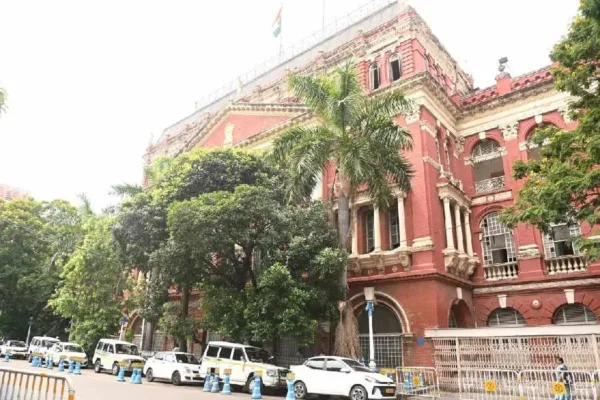
Kolkata’s iconic Writers’ Buildings, the historic red edifice that served as the nerve centre of governance in West Bengal for decades, is poised to reclaim its status as the state secretariat as the Bharatiya Janata Party (BJP) has reportedly decided that its Chief Minister will not function from Nabanna, the administrative headquarters used during the Mamata Banerjee-led Trinamool Congress government.
According to senior government officials, the nearly 250-year-old Writers’ Buildings, once synonymous with political power in Bengal, is set to again become the principal seat of governance after years of administrative inactivity.
The move is being viewed not merely as an administrative shift but also as a symbolic political decision aimed at reconnecting governance with Bengal’s historic institutional legacy.
BJP Plans Return to Historic Seat of Power
Sources in the state administration said the BJP leadership has made it clear that the new Chief Minister would not operate from Nabanna, the 14-storey building in Shibpur, Howrah, which became the headquarters of the Mamata Banerjee administration after 2013.
Instead, the party is preparing to restore Writers’ Buildings as the official secretariat of the West Bengal government.
A senior government official said discussions are already underway regarding logistical and infrastructural arrangements required before the relocation can take place.

According to the official, until the remaining restoration and maintenance work at Writers’ Buildings is completed, the new Chief Minister is likely to function temporarily from the annex building of the West Bengal Assembly.
However, the official clarified that no final administrative order has yet been issued regarding the interim arrangement.
Emergency Meeting Held on Interim Arrangement
Sources said Chief Secretary Dushmanta Narial recently held an emergency meeting with Assembly Secretary Samarendra Nath Das to discuss the proposal and assess the feasibility of temporarily operating the Chief Minister’s Office from the Assembly annex building.

A senior Assembly official confirmed that preparations have already been initiated following instructions from higher authorities.
“We have been asked to keep the annex building ready and examine all infrastructural requirements, including security arrangements and administrative functionality,” the official said.
The developments indicate that preparations are progressing for a possible administrative transition once political and procedural formalities are completed.
End of the Nabanna Era?
Nabanna became the administrative headquarters of West Bengal during the Trinamool Congress regime under Chief Minister Mamata Banerjee.
After coming to power in 2011, Mamata Banerjee had initially operated from Writers’ Buildings. However, within two years, the state administration shifted to Nabanna, a modern high-rise structure located in Howrah.
Officials pointed out that Nabanna was originally constructed for a project linked to the Hooghly River Bridge Commissioners and was not initially conceived as a permanent state secretariat.
Over time, however, it evolved into the operational centre of the state government under the Trinamool Congress administration.
Now, with the BJP preparing to form the government, the party appears determined to reverse that decision and restore the historical administrative identity associated with Writers’ Buildings.
Writers’ Buildings: Bengal’s Historic Power Centre
Writers’ Buildings remains one of the most historically significant administrative structures in India and occupies a central place in Bengal’s political and colonial history.
The three-storey red building was constructed in 1780 by Thomas Lyon in the neoclassical architectural style with imposing Corinthian columns.
Originally, the building served as a boarding and working facility for junior clerks of the British East India Company, who were known as “Writers”, eventually giving the structure its famous name.
Later, under Governor-General Warren Hastings, the complex was transformed into an administrative headquarters and gradually became the centre of British governance in Bengal.
Over the decades, additional structures were added to the complex, turning it into one of the most recognisable government establishments in eastern India.
Site of Revolutionary Legacy
Beyond its administrative significance, Writers’ Buildings also occupies a special place in India’s freedom movement.
The building witnessed one of the most dramatic revolutionary actions during the anti-colonial struggle when freedom fighters Benoy Basu, Badal Gupta and Dinesh Gupta launched an attack inside the premises in December 1930.
During the operation, Lt Col N.S. Simpson, the Inspector General of Prisons accused of torturing Indian freedom fighters, was shot dead.
The incident became one of the defining moments of Bengal’s revolutionary movement and immortalised the names of Benoy, Badal and Dinesh in India’s independence history.
Even today, the nearby Dalhousie Square area bears their legacy through the name B.B.D. Bagh.
Seat of Bengal’s Governance for Over Six Decades
After India’s independence in 1947, Writers’ Buildings formally became the seat of power of the West Bengal government.
From the state’s first Chief Minister Prafulla Chandra Ghosh to former CPI(M) Chief Minister Buddhadeb Bhattacharjee, every Chief Minister governed Bengal from Writers’ Buildings for more than six decades.
The building remained the political and administrative heart of Bengal through Congress rule, Left Front dominance and major political transitions.
It was only after Mamata Banerjee came to power in 2011 that the secretariat eventually shifted to Nabanna.
Political Symbolism Behind the Move
Political observers believe the BJP’s reported decision to shift governance back to Writers’ Buildings carries a deeper symbolic message.
The move is being interpreted as an attempt to reconnect the administration with Bengal’s historical governance legacy while also distinguishing itself from the Trinamool Congress era represented by Nabanna.
Party insiders indicate that the BJP leadership views Writers’ Buildings not merely as an office complex but as a symbol of institutional continuity, governance authority and Bengal’s political identity.
With restoration work nearing completion and preparations reportedly underway, the iconic red building may once again emerge as the centre of power in West Bengal after more than a decade.