Siddaramaiah steps down as Karnataka CM, DK Shivakumar to take over
THE JHARKHAND STORY DESK New Delhi/Bengaluru, May 28: Senior Congress leader Siddaramaiah on Thursday stepped down as Karnataka Chief Minister after serving…
THE JHARKHAND STORY DESK
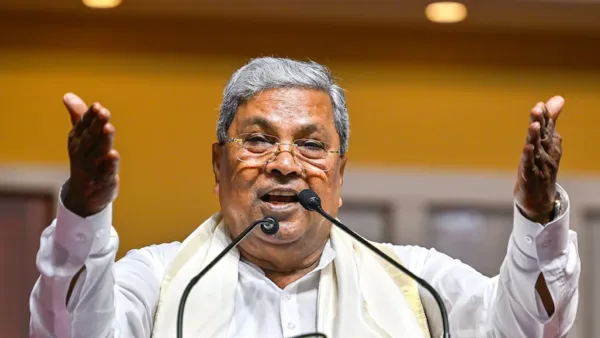
New Delhi/Bengaluru, May 28: Senior Congress leader Siddaramaiah on Thursday stepped down as Karnataka Chief Minister after serving more than eight years across two non-consecutive terms.
Deputy Chief Minister DK Shivakumar is expected to succeed him, possibly by Saturday, as the Congress prepares for the 2028 Karnataka Assembly elections.
Soon after resigning, Siddaramaiah made it clear that he was not interested in moving to national politics or accepting a Rajya Sabha berth.
“The high command told me to ‘Go Rajya Sabha’, but I have said ‘no’ to it. I have no interest in national politics. I will be in active politics,” Siddaramaiah said in Bengaluru.
Congress resolves leadership tussle
The leadership change brings a temporary end to the prolonged power struggle between Siddaramaiah and DK Shivakumar, which had created political uncertainty within the Karnataka Congress for nearly three years.

Earlier in the day, Siddaramaiah said, “The Congress high command proposed DKS as the next chief minister… I have agreed to this.”
Sources said Rahul Gandhi held a 35-minute meeting with Siddaramaiah earlier this week and reportedly advised him to “look beyond Karnataka” keeping the 2028 Assembly and 2029 Lok Sabha elections in mind.
However, the veteran leader declined the proposal for a national role.

Longest-serving Karnataka Chief Minister
The 80-year-old Congress leader created history in January 2026 by surpassing D Devaraj Urs to become Karnataka’s longest-serving Chief Minister.
Despite repeated pressure from Shivakumar’s camp to step down, Siddaramaiah retained the post for months, underlining his influence within the Congress and his strong support base among the AHINDA communities — minorities, backward classes and Dalits.
The AHINDA bloc is estimated to account for nearly 65-70 per cent of Karnataka’s voters and has remained central to Siddaramaiah’s political strength.
Rise from poverty to power
Born in April 1948 in a poor farming family from the Kuruba community in Mysuru district, Siddaramaiah’s journey from rural poverty to Karnataka’s top political post is seen as one of the state’s most significant political success stories.
In interviews, Siddaramaiah had recalled how a folk dance troupe and a local teacher inspired him to pursue education.
He later earned a Bachelor of Science degree and a law degree from Mysore University before entering active politics.
Political journey shaped by socialism
Influenced by socialist leader Ram Manohar Lohia and former Karnataka Chief Minister Devaraj Urs, Siddaramaiah entered politics in the late 1970s.
He first became an MLA in 1983 from Chamundeshwari as an Independent candidate before joining the Janata Dal in 1985.
Over the years, he served as Transport Minister, Finance Minister and Deputy Chief Minister.
In 2006, after differences with Janata Dal leadership led by H D Deve Gowda, Siddaramaiah joined the Congress and gradually emerged as one of the party’s tallest leaders in Karnataka.
Welfare schemes and corruption allegations
Siddaramaiah first became Karnataka Chief Minister in 2013, leading Congress back to power with a strong welfare agenda.
His government launched several welfare schemes under the “Bhagya” programme, including subsidised food grains and essential commodities for poor families.
Supporters projected him as a “leader of the masses”, while critics questioned the financial burden of welfare spending.
His tenure also faced controversies, including allegations linked to the Mysuru Urban Development Authority (MUDA) land allotment case involving his wife Parvathi. Both Siddaramaiah and his wife were later cleared of charges.
Challenges ahead for DK Shivakumar
Political observers believe DK Shivakumar’s tenure may begin amid internal pressures, with Siddaramaiah loyalists demanding key cabinet positions and deputy chief ministerial berths.
Congress leadership is expected to hold further discussions in Delhi as Siddaramaiah reaches the national capital later tonight.