Jharkhand governor clears 4 Information Commissioners, but his caveat raises questions over selection process
Ranchi, June 10: Jharkhand Governor Santosh Kumar Gangwar has approved the appointment of four Information Commissioners to the Jharkhand State Information Commission…
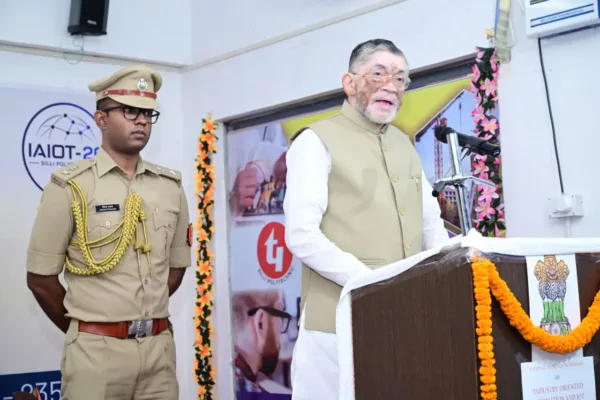
Ranchi, June 10: Jharkhand Governor Santosh Kumar Gangwar has approved the appointment of four Information Commissioners to the Jharkhand State Information Commission after initially raising objections over the selection process and eligibility criteria. However, the approval comes with an unusual rider that has sparked fresh debate over the legality and transparency of the appointments.
The Governor has cleared the names of Anuj Kumar Sinha, Tanuj Khatri, Amulya Neeraj Khalkho and Shivpujan Pathak as Information Commissioners. At the same time, he has directed the state government to appoint a Chief Information Commissioner (CIC) at the earliest. He has explicitly stated that the government will bear full responsibility if any procedural irregularity is discovered later or if the appointments are found to be inconsistent with Supreme Court guidelines.

The wording of the approval suggests that while Raj Bhavan ultimately accepted the government’s recommendation, it was not entirely satisfied with the process that led to the selections.
File Returned After Governor’s Objections
According to sources familiar with the developments, the Governor had earlier returned the file seeking clarifications on the eligibility of the proposed appointees and the process followed by the selection committee.
The concerns reportedly related to whether the candidates fulfilled the requirements laid down under the Right to Information Act, 2005, which mandates that Information Commissioners should be persons of eminence in public life possessing wide knowledge and experience in fields such as law, science and technology, social service, management, journalism, mass media, administration and governance.
Following the government’s response and resubmission of the proposal, Raj Bhavan eventually approved the appointments but attached conditions that effectively place future legal responsibility on the state government.

Political Backgrounds Under Scrutiny
The composition of the new Information Commission is likely to attract scrutiny.
Of the four appointees, Anuj Kumar Sinha is a retired journalist, a profession specifically mentioned in the RTI Act as one from which Information Commissioners may be drawn.
The other three appointees, however, are better known for their political affiliations.

- Tanuj Khatri has been associated with the Jharkhand Mukti Morcha (JMM).
- Amulya Neeraj Khalkho has been linked to the Congress.
- Shivpujan Pathak has been associated with the Bharatiya Janata Party (BJP).
The RTI Act does not list political experience or party office as a qualification for appointment. While the law allows selection of individuals with experience in administration and governance, critics argue that political affiliation by itself cannot be treated as a statutory qualification.
This issue appears to have been one of the concerns that prompted closer scrutiny of the file at Raj Bhavan.
Supreme Court’s Stress on Transparency
The appointments must also be viewed in the backdrop of repeated interventions by the Supreme Court regarding the functioning of Information Commissions.
In Namit Sharma and later in Anjali Bhardwaj vs Union of India, the Supreme Court emphasised transparency, objectivity and merit in the appointment process. The court directed governments to ensure openness in selections, make relevant information public and avoid arbitrary appointments.
The court has repeatedly underlined that Information Commissions are independent statutory bodies entrusted with protecting citizens’ right to information and therefore cannot be treated as extensions of the political executive.
RTI activists have often argued that appointments should be based on demonstrable expertise in the fields specified by the Act rather than political considerations.
Why the Governor’s Rider Matters
The most striking aspect of the Governor’s approval is the disclaimer accompanying it.
Raj Bhavan has stated that if any procedural flaw emerges in the future or if any issue arises regarding compliance with Supreme Court directions, the state government will bear full responsibility.
Legal experts say the rider is significant because it indicates that the Governor wanted his reservations to be formally recorded.
“It is unusual for an approving authority to expressly state that responsibility for future legal complications will rest with the government. The language suggests that Raj Bhavan was not willing to certify the process as entirely free from legal doubt,” said a constitutional law expert.
The caveat may also be intended to protect Raj Bhavan from being seen as endorsing every aspect of the selection process.
Can Approval Cure a Defective Process?
The development also raises a broader constitutional question: does approval by the Governor validate a process if procedural defects exist?
Legal opinion is fairly settled on this issue. Courts have consistently held that an appointment can still be struck down if it violates statutory provisions or constitutional requirements, regardless of the fact that it received approval from the competent authority.
The Supreme Court has repeatedly maintained that there can be no validation of an illegal act merely because it has been approved at a higher level.
At the same time, the Governor ordinarily acts on the aid and advice of the Council of Ministers. In such cases, the legal burden of defending the process generally falls on the government rather than on the constitutional head of the state.
That appears to be the principle reflected in Raj Bhavan’s decision to place responsibility for any future challenge squarely on the state government.
Commission Functioning With Vacancies
The appointments come after years of vacancies in the Jharkhand State Information Commission.
The post of Chief Information Commissioner has remained vacant for a considerable period, while vacancies among Information Commissioners have affected the Commission’s ability to dispose of RTI appeals and complaints. The shortage of commissioners has contributed to delays in hearings and disposal of cases.
Recognising this problem, the Governor has specifically directed the government to fill the CIC’s post without delay so that the Commission can function effectively.
Approval Ends One Debate, May Trigger Another
The Governor’s approval has removed the immediate hurdle to filling long-pending vacancies in the Information Commission. Yet the circumstances surrounding the decision ensure that questions about the eligibility of some appointees, adherence to Supreme Court guidelines and the transparency of the selection process are unlikely to disappear.
With Raj Bhavan having recorded its concerns and shifted responsibility to the government, any future legal challenge to the appointments will almost certainly focus on whether the selected candidates satisfy the qualifications envisioned under the RTI Act and whether the selection process met the standards of transparency and objectivity laid down by the Supreme Court.