
Jharkhand: Palamu administration mobilises schools to combat drug abuse
Daltonganj, June 12: After intensifying action against illegal poppy cultivation in vulnerable districts, the focus of the anti-drug campaign in Jharkhand has…
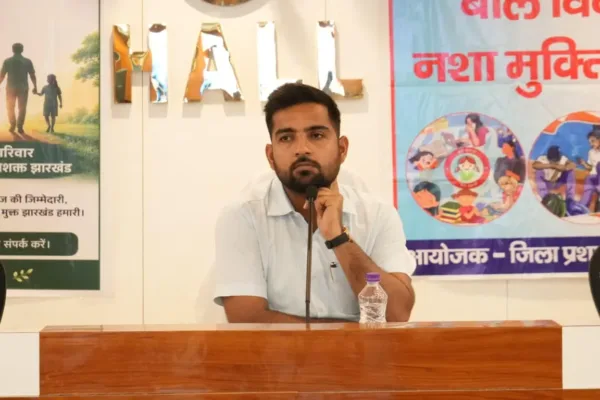
A pensive Palamu Deputy Commissioner Dilip Pratap Singh Shekhawat during a training session on combating drug abuse in Daltonganj on Thursday.
Daltonganj, June 12: After intensifying action against illegal poppy cultivation in vulnerable districts, the focus of the anti-drug campaign in Jharkhand has now shifted to classrooms.
The state education department has launched a fortnight-long programme aimed at preparing students of Classes 9 to 12 to play an active role in combating drug abuse and promoting awareness among adolescents.
A training session for school authorities was held in Daltonganj on Thursday under the leadership of Palamu Deputy Commissioner Dilip Pratap Singh Shekhawat. The programme was attended by District Education Officer Saurav Prakash, District Superintendent of Education Sandip Kumar, Assistant District Programme Officer Ambujya Pandey and other officials.
Schools at the Centre of Anti-Drug Drive
The initiative seeks to strengthen preventive measures against substance abuse among teenagers through awareness, vigilance and early intervention.
Addressing school authorities, Deputy Commissioner Dilip Pratap Singh Shekhawat called for collective efforts to curb drug abuse and highlighted the important role teachers can play in identifying vulnerable students and providing timely support.
Concern Over School Dropouts
While the campaign focuses on students enrolled in schools, officials and stakeholders acknowledge that school dropouts remain a major area of concern.

An enrolled student remains connected to the education system and is easier to monitor and support. In contrast, school dropouts often remain outside institutional oversight, making them more vulnerable to drug abuse and exploitation by illegal drug networks.
Teachers Asked to Watch for Warning Signs
District Superintendent of Education Sandip Kumar emphasised the importance of observing behavioural changes among students.
“The behaviour and even the school bag of a senior student should be observed to identify any signs of diversion or unusual conduct,” he said.

Officials believe that early detection of behavioural changes can help prevent substance abuse and ensure timely counselling and intervention.
Prahri Clubs to Play Vigilance Role
Schools across the district have established Prahri Clubs, which are intended to function as vigilance and awareness groups within educational institutions.
Officials stressed that the effectiveness of the campaign will depend on keeping these clubs active, functional and engaged throughout the year.
Survey Highlights Trends in Adolescent Drug Abuse
An independent survey conducted by The Jharkhand Story Network among children and adolescents in the 12-18 age group highlighted several trends:
- Drug abuse is found among children from lower-, middle- and upper-income families, indicating that the problem cuts across economic backgrounds.
- Children often obtain drugs through a common acquaintance or friend, with supply networks tending to remain consistent.
- Adolescents involved in substance abuse generally avoid creating disturbances in their neighbourhoods to prevent detection by family members.
- Rural and urban adolescents appear equally vulnerable to substance abuse, with little difference observed between the two groups.
Families Seek Stronger Action Against Drug Networks
Families affected by a child’s substance abuse often express concern over the limited public visibility of legal outcomes in drug-related cases.
While seizures of narcotics such as brown sugar frequently attract media attention, families say information regarding prosecution, conviction and sentencing is less visible. They also point to the social stigma faced by victims and their families, arguing that communities often isolate those struggling with addiction while paying less attention to drug peddlers and supply networks.
Women’s Role in Drug Networks Under Watch
Sources indicated that women and girls are also involved in drug networks, although their participation remains limited in Palamu, where crime and illegal activities are still largely male-dominated.
Officials maintain that community participation, parental vigilance, active schools and strict enforcement against drug traffickers will all be crucial to the success of the anti-drug campaign.