Jharkhand HC refuses DNA test as child turns 24 during 14-year legal battle
Ranchi, June 29: A 14-year-old legal battle over a DNA test in a matrimonial dispute came to an end on Monday, with…
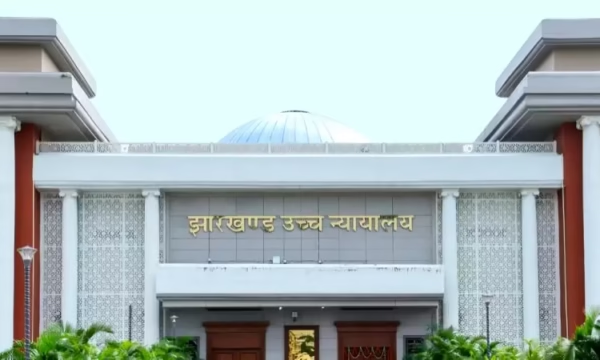
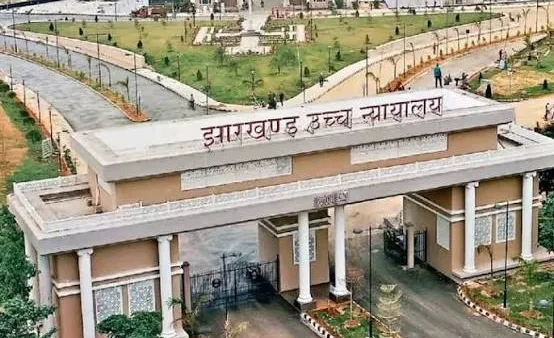
Ranchi, June 29: A 14-year-old legal battle over a DNA test in a matrimonial dispute came to an end on Monday, with the Jharkhand High Court refusing to order the test after observing that the child, whose paternity was questioned, had become an adult during the prolonged litigation.
Justice Anubha Rawat Choudhary dismissed a writ petition filed by Lakhan Kumar Mandal, who had challenged a 2011 order of a Giridih family court rejecting his plea for a DNA test of a boy he claimed was not his biological son.
Litigation Outlasted the Child’s Minority
The case highlights how a prolonged court battle changed the very nature of the dispute.
When Mandal sought the DNA test in 2010, the child was only eight years old, and his mother could legally represent him. However, by the time the High Court finally decided the matter on Monday, the child had turned 24, having attained majority during the pendency of the writ petition filed in 2012.
ALSO READ: Jharkhand High Court: Disability commissioner can’t decide land disputes
The High Court noted that once the child became an adult, his mother could no longer consent to a DNA test on his behalf. Since the petitioner never impleaded the child after he attained majority, the court said it could neither compel him to undergo the test nor draw any adverse inference against the mother if the now-adult son refused.

Justice Choudhary also recorded that although the writ petition was filed in 2012, it remained pending for years and was admitted only in 2021, by which time the child had attained majority.
Divorce Case Dates Back to 2008
Mandal had married Foolmati Devi on July 12, 2000, and claimed that he worked in Surat between January 2001 and April 2002. He alleged that when he returned home, he found his wife in an advanced stage of pregnancy and later accused her of adultery.
A divorce suit was filed in 2008, nearly six years after the child’s birth. In 2010, after recording evidence of four witnesses, Mandal moved the family court seeking a DNA test to establish that the child was not his. The application was rejected in December 2011, leading to proceedings in the High Court.

No Strong Prima Facie Case
Apart from the delay, the High Court found that Mandal had failed to specifically plead “non-access” to his wife during the period when the child could have been conceived—a key requirement for rebutting the legal presumption of legitimacy under Section 112 of the Indian Evidence Act.
The court reiterated that DNA tests cannot be ordered routinely and should be directed only in exceptional cases where a strong prima facie case is made out.
Dismissing the petition, the High Court upheld the family court’s decision, bringing an end to litigation that had continued for more than 14 years and had outlasted the child’s minority.