
The Evolving Security Landscape: Pakistan’s Internal Challenges and South Asia’s Future
DR RACHNA PRASAD By mid-2026, Pakistan finds itself confronting one of the gravest crises in its history. Describing the country as…
DR RACHNA PRASAD

By mid-2026, Pakistan finds itself confronting one of the gravest crises in its history. Describing the country as merely “fragile” no longer captures the scale of the challenges it faces. The pressures are no longer confined to a struggling economy or recurring political instability. Instead, multiple crises have begun feeding into one another, creating a situation where governance itself appears increasingly strained.
The country today faces a rare convergence of economic exhaustion, political uncertainty, institutional paralysis, and regional unrest. Administrative authority has weakened in several peripheral regions, financial resources have dwindled, and public confidence in state institutions has eroded significantly. More importantly, the long-standing narrative that held together Pakistan’s diverse provinces is under visible stress.
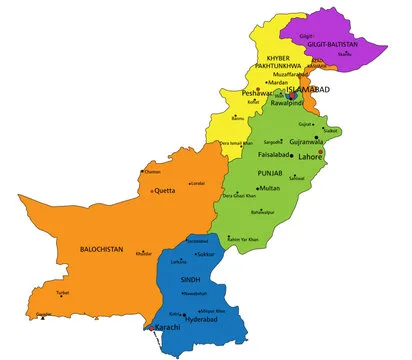
Three regions have emerged as the principal centres of unrest. Balochistan continues to witness an intensifying insurgency. Khyber Pakhtunkhwa struggles with militant violence spilling across the Afghan border. Meanwhile, Pakistan Occupied Kashmir has seen growing public protests against Islamabad’s political and economic policies. Although each movement has distinct local causes, together they present an unprecedented challenge to the country’s federal structure.
History reminds us that states rarely collapse because of one crisis alone. They weaken when economic distress, political alienation, security failures, and declining institutional legitimacy reinforce one another. Pakistan in 2026 increasingly reflects this complex interaction.
The implications extend well beyond Pakistan’s borders. Given its strategic location, nuclear capability, and central role in South Asian geopolitics, prolonged instability has the potential to reshape regional security calculations for years to come.
Balochistan: An Insurgency That Has Become Increasingly Organized
Balochistan occupies nearly half of Pakistan’s territory, yet it remains its least developed province. Rich in natural gas, copper, gold, and other mineral resources, it has long been viewed by Islamabad as strategically indispensable. Ironically, the very province that contributes significantly to the country’s resource base has also become the region where the state’s authority appears most contested.
For decades, the conflict in Balochistan followed a familiar cycle. Insurgent attacks were met with military operations, followed by periods of uneasy calm before violence resurfaced. That pattern appears to have changed.
During 2026, several militant organizations, particularly the Baloch Liberation Army (BLA), demonstrated higher levels of coordination, improved operational planning, and greater geographical reach. Attacks have become more sophisticated, targeting not only security installations but also strategic infrastructure. Reports of militant operations extending into traditionally Pashtun dominated areas such as Quetta suggest that the conflict is no longer confined by older ethnic or geographic boundaries.
The economic dimension remains central to the unrest. Many Baloch groups argue that while their province generates substantial wealth through natural resources, the benefits rarely reach local communities. Revenue from gas fields, coal mines, and mineral extraction largely flows to federal institutions, while many districts continue to rank among Pakistan’s poorest.
The China Pakistan Economic Corridor was expected to transform this reality. Gwadar Port, promoted as the crown jewel of CPEC, symbolized ambitious hopes of regional prosperity. Yet many local residents continue to question whether these promises translated into meaningful improvements in employment, infrastructure, healthcare, or education. Among fishing communities, concerns over displacement and limited economic participation have further deepened resentment.
Security policies have also shaped public perceptions. Human rights organizations have repeatedly raised concerns regarding enforced disappearances and prolonged military operations in the province. Regardless of differing political interpretations, such allegations have contributed to growing distrust between local communities and the federal government. Heavy reliance on force may suppress violence temporarily, but it rarely resolves underlying political grievances. In many conflict zones around the world, prolonged militarization has often strengthened rather than weakened insurgent recruitment.
Khyber Pakhtunkhwa: The Unintended Consequences of Strategic Depth
If Balochistan reflects Pakistan’s internal resource conflict, Khyber Pakhtunkhwa illustrates the collapse of one of its most enduring security doctrines.
For decades, sections of Pakistan’s strategic establishment viewed Afghanistan as providing “strategic depth” against India. The return of the Taliban to power in Kabul in 2021 was initially seen by some observers as an opportunity to restore favourable regional dynamics. Developments since then have challenged that expectation.
Instead of enhancing Pakistan’s security, the Afghan frontier has become increasingly volatile. The Tehreek e Taliban Pakistan (TTP) has expanded its operational capacity, reportedly using sanctuaries across the border to launch attacks inside Pakistan. Border skirmishes have become more frequent, while occasional Pakistani air strikes inside Afghan territory have heightened tensions between the two neighbours.
Large parts of the tribal belt continue to experience persistent insecurity. Many local residents find themselves caught between militant groups and state security operations. Military campaigns aimed at eliminating insurgents often result in temporary displacement of civilian populations. At the same time, militant organizations continue to impose extortion networks and intimidate local businesses and officials.
This creates what might be called a “double pressure” on ordinary citizens. Communities experience insecurity from both armed non state actors and prolonged counter insurgency operations. Such environments often produce cycles of distrust that become increasingly difficult to reverse.
The instability in Khyber Pakhtunkhwa also weakens Pakistan’s broader regional position. Rather than functioning as a gateway to Central Asia, the province increasingly resembles a security buffer under constant pressure.
Pakistan Occupied Kashmir: Growing Economic and Political Discontent
The emergence of the Jammu Kashmir Joint Awami Action Committee has introduced a new dimension to Pakistan’s internal challenges.
For decades, Islamabad projected Pakistan Occupied Kashmir as an example of political autonomy. Recent protests, however, have highlighted growing dissatisfaction among sections of the local population over rising electricity prices, taxation, shortages of essential commodities, and broader governance concerns.
The economic grievances are particularly striking. Residents often point to the paradox that although the Mangla Dam generates significant hydroelectric power, many local households continue to face relatively high electricity costs. Such perceptions have strengthened the argument among protesters that regional resources disproportionately benefit other parts of Pakistan.
Political representation has also become a subject of debate. Critics argue that reserved legislative seats filled by individuals residing outside the territory reduce the ability of locally elected representatives to exercise meaningful autonomy. Supporters of the existing arrangement defend it as part of Pakistan’s constitutional framework. Nevertheless, the controversy itself illustrates a widening gap between official narratives and local political expectations.
Historical comparisons with East Pakistan before 1971 have occasionally surfaced in public discourse. While every historical situation is unique and direct parallels should be treated cautiously, the underlying lesson remains relevant. States face growing risks when political representation weakens while economic grievances intensify.
Economic Crisis and Institutional Paralysis
No internal conflict exists in isolation from economic realities.
Pakistan’s economy has faced repeated balance of payments crises over the past decade. By 2026, debt servicing consumes a substantial share of public expenditure, significantly limiting the government’s ability to invest in development, infrastructure, healthcare, or education.
This fiscal pressure affects almost every sector. Provincial governments struggle to finance basic services, while inflation and unemployment continue to erode public confidence.
Large infrastructure projects further illustrate institutional challenges. The Neelum Jhelum Hydropower Project, originally envisioned as a major achievement, has encountered repeated technical and operational difficulties despite enormous financial investment. The project’s problems have become symbolic of wider concerns regarding planning, implementation, and institutional oversight.
Political uncertainty compounds these economic weaknesses. Pakistan’s history includes multiple periods of military intervention following civilian crises. As economic hardship deepens, speculation inevitably grows regarding the possibility of another restructuring of political authority.
Whether such speculation proves accurate remains uncertain. However, the recurring discussion itself reflects declining confidence in civilian governance and continuing ambiguity regarding the balance between civilian institutions and the military establishment.

External Narratives and Relations with India
Domestic crises often influence foreign policy behaviour, particularly in states facing significant internal pressures.
Relations between India and Pakistan continue to remain shaped by longstanding disputes, including terrorism, Kashmir, and water sharing under the Indus Waters Treaty. During periods of heightened domestic instability, political narratives frequently become more externally focused.
Indian analysts have argued that sections of Pakistan’s establishment continue to highlight external threats as a means of strengthening domestic political cohesion. Pakistani officials, on the other hand, maintain that India’s policies pose genuine security challenges to Pakistan. As with many bilateral disputes, competing narratives coexist, making objective assessment difficult.
The debate surrounding the Indus Waters Treaty illustrates this complexity. Pakistan has expressed concern over India’s water management projects, while India maintains that its actions remain consistent with treaty provisions. International institutions have repeatedly emphasized that Pakistan’s water crisis is influenced not only by transboundary issues but also by internal factors such as inefficient irrigation systems, groundwater depletion, storage limitations, and poor water governance.
Looking Ahead: Implications for South Asian Security
Pakistan’s internal trajectory will remain one of the defining strategic variables for South Asia over the coming years.
Continued instability in Balochistan could disrupt major infrastructure projects and regional connectivity initiatives. Persistent violence in Khyber Pakhtunkhwa may further complicate relations with Afghanistan while providing space for extremist organizations to expand. Growing political unrest in Pakistan Occupied Kashmir could reshape regional political discourse, particularly if economic grievances remain unresolved.
For India, these developments require careful strategic assessment rather than reactive policymaking. Border management, intelligence coordination, counter terrorism preparedness, and humanitarian contingency planning are all likely to assume greater importance.
The international community also has a stake in Pakistan’s stability. A country possessing nuclear weapons, facing economic distress, and experiencing multiple internal conflicts inevitably attracts global concern. Financial institutions, regional organizations, and major powers will continue monitoring developments closely.
Ultimately, Pakistan’s future depends less on military responses than on political reconciliation, institutional reform, and economic recovery. Durable stability cannot be achieved solely through security operations. It requires rebuilding public trust, addressing regional inequalities, strengthening democratic institutions, and ensuring that economic development reaches marginalized communities.
The story unfolding in Pakistan during 2026 is therefore not simply about insurgencies or political crises. It is about the difficult relationship between state power and public legitimacy. History shows that nations endure when institutions retain the confidence of their citizens. When that confidence begins to weaken across multiple regions simultaneously, restoring stability becomes far more challenging than maintaining it in the first place.
For South Asia, the consequences of Pakistan’s choices will not remain confined within its borders. The region’s security environment, diplomatic relationships, and strategic calculations will increasingly be shaped by how successfully Pakistan navigates this defining moment in its modern history.
(Dr Rachna K Prasad, is Asst Professor Political science Delhi University. She can be contacted at drrachnaprasad24@gmail.com)