MMDR amendment benefits Jharkhand, JMM-Congress spreading confusion: Raghubar Das
THE JHARKHAND STORY NETWORK Ranchi, August 26: Former Jharkhand Chief Minister Raghubar Das on Wednesday defended the recently introduced MMDR (Mines and…
Raghubar Das
THE JHARKHAND STORY NETWORK
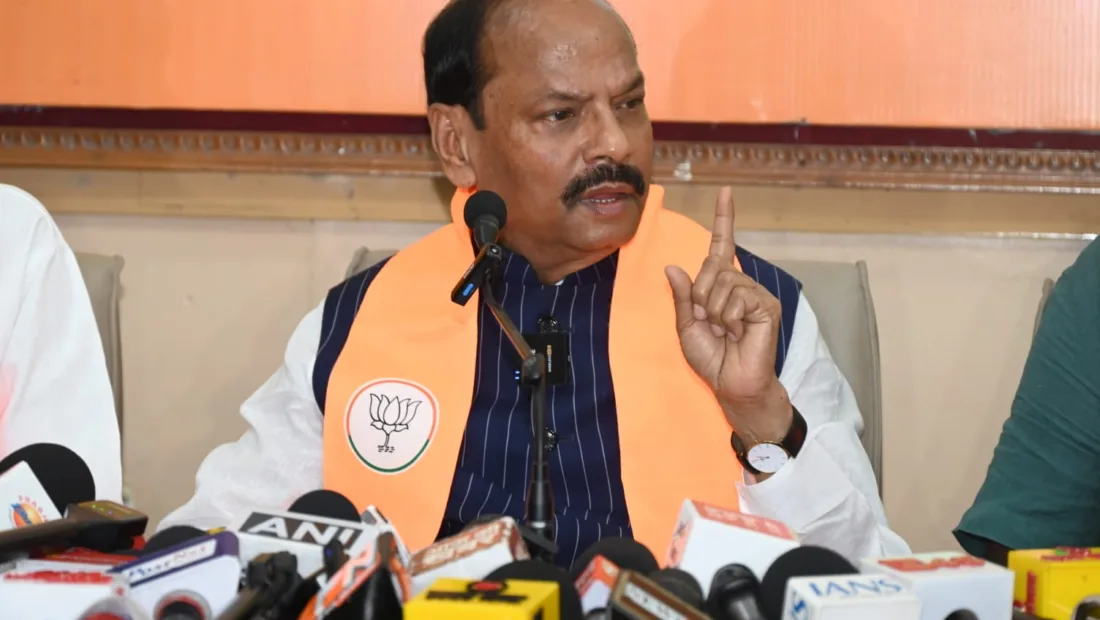
Ranchi, August 26: Former Jharkhand Chief Minister Raghubar Das on Wednesday defended the recently introduced MMDR (Mines and Minerals (Development and Regulation) Amendment) Act, saying it would benefit both Jharkhand and the country. He accused the ruling Jharkhand Mukti Morcha (JMM) and Congress of misinterpreting the legislation and confusing people.

At a press conference at the BJP state office, Das said the amendment aimed to promote legal and transparent mining, encourage investment, increase production, and ensure Jharkhand derives greater economic benefit from its mineral resources.
He said the issue should not be viewed only through the lens of the ₹11,000-crore cess, arguing that the larger concern was whether “fiscal uncertainty” would discourage investment, industrial activity, employment and mineral production in the state.
Das accuses JMM-Congress of misleading people
Das alleged that illegal coal, sand and stone mining syndicates were operating in several districts, including Dhanbad, Bokaro, Chatra, Hazaribagh, Sahibganj, Dumka and Shikaripara.
He accused the JMM and Congress of failing to protect Jharkhand’s natural resources despite coming to power on the slogan of “Jal, Jungle, Zameen”.

Referring to alleged cases of illegal mining, Das said there was no need for the JMM or Congress to give a “certificate” on whether the MMDR amendment was in Jharkhand’s interest.
He alleged that the opposition to the amendment was driven by vested interests and an attempt to protect illegal mining networks.
‘States will continue to receive major share of mining revenue’
Das said concerns over the loss of state revenue were misplaced, claiming that around 90% of taxes and statutory payments generated by the mining sector go directly to states.

He maintained that the amendment would not disrupt this arrangement.
Das also highlighted the District Mineral Foundation Trust (DMFT), saying the Narendra Modi government introduced the mechanism in 2015 to provide additional funds, over and above royalty, for the development of mining-affected districts.
He said tribal communities, DMFT funds and Jharkhand’s legitimate revenue must be protected and that the benefits of mineral wealth should reach people living in mining-affected areas.
Only four of 34 approved coal blocks operational
Das questioned the state government’s record in operationalising mineral resources.
Citing figures, he said the Centre had approved the operationalisation of 34 coal blocks in Jharkhand, but only four had become operational, leaving 30 pending.
Similarly, he said only six of 15 iron ore mines and 17 of 37 bauxite mines were operational.
According to Das, faster operationalisation of these mines and blocks could substantially increase state revenue, create employment and support industrial growth.
₹7,915 crore DMFT funds remain unspent, claims Das
Das compared Jharkhand’s mining revenue with that of Odisha, saying Odisha was targeting ₹60,000 crore in revenue for 2025-26, against Jharkhand’s target of ₹18,844 crore.
He attributed the difference partly to faster auction and mining processes in Odisha.
Das further claimed that of the ₹18,250 crore collected under DMFT in Jharkhand, more than ₹7,915 crore remains unspent, while 2,487 projects have stalled.
He said DMFT funds worth ₹2,393.58 crore in Dhanbad, ₹1,802.82 crore in Chaibasa, ₹1,055.40 crore in Chatra, ₹527.88 crore in Pakur and ₹518.82 crore in Ramgarh remained unutilised.
He alleged that mining-affected districts continued to face shortages of medicines, drinking water, hospital equipment and ambulances despite the availability of DMFT funds.
Coal production declined, says former CM
Das also cited a decline in coal production, saying government data showed output falling from 44.78 million tonnes in April-July 2024-25 to 37.25 million tonnes during the corresponding period of 2025-26.
He alleged that illegal mining and weak enforcement were hurting legal mining and, consequently, the state’s legitimate revenue.
Jharkhand minerals costlier due to cess, claims Das
Das said the cess had increased the cost of Jharkhand’s coal and iron, making the state’s minerals less competitive compared with those from neighbouring states.
According to figures cited by him, Grade 8 to Grade 12 coal in Jharkhand costs between ₹2,045 and ₹3,212 per tonne, compared with ₹1,514 to ₹2,681 in Odisha and Chhattisgarh.
Similarly, iron of comparable quality was priced at ₹8,284 per tonne in Jharkhand, against ₹7,493 in Odisha and ₹7,422 in Chhattisgarh, he said.
Das argued that a stronger legal mining ecosystem and transparent supply chains would reduce the advantage enjoyed by illegal mining and generate wider economic benefits through royalties, auction premiums, DMFT contributions, employment and downstream industries.
26 mining leases expired in six years
Das said the leases of 26 mines in Jharkhand had expired over the past six years, alleging that timely auctions could have generated substantial revenue for the state while creating jobs and curbing illegal mining.
He also claimed that the lease of a Tata mine had expired and was awaiting approval.
‘MMDR issue being used to divert attention’
Das accused the JMM-Congress government of failing to address issues concerning students and young people and alleged that the MMDR controversy was being used to divert attention from other problems.
He questioned what tangible improvements had reached tribal communities over the past six years and claimed that the people of Jharkhand were now aware of what he described as a system of “plunder”.
State Media In-charge Yogendra Pratap Singh and State Spokesperson KK Gupta were also present at the press conference.