Baba Kartik Oraon: A life of dedication, a vision for society, and a legacy to carry forward
DR ARUN KUMAR ORAON History remembers certain individuals not merely for the positions they held or the achievements they accomplished, but for…
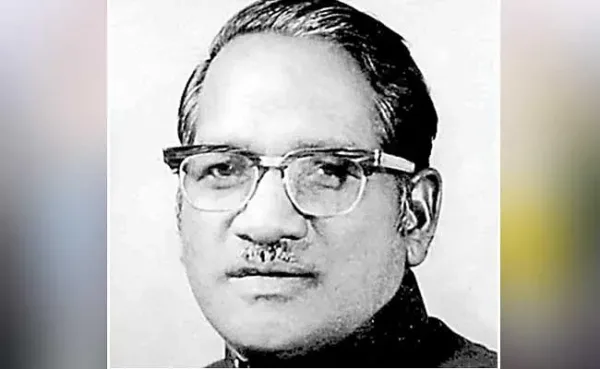
Baba Kartik Oraon/Wikipedia
DR ARUN KUMAR ORAON

History remembers certain individuals not merely for the positions they held or the achievements they accomplished, but for the ideals they represented and the lasting influence they left on society.
Baba Kartik Oraon was one such extraordinary personality.
He was not merely a political leader. He was an internationally accomplished engineer, a distinguished scholar, a visionary thinker, a passionate advocate of tribal identity and dignity, and, above all, a compassionate human being who devoted his life to advancing his people.
His remarkable journey from a remote tribal village in present-day Jharkhand to the highest levels of engineering excellence in the United Kingdom, and subsequently to the Parliament of India, remains one of the most inspiring chapters in the history of tribal India.
His life demonstrated that poverty, geographical isolation and limited opportunities need not determine an individual’s destiny. With determination, discipline, education and an unwavering sense of purpose, even the most formidable barriers can be overcome.
As we commemorate his 102nd birth anniversary on October 29, 2026, the occasion calls for more than ceremonial remembrance. It invites us to reflect on the values he cherished, the struggles he undertook, and the unfinished mission he entrusted, through his example, to succeeding generations.
Above all, it compels us to ask: How far have we progressed towards realising his dream of an educated, empowered, self-reliant and culturally confident tribal society?

From a Humble Tribal Village to International Recognition
Baba Kartik Oraon was born on October 29, 1924, in Karounda LitatoIi village in present-day Gumla district of Jharkhand, which was then part of undivided Bihar.
Born into a modest Oraon tribal family, he grew up in an environment where educational opportunities were limited and economic hardship was an everyday reality. His father, Jaira Oraon, and mother, Birsi Oraon, belonged to a rural society in which access to higher education remained a distant dream for most families.
Yet, young Kartik possessed an exceptional determination to learn and excel.
After completing his early education in Gumla, he pursued further studies in Patna and subsequently received an engineering education from Bihar College of Engineering.
At a time when even completing school was a major achievement for children from remote tribal villages, his academic journey was extraordinary. However, his ambitions extended far beyond the boundaries of his home state.
He travelled to the United Kingdom for advanced engineering studies and acquired several higher technical qualifications. He is widely remembered for his nine advanced academic and professional qualifications, a remarkable achievement that brought immense pride to the tribal community.
During his professional career in Britain, he was associated with sophisticated engineering projects, including work connected with nuclear power engineering.
His achievements demonstrated that talent is not the privilege of any particular community, region or social background. A young man from a remote tribal village had proved his intellectual capabilities on an international platform.
The Call of His Homeland
Baba Kartik Oraon could have continued his successful professional career abroad, enjoying the opportunities and comforts that accompanied his accomplishments. Instead, he chose to return to India.
He joined the Heavy Engineering Corporation in Ranchi, where his technical expertise and professional achievements earned him recognition.
However, his heart remained deeply connected to the villages, forests, fields and people among whom he had grown up.
He was acutely conscious of the poverty, illiteracy, exploitation and social disadvantages faced by tribal communities. Gradually, he came to believe that his education and professional accomplishments would acquire their fullest meaning only when placed in the service of society.
His decision to enter public life was therefore much more than a career change. It represented a conscious transition from personal achievement to collective responsibility.
Politics as an Instrument of Social Transformation
For Baba Kartik Oraon, politics was never merely a pursuit of power or personal recognition. It was a means of giving a voice to communities whose concerns had remained neglected for generations.
He was elected to the Lok Sabha from Lohardaga in 1967, 1971 and 1980. He also served in the Bihar Legislative Assembly and held ministerial responsibilities in the Government of India, including responsibilities relating to civil aviation and communications.
However, his true contribution cannot be measured solely by the offices he held. His larger concern was the social, educational, economic and political advancement of India’s tribal communities.
He understood that the challenges confronting tribal society were multidimensional. Poverty was only one aspect. Equally important were educational deprivation, protection of land rights, cultural identity, constitutional safeguards, social dignity and meaningful political representation.
He consistently raised issues concerning tribal welfare and constitutional protections.
Some of his positions concerning tribal identity and reservation remain subjects of historical and contemporary debate. Nevertheless, his broader commitment to the dignity, rights and advancement of tribal communities continues to command serious attention.
Through the Akhil Bharatiya Adivasi Vikas Parishad, he sought to create greater awareness, unity and organisational strength among tribal communities.
He recognised that political representation alone would not guarantee lasting progress. What society needed was educated, responsible, culturally rooted and socially committed leadership.
Modern Education Without Losing Cultural Identity
One of the most enduring aspects of Baba Kartik Oraon’s philosophy was his belief that modern education and cultural identity were not contradictory.
He encouraged scientific thinking, technological advancement and professional excellence. At the same time, he remained deeply conscious of the importance of tribal languages, traditions, community institutions and cultural values.
His life conveyed a powerful message: modernisation does not require the abandonment of one’s roots.
A tribal child can become an internationally recognised scientist, engineer, doctor or administrator while remaining proud of their language, heritage and identity.
This message has acquired even greater relevance today, when several indigenous languages and traditional cultural practices face increasing pressure.
Baba Kartik Oraon passed away on December 8, 1981, at the relatively young age of 57. His untimely death deprived the nation of an exceptional personality and the tribal community of one of its most visionary leaders.
Yet his ideas continue to inspire generations.
What Can We Learn from Baba Kartik Oraon Today?
The true purpose of commemorating Baba Kartik Oraon’s birth anniversary should extend beyond offering floral tributes, organising meetings or recalling his achievements. The greater responsibility lies in translating his ideals into meaningful action.
Despite considerable progress since Independence, tribal communities in Jharkhand and other parts of India continue to face serious challenges.
Educational opportunities have expanded, but access to quality education remains unequal. Government welfare programmes exist, but their benefits do not always reach the most disadvantaged. Modern development has created new opportunities, yet poverty, unemployment, migration and inadequate infrastructure continue to affect numerous tribal villages.
In this context, Baba’s life offers several valuable lessons.
Education Is the Foundation of Empowerment
Baba Kartik Oraon’s own life is perhaps the strongest illustration of the transformative power of education. He demonstrated that a child from a remote village could attain the highest levels of academic and professional excellence.
Today, our objective must go beyond basic literacy. We must strive to provide quality education that enables tribal children to compete confidently in an increasingly demanding world.
Our villages must produce doctors, engineers, scientists, teachers, administrators, entrepreneurs and responsible public leaders. At the same time, education must instil social responsibility and a commitment to one’s community.
Personal Success Must Contribute to Collective Progress
Baba’s life teaches us that personal success acquires a deeper meaning when it contributes to the welfare of others.
Today, many young men and women from tribal communities have achieved distinction in education, administration, medicine, engineering, business and other professions. Their achievements deserve appreciation.
But they also raise an important question: How much of our individual success are we willing to share with the communities from which we emerged?
If every successful professional were to support the education of even a few disadvantaged children, the cumulative impact could be enormous.
Preserve Our Identity While Embracing Modernity
Tribal society possesses a rich heritage of languages, traditions, community institutions, ecological knowledge and cultural practices. These are valuable components of India’s diversity, and their preservation must remain a collective responsibility.
At the same time, our children must be encouraged to acquire proficiency in science, mathematics, English, computers and emerging technologies.
They should also learn their mother tongues, including Kurukh, and understand the history and traditions of their communities.
Our cultural roots give us identity; education gives us the wings to explore the world.
Social Unity Is Essential for Lasting Change
Baba understood the importance of collective organisation.
Today, village institutions, educated youth, women’s groups, teachers, professionals and public representatives must work together to address common challenges.
Education, healthcare, livelihood development, environmental protection and freedom from substance abuse require sustained community participation.
No society can achieve lasting progress through isolated individual efforts alone.
Leadership Is a Responsibility, Not a Privilege
Baba’s public life reminds us that leadership is measured not by titles or positions, but by the positive difference one makes in the lives of others.
Our society needs leaders who unite rather than divide, who listen rather than merely speak, and who build institutions capable of serving future generations.
- Kartik Oraon Ratri Paathshala: Our Humble Endeavour to Carry His Vision Forward
For me, Baba Kartik Oraon is not merely a historical personality whose achievements I admire. My association with him is also deeply personal and emotional.
I have had the privilege of being connected to his family. However, I firmly believe that a family relationship with a great personality is not, by itself, an achievement.
The true responsibility lies in preserving his values and making a sincere effort to carry his unfinished mission forward.
It is this conviction that inspired me to undertake a modest initiative in the field of rural education.
The Experiences That Inspired the Initiative
During my years in the Indian Police Service, particularly while serving in remote and challenging areas of Jharkhand, I had the opportunity to observe rural life closely.
My assignments in Latehar, East Singhbhum and Santhal Pargana exposed me to the difficult circumstances in which many tribal families lived.
I witnessed poverty, inadequate infrastructure, limited educational facilities and the struggles of parents who wanted a better future for their children but lacked the means to provide it.
What affected me most was the plight of young children. Many possessed intelligence, curiosity and a genuine desire to learn. Yet their aspirations were often constrained by circumstances beyond their control.
Several children attended government schools but received little academic support after returning home. Their parents, despite their best intentions, were frequently unable to guide them because of limited educational backgrounds or demanding livelihoods.
In some villages, electricity was unreliable. In others, study materials were inadequate. Frequently, children lacked even a supportive environment in which to complete their homework or clarify their doubts.
These experiences gradually gave rise to a simple idea.
Could we mobilise educated young people from the villages themselves to provide free academic support to younger children? Could education become a community-led movement rather than remaining entirely dependent on external assistance?
This idea eventually evolved into the Kartik Oraon Ratri Paathshala initiative.
Village Youth as Agents of Change
The most distinctive feature of the Ratri Paathshala initiative is its reliance on local community participation.
We encourage college-going young men and women from villages to volunteer as teachers for younger children. These volunteers receive no salary. They contribute their time and effort out of a sense of social responsibility.
After completing their own studies and daily commitments, they gather children and help them with their lessons.
This arrangement serves two important purposes.
First, it provides much-needed academic support to children from disadvantaged families. Second, it nurtures leadership, compassion, discipline and a spirit of voluntary service among educated rural youth.
I have always believed that when an educated young person returns to serve the children of their own village, something far more significant than classroom teaching takes place.
A relationship of trust develops. A culture of cooperation emerges. And the community begins to recognise its own capacity to bring about change.
Reaching 141 Villages and Nearly 5,000 Children
Today, the Kartik Oraon Ratri Paathshala initiative has expanded to 141 villages across the South Chotanagpur region of Jharkhand. Approximately 5,000 children, predominantly from tribal and other rural communities, are associated with these learning centres.
For us, these are not merely statistics. Behind every child is a family with aspirations.
There is a mother who dreams of seeing her daughter become a teacher. There is a farmer who hopes that his son will become an engineer. There is a daily-wage worker who wishes that his children may enjoy opportunities that remained beyond his own reach.
Every evening, when children gather with their books in these village learning centres, they represent thousands of dreams waiting to find expression.
Our endeavour is to ensure that poverty does not become the boundary of a child’s aspirations.
Education Beyond Textbooks
Our objective is not limited to helping children complete their school assignments. We also seek to encourage discipline, self-confidence, personal hygiene, environmental awareness, respect for elders and pride in their cultural heritage.
We organise periodic training workshops for volunteer teachers, generally at intervals of two to three months. Retired civil servants, experienced teachers, medical professionals and other resource persons contribute their knowledge and experience.
These interactions help us review teaching methods, understand difficulties faced by volunteers and identify ways to improve the quality of learning.
I firmly believe that investing in a committed teacher is one of the most effective ways of transforming the lives of many children.
A good teacher does not merely impart knowledge. A good teacher builds confidence, awakens curiosity and inspires children to believe in their own potential.
Kartik Oraon Academy of Excellence: A Further Step Towards Institution Building
To provide a more organised and institutional foundation to the Ratri Paathshala initiative, we established the Kartik Oraon Academy of Excellence at Uchri, Mandar, in Ranchi district.
The Academy was formally inaugurated on April 6, 2026.
Beginning with a modest three-room facility, the institution represents an important step in our continuing educational journey.
Our vision is to develop it into a centre for teacher training, academic innovation, personality development and community participation.
We aspire to gradually introduce improved learning materials, digital education, exposure to science and technology, preliminary guidance for competitive examinations, and opportunities for children to learn about their languages and cultural heritage.
The Academy is still at an early stage. Our resources are limited, and the challenges are considerable.
Nevertheless, we believe that meaningful institutions often begin with modest efforts sustained by conviction, dedication and community support.
The true strength of an institution lies not in the grandeur of its buildings, but in the sincerity of its purpose and the lives it transforms.
Baba’s Legacy Must Live Beyond Statues and Memorials
As we commemorate Baba Kartik Oraon’s birth anniversary, we must ask ourselves an important question: Is the legacy of a great personality preserved merely by erecting statues, naming institutions or organising annual commemorative functions?
Such gestures certainly have their place. They help society remember and honour its distinguished personalities.
But remembrance alone is not enough.
The real legacy of Baba Kartik Oraon will survive when his ideals become visible in the everyday lives of ordinary people.
When a girl from a disadvantaged tribal family completes higher education, his vision moves forward.
When a young graduate voluntarily teaches children in their village, his vision moves forward.
When a tribal student excels in science or technology without losing pride in their cultural identity, his vision moves forward.
When an accomplished professional devotes time and resources to the welfare of the less fortunate, his vision moves forward.
Our Ratri Paathshala initiative is a humble expression of this philosophy.
We do not claim to have accomplished something extraordinary. Reaching 141 villages and approximately 5,000 children is encouraging, but we are equally conscious that thousands of villages and countless children still need better educational opportunities.
The journey is long, and our contribution remains modest.
Nevertheless, there is satisfaction in knowing that we have attempted to move beyond discussing problems and have taken practical steps towards addressing them.
An Appeal to the Younger Generation
On this 102nd birth anniversary of Baba Kartik Oraon, I would like to make a special appeal to educated tribal youth, students, teachers, civil servants, doctors, engineers, entrepreneurs and social workers.
Whatever our profession or position in life, we should make a conscious effort to contribute something to our communities.
Not everyone needs to establish a large organisation.
A young graduate who spends a few hours every week teaching disadvantaged children is making a meaningful contribution.
A teacher who voluntarily guides a struggling student is participating in social transformation.
A financially secure family that supports the education of a needy child is helping build a better future.
A professional who assists a village in establishing a small library or digital learning centre is creating opportunities that may benefit generations.
We must recognise that the progress of society cannot remain the responsibility of governments alone. Educated and socially conscious citizens have an equally important role to play.
Baba Kartik Oraon’s life reminds us that acquiring education is important, but using that education for the welfare of society is even more meaningful.
A Personal Commitment to an Unfinished Dream
Whenever I reflect upon Baba Kartik Oraon’s life, one question continues to occupy my thoughts: What responsibility do we bear towards the legacy of a man who could have devoted his extraordinary talent and education to personal advancement, but instead chose to serve his people?
For me, the answer is clear.
We must preserve his ideals. We must continue the work he considered important. And, above all, we must make every possible effort to bring education within the reach of children whose aspirations are restricted by poverty and a lack of opportunity.
When I visit a Ratri Paathshala and see children sitting together with their books, I experience a deep sense of satisfaction.
When I see a young volunteer teacher patiently explaining a lesson to a group of children, I am reminded that social transformation often begins with the simplest acts of dedication.
In those children, I see the possibility of future doctors, engineers, scientists, teachers, administrators and community leaders.
Who knows? Perhaps one of these children will someday follow in Baba Kartik Oraon’s footsteps and achieve international distinction. Perhaps a child studying today in a small village learning centre will one day enter a prestigious university. Perhaps a young girl receiving academic support through our initiative will grow up to transform the lives of thousands of people.
If even a few such dreams become reality, our efforts will have been worthwhile.
Our dream is not merely to educate children, but to inspire them to become responsible individuals who will, in turn, contribute to the advancement of society.
The Most Meaningful Tribute to Baba Kartik Oraon
The birth anniversary of Baba Kartik Oraon should be an occasion not only for remembrance, but also for introspection and renewed commitment.
His life proved that extraordinary achievements are possible even when one’s beginnings are humble. He demonstrated that education can overcome barriers imposed by poverty and social disadvantage.
More importantly, he showed that the highest purpose of personal accomplishment lies in service to others.
Today, his life and contributions deserve deeper academic study and wider public recognition. His achievements in engineering, his parliamentary interventions, his social philosophy and his efforts towards tribal advancement should be documented and introduced to younger generations.
But beyond research, publications and commemorative programmes, we must translate his ideals into concrete social action.
The Kartik Oraon Ratri Paathshala initiative represents our modest attempt to do so.
We hope that more educated young people, professionals, social organisations and concerned citizens will come forward to strengthen this movement.
With collective participation, even small village learning centres can become powerful instruments of educational and social transformation.
As I pay my respectful tribute to Baba Kartik Oraon on his 102nd birth anniversary, I wish to reaffirm a simple but deeply held conviction.
Baba Kartik Oraon reached extraordinary heights through education, yet he never forgot the people and the soil from which he came.
He taught us that the greatest achievement in life is not merely to rise above our circumstances, but to help others rise with us.
In the dreams of the thousands of children studying in our Ratri Paathshalas, we see the continuing relevance of his vision.
Our efforts may be small, but our commitment is sincere.
We dream of a future in which no talented child in Jharkhand is denied the opportunity to learn and succeed merely because of poverty, social disadvantage or geographical isolation.
We dream of villages where education becomes a shared responsibility and where young people take pride in serving their communities.
We dream of a tribal society that is educated, self-reliant, progressive and deeply rooted in its cultural identity.
If our humble efforts can help bring even a part of that dream to life, we shall consider it our most meaningful tribute to Baba Kartik Oraon.
Baba Kartik Oraon Will Continue to Inspire Generations.
His Vision Lives On. His Mission Must Continue.
(Dr Arun Kumar Oraon, IPS (Retd.), is the founder of Kartik Oraon Ratri Paathshala, Jharkhand, India. This write-up is dedicated with profound respect and gratitude to the memory of Baba Kartik Oraon on his 102nd birth anniversary, October 29, 2026.)