





SUBHASH MISHRA
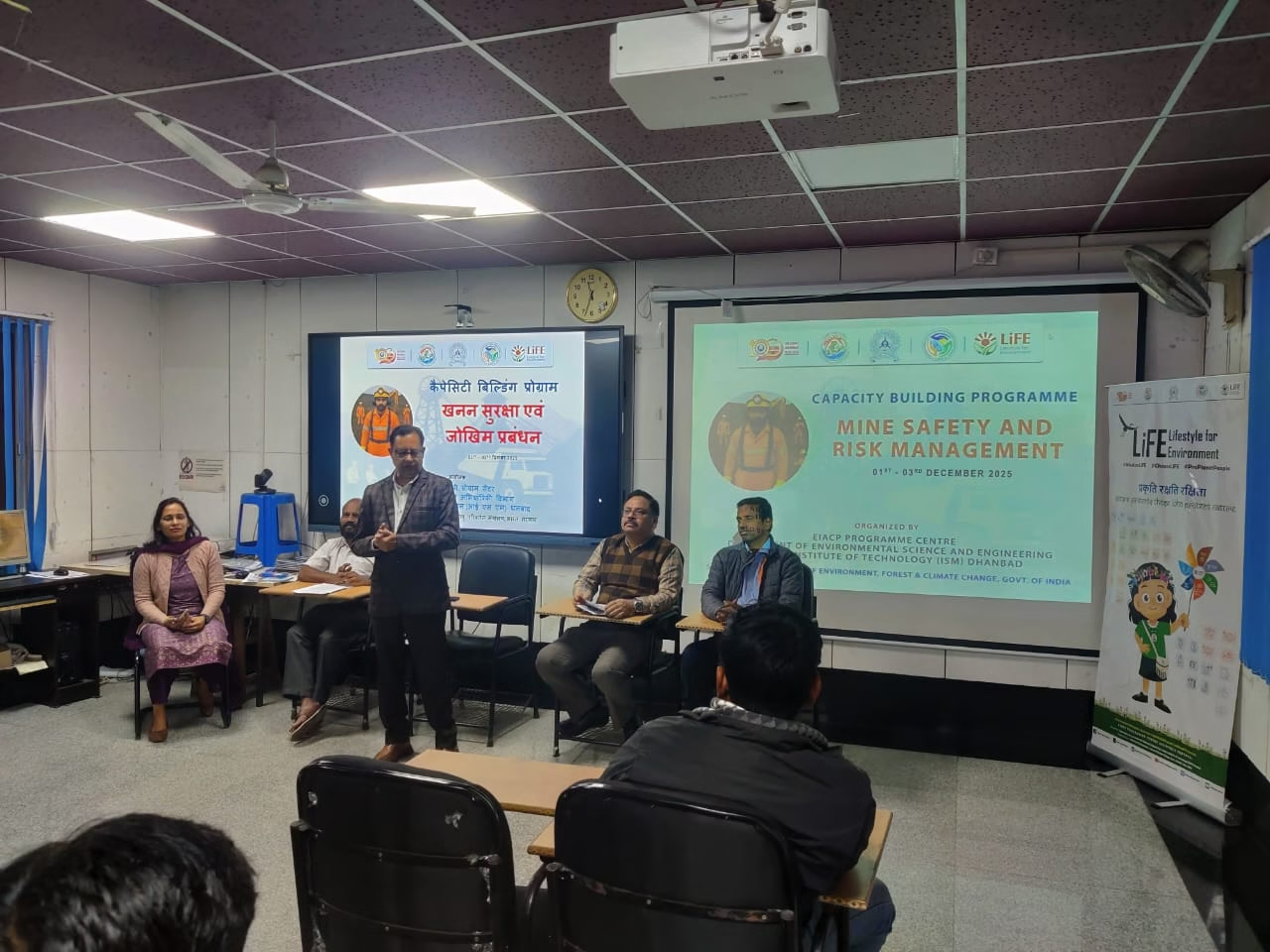
Dhanbad, Dec 1: A three-day national programme on Mine Safety and Risk Management commenced on Monday at the Department of Environmental Science & Engineering (ESE) of IIT ISM Dhanbad.
The event is being organised under the Environmental Information Awareness Capacity Building Programme (EIACP) and sponsored by the Ministry of Environment, Forest & Climate Change (MoEF&CC), Government of India.
Prof. Alok Sinha, Head of the Department of ESE and Coordinator of the EIACP Centre, inaugurated the programme. He highlighted EIACP’s vital role in bridging academic research with ground-level mining operations.

Also Read- Lok Sabha adjourned amid day-long sloganeering; Manipur GST Bill introduced
Prof. Sinha stressed the importance of cultivating a robust and long-lasting safety culture among frontline mining personnel, adding that increased awareness and capacity-building at the grassroots level are essential for reducing accidents and promoting sustainable mining practices.
Focus on Practical and Continuous Training
Associate Professor Prof. Suresh Pandian, Co-Coordinator of the EIACP Centre, emphasised that continuous, hands-on training is crucial for improving workplace preparedness and mitigating operational risks.
He noted that practical learning modules, live demonstrations, and exposure to real-world scenarios are indispensable for miners working in hazardous environments.
Prof. M.K. Jain further underscored the significance of understanding site-specific hazards and strictly adhering to DGMS safety protocols. He reiterated that responsible mining can be achieved only through a combination of awareness, discipline, and scientific decision-making.
Also Read- 18th Bihar Assembly Session begins with oaths and key preparations
Importance of Field-Oriented Learning
Prof. V.G.K. Villuri from the Department of Mining Engineering highlighted the transformative impact of field-based training.
He said that real-world exposure is critical in shaping competent and safety-conscious mining professionals, enabling workers to internalise safe practices and respond effectively during emergencies.
