Elephant herd blocks Howrah–Mumbai main line, four Express trains stranded
PINAKI MAJUMDAR Jamshedpur, October 19: Railway traffic on the Howrah–Mumbai main line was disrupted after a herd of around two dozen wild…
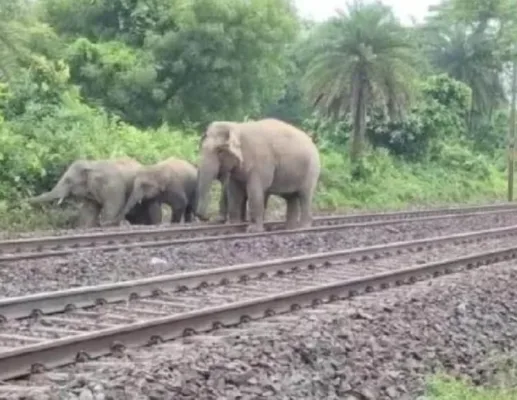
File pic
PINAKI MAJUMDAR
Jamshedpur, October 19: Railway traffic on the Howrah–Mumbai main line was disrupted after a herd of around two dozen wild elephants occupied the tracks between A and D cabins in the Bandamunda railway section of the Chakradharpur division, leaving four express trains stranded for hours.

The elephants had remained on the tracks since Sunday night and had still not moved into the forest by Monday morning, causing considerable inconvenience to passengers travelling on the busy route.
Four Trains Held Up at Different Stations
According to railway sources, the Dhanbad–Alappuzha Express (13352) has been stranded at Rourkela since 1.45 am, while the Dhanbad Special (18403) has been halted at the same station since 6.15 am.
The Surat–Malda Express (13425) has been held up at Bangurkela since 6 am, while the Shalimar Superfast Express (20971) has remained stationary at Kalunga since 7 am.
Forest Department Works to Move Elephants Safely
Following the incident, the Rourkela forest department launched efforts to guide the herd safely away from the railway tracks and back into the forest.

The railway operating department is also monitoring the situation, with the resumption of train movements dependent on the safe clearance of the tracks.
The immediate priority is to move the elephants away from the railway line without endangering the animals or passengers.
Recurring Incidents Raise Safety Concerns
Local residents said elephants venturing onto railway tracks had become increasingly frequent over the past five months, raising concerns about the safety of both passengers and wildlife.

The recurring incidents highlight the challenges of maintaining safe railway operations along routes that pass through elephant habitats. They also underscore the need for coordination between railway authorities and forest officials to minimise risks to wildlife and prevent prolonged disruptions to train services.