






THE JHARKHAND STORY NETWORK
Ranchi, March 19: A state-level event titled “Hack to the Future” was organised by Quest Alliance in collaboration with the Jharkhand Education Project Council (JEPC) on Wednesday at Hotel Capitol Hill. Around 150 participants—including 35 students, 12 teachers, NGO representatives, government officials, and other stakeholders from Ramgarh, Dumka, and Deoghar—took part in discussions on innovation in education, future readiness, and systemic change.
Students showcase innovation
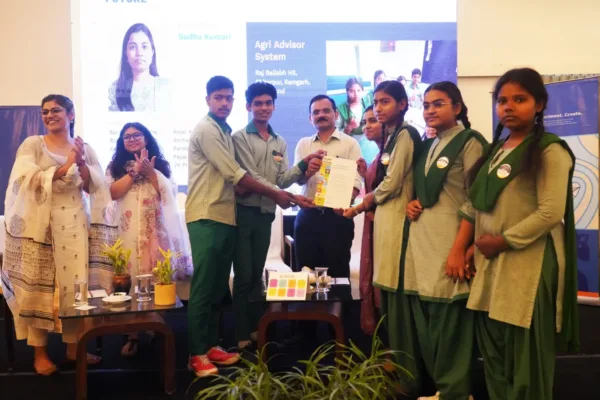
The event provided a platform for students to present prototype solutions to real-world community problems using design thinking and technology. Covering themes such as education, environment, health, and social inclusion, the students demonstrated creativity, logical thinking, and problem-solving skills.

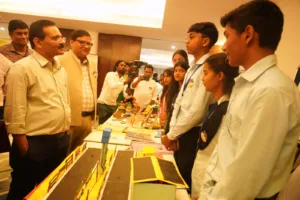
A key highlight was the live exhibition of student prototypes, where participants presented their ideas to stakeholders. Girls from the ‘Future Skills Club’ also displayed resin art and handicrafts, reflecting creativity, entrepreneurship, and growing confidence.
Focus on future and technology
Neha Partii, Director of the Schools Program at Quest Alliance, spoke about India’s Vision 2047 and the role of technology. She noted that while AI and automation may take over routine tasks, human skills like critical thinking, creativity, and decision-making will remain essential. She also raised concerns about climate change and rising pollution.
ALSO READ: Jharkhand Weather: IMD issues Orange alert for March 20
Participants shared perspectives on regional challenges, including floods in Assam, heat-related issues in Odisha, and water scarcity in Rajasthan. Students also expressed mixed views on the future, including the growing role of robots and dependence on technology.
Discussions highlighted the need to balance individual responsibility with policy and institutional support. Emphasis was placed on developing critical thinking, creative problem-solving, systems thinking, and responsible use of technology.
The role of AI in education was also discussed, with participants noting increased digital adoption among teachers. However, it was stressed that AI should support—not replace—human thinking, and concerns were raised about its environmental impact.
Importance of social-emotional learning
The program underscored the role of Social-Emotional Learning (SEL) in improving participation and learning outcomes. Experts stressed that SEL should be integrated into daily teaching practices, involving teachers, parents, and communities.
Chief Guest Dr. Abhinav Kumar, State Project Officer (SPO), Jharkhand, highlighted challenges in education. He noted that only 11.92% of students currently opt for Science in Class 12, but outcomes in middle grades have improved to 29% due to integrated teaching approaches. He emphasised the importance of both technology adoption and socio-emotional skills.
Grassroots impact and challenges
The event highlighted Quest Alliance’s work in Jharkhand, where teachers are adopting new methods despite limited resources. Youth clubs are supporting girls with career guidance, continued education, and protection from child marriage.
Speakers also stressed the need to include community knowledge, local practices, and life experiences in formal education. Challenges such as exam-centric systems, time constraints, and administrative pressures were discussed, along with the need for skills-based education and holistic assessment.
The impact of the Kasturba Gandhi Balika Vidyalaya (KGBV) program was also noted, benefiting over 1.25 lakh girls in Jharkhand through leadership and life skills initiatives like “Sashaktikaran Nayi Disha.”
The program was led by Sushant Pathak, State Lead, Jharkhand, and anchored by Anju Priya and Shitanshu, with contributions from a large team.
The event concluded with a strong message: an education system rooted in human values, empathy, collaboration, and innovation is essential to build the future, where youth are not just prepared for change but empowered to lead it.
