






SUBHASH MISHRA
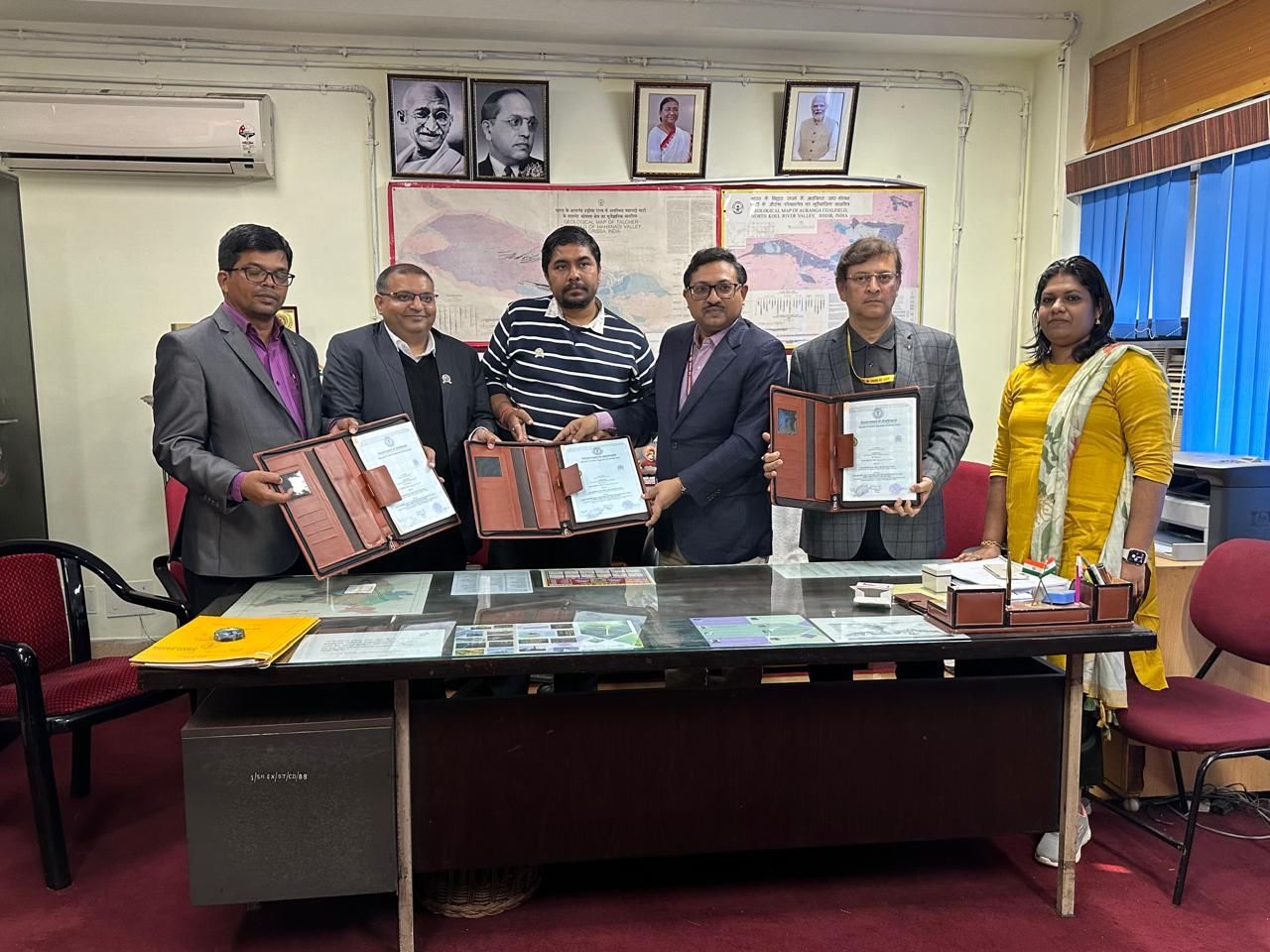
Dhanbad, Jan 24: IIT ISM Dhanbad has entered into a Memorandum of Understanding (MoU) with the Geological Survey of India (GSI) to explore natural hydrogen resources in the Andaman and Nicobar Islands.
The agreement was formalized at the GSI office in Kolkata. The primary goal of the research project is to establish a comprehensive framework for evaluating the feasibility of harnessing natural hydrogen as a renewable energy resource.

Research Collaboration Led by IIT ISM’s Applied Geophysics Department
The joint initiative will be spearheaded by the Subsurface Energy and Storage Systems Lab, along with the Exploration Seismic and Simulation Lab, both of which fall under the Department of Applied Geophysics at IIT ISM Dhanbad.
The research will focus on locating geological formations that could potentially host natural hydrogen reservoirs in the region.
Also Read- Achyut Ghatak assumes charge as Director (Technical) of Coal India
Natural Hydrogen: A Clean Energy Frontier
Natural hydrogen is increasingly gaining recognition as a promising clean energy source. Experts believe it has the potential to play a significant role in India’s renewable energy landscape.
The exploration studies will target understanding the geological formations that could provide the necessary infrastructure for sustainable hydrogen production.
Innovation in Subsurface Energy Storage
This collaboration between IIT ISM Dhanbad and GSI aims to bring together academic expertise, advanced technology, and GSI’s extensive geological insights.
The initiative seeks to innovate solutions for subsurface energy storage, aligning with broader climate goals and enhancing energy sustainability.
An official from IIT ISM Dhanbad highlighted the opportunity, stating that natural hydrogen could contribute significantly to meeting India’s energy needs and climate targets.
“This collaboration with the Geological Survey of India is a remarkable opportunity to explore new frontiers in energy. Natural hydrogen represents a sustainable energy source, and our research has the potential to support broader energy needs and contribute to climate goals’, said the official.
