







AMISHA KUMARI, SANOBAR MASOOD & K. JENI
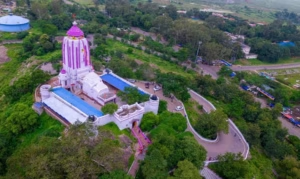
The Jagannath Temple in Ranchi is not just a place of worship—it is a symbol of the city’s history, culture, and beauty. Located about 10 kilometres from the main city, the temple stands on a small hill, giving visitors a wonderful view of Ranchi from the top.
A Temple with a Royal Past
Built in 1691 by Thakur Ani Nath Shahdeo of the Nagvanshi dynasty, the Jagannath Temple in Ranchi is a historic and spiritual landmark. Modelled after the Puri temple, it hosts a grand Rath Yatra every June–July, drawing thousands of devotees.
Though the original structure was damaged in an earthquake (1967) and collapsed in 1990, it was restored in 1992 by the Bihar government. The present temple, built in traditional Kalinga style, features beautifully carved stonework and idols made of neem wood.

Perched on a hill, it offers stunning views of Ranchi. Visitors can climb the steps or drive up. Facilities like drinking water and resting spots are available.
Getting There:
By Road: 10 km from the Ranchi city centre
By Rail: 10–12 km from Ranchi Junction
By Air: 15 km from Birsa Munda Airport
The temple is a symbol of communal harmony, with active participation from tribal communities and Muslim families who serve in temple duties, making it a rare example of inclusive faith. Major festivals like Rath Yatra, Kartik Purnima, and Janmashtami transform the site into a vibrant cultural fairground.
Overlooking Ranchi, the temple is a spiritual retreat for pilgrims, schoolchildren, and newlyweds. It also supports community welfare through education, charity (anna daan), and seasonal camps—continuing its legacy as a sacred and social cornerstone of the region.
Present Condition of Jagannath Temple
After its reconstruction in 1992, the Jagannath Temple has seen major upgrades. In August 2024, Union Minister Sanjay Seth launched a ₹2.19 crore Jagannath Corridor project to enhance the temple’s appeal. Plans include landscaped gardens, solar lighting, a yoga centre, restored Pushkarini Pond, heritage-style walls, and children’s play zones.
Festivals & Crowd Management
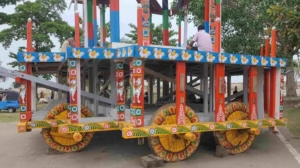
The temple continues to draw huge crowds. The Snan Yatra 2025 saw thousands participate, while Rath Yatra 2024 attracted over 1 lakh devotees and raised ₹1.97 crore in donations. Preparations for Rath Yatra 2025 include reinforced wooden chariots and advanced crowd management systems with CCTV, drones, and medical support.
Security Upgrades
Following a 2023 theft, 47 CCTV cameras, biometric entry for priests, night patrols, and strict monitoring were introduced. A unique floor-heating phenomenon in the sanctum remains under expert observation, with regular inspections during major rituals.
The temple stands today as a secure, spiritually vibrant, and tourist-friendly site.
Rath Yatra – The Divine Chariot Festival
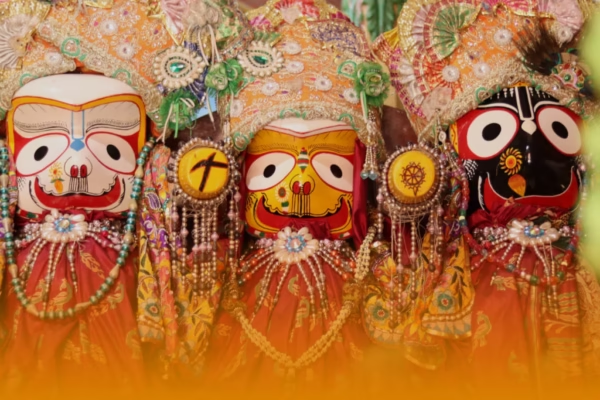
Rath Yatra, held on Shukla Paksha Dwitiya of Aashadha, is a major spiritual event in Jharkhand celebrating Lord Jagannath, Devi Subhadra, and Lord Balabhadra. Rooted in ancient traditions, the festival follows unchanged rituals, drawing thousands of devotees every year.
According to the Katha Upanishad, the chariot symbolizes the human body, with the soul as the rider and God as the charioteer guiding it through life’s journey.
Each deity rides a distinct, colourfully decorated chariot:
Jagannath: Red & yellow (Chakradhwaja/Nandighosa)
Balabhadra: Red & green
Subhadra: Red & black
On this auspicious day, devotees joyfully pull the chariots to Mausibadi, creating a vibrant and spiritually charged atmosphere.
As in previous years, the grand Rath Mela at Jagannath Temple, Dhurwa, Ranchi will begin on June 27 and continue for 10 days. The event draws lakhs of devotees, especially on the first day when people gather in large numbers to pull the chariot of Lord Jagannath. Devotees queue up from early morning for darshan and rituals.
During the fair, the temple grounds transform into a bustling marketplace with stalls selling household utensils, decorative weapons, fishing nets, home décor, handicrafts, toys, and traditional sweets. Traders from all over India participate, making it a culturally rich and diverse event.
Security has been assigned to VSF (Village Security Force), with bids of ₹875 per lathi-wielding guard and ₹1775 per armed guard. Two more agencies have submitted tenders, and the temple trust will soon finalize the terms.
Artisan Mahavir revealed that this year’s chariot will be grander, featuring avatars of Lord Vishnu, crafted by four Odia artists using traditional painting techniques. The chariot will have eight large bells, steel-reinforced wheels, and increased height for enhanced visual appeal.
A perfect blend of devotion, heritage and scenic beauty, the Jagannath Temple is a must-visit for all.
