
Jharkhand HC upholds life sentence of two convicted in Dhanbad judge Uttam Anand murder case
SUMAN K SHRIVASTAVA Ranchi, July 15: The Jharkhand High Court has upheld the conviction and life sentence awarded to Lakhan Kumar Verma…
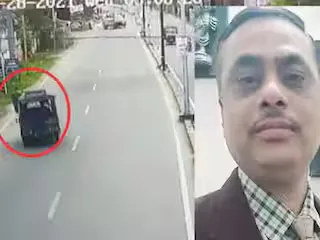
Uttam Anand (file pic)
SUMAN K SHRIVASTAVA
Ranchi, July 15: The Jharkhand High Court has upheld the conviction and life sentence awarded to Lakhan Kumar Verma and Rahul Kumar Verma in the sensational 2021 murder of Additional District and Sessions Judge Uttam Anand, ruling that the evidence conclusively established the killing was intentional and not a road accident.
A Division Bench comprising Justice Rongon Mukhopadhyay and Justice Pradeep Kumar Srivastava dismissed the criminal appeal filed by the two convicts against the judgment of the Special CBI Court, Dhanbad, which had sentenced them to rigorous imprisonment for life without remission or commutation till their last breath for offences under Sections 302/34 and 201/34 of the IPC.
Judge Was Knocked Down During Morning Walk
The case relates to the death of District and Additional Sessions Judge-VIII Uttam Anand, who was struck by an autorickshaw while on his morning walk near Randhir Verma Chowk in Dhanbad on July 28, 2021.
Initially registered by Dhanbad Police, the investigation was later transferred to the Central Bureau of Investigation (CBI) owing to the gravity of the offence and widespread public concern. The CBI subsequently chargesheeted Lakhan Kumar Verma and Rahul Kumar Verma for murder and destruction of evidence.
Court Relies on Scientific and Forensic Evidence
The High Court noted that the prosecution examined 58 witnesses, including doctors, forensic experts, investigators and technical experts, besides relying on CCTV footage, forensic reconstruction and scientific analysis.
Medical evidence established that Uttam Anand suffered fatal head injuries caused by a hard and blunt impact, while forensic experts concluded that the autorickshaw driver remained in complete control of the vehicle before steering it towards the judge.
According to the forensic reconstruction, the auto changed its course by about 20 degrees specifically towards the victim before returning to its original path after the collision, indicating that the act was deliberate rather than accidental.
‘Hit Was Intentional, Not an Accident’
The High Court relied heavily on expert forensic opinions which concluded that the collision was intentional.

The Court noted that forensic reconstruction, CCTV footage and crime scene analysis consistently showed the driver neither attempted to brake nor swerve away from the victim.
Medical experts also opined that the injuries sustained by the judge were sufficient in the ordinary course of nature to cause death.
CBI Investigation Supported Conviction
The Bench observed that the investigation unearthed a chain of scientific, medical and circumstantial evidence linking the two accused to the crime.
The prosecution relied on CCTV footage tracing the movement of the autorickshaw, forensic examination of the vehicle, DNA and biological evidence, mobile phone records, witness testimonies and reconstruction of the crime scene.
The Court found the evidence sufficient to sustain the conviction recorded by the trial court.
Appeal Dismissed
Finding no infirmity in the Special CBI Court’s judgment, the Division Bench dismissed the appeal and upheld both the conviction and the sentence imposed on the appellants.
The ruling brings judicial finality, at the High Court level, to one of Jharkhand’s most closely watched criminal cases involving the murder of a serving judicial officer.