






THE JHARKHAND STORY NETWORK
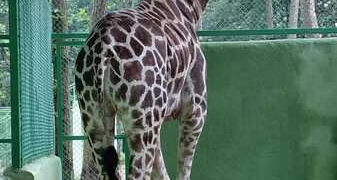
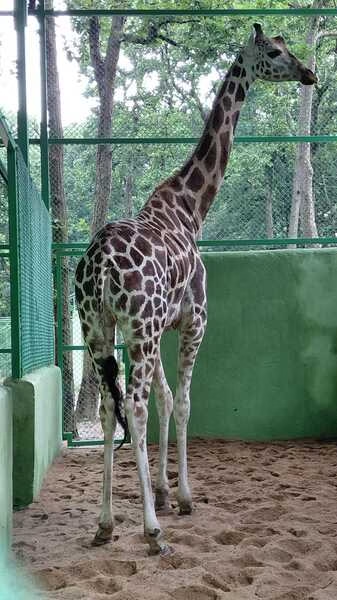
Ranchi, August 8: A six-year-old female northern giraffe named Misty and a pair of silver pheasants have been brought to Bhagwan Birsa Biological Park in Ranchi as part of an inter-zoo animal exchange programme with Alipore Zoological Garden, Kolkata. The exchange took place on August 7, 2025.
Zoo authorities said Misty‘s arrival marks a significant milestone, as the programme had been pending for several months. Northern giraffes are primarily found in protected areas across East and Central Africa—such as Kenya, South Sudan, Chad, Niger, and the Central African Republic.

Also Read- Amit Shah lays foundation stone for Mata Sita Temple in Bihar’s Sitamarhi
In captivity, their average lifespan ranges from 19 to 20 years, while in the wild it is slightly lower at around 17 to 18 years. Giraffes are herbivores, and in zoos they are typically fed leaves from various trees along with grasses.
Special Arrangements for Giraffe
Due to Misty‘s towering height of over 12 feet, the zoo constructed a custom 14-foot-high enclosure to accommodate her. Despite being transported in a low-bed trailer, her total height from ground level during the journey was between 16 to 17 feet. This required careful route planning and resulted in a nearly 24-hour-long journey from Kolkata to Ranchi.
Principal Chief Conservator of Forests (Wildlife) and Chief Wildlife Warden of Jharkhand, Paritosh Upadhyay, was present during the giraffe’s arrival and oversaw her safe entry into the night shelter. Zoo Director Jabbar Singh highlighted the coordinated efforts of veterinary staff, forest officers, biologists, guards, and zookeepers from both Ranchi and Kolkata in ensuring a smooth exchange.
Also Read: An Era Ends: National reflections on Shibu Soren’s legacy
More Additions Planned
According to Singh, the next phase of the programme will see the arrival of a male giraffe in Ranchi. In return for the female giraffe and the silver pheasants, Ranchi zoo has initially sent an ostrich to Alipore Zoo. Further exchanges involving a hippopotamus, Himalayan black bear, and gharial are scheduled in upcoming phases.
Officials said the initiative is not only an example of institutional cooperation but also a significant step in enriching wildlife diversity and enhancing visitor experience at both zoos.
