JMM-Congress opposition to MMDR amendment is ‘political drama’, says Babulal Marandi
THE JHARKHAND STORY NETWORK Ranchi, August 17: Jharkhand Leader of Opposition Babulal Marandi on Monday accused the JMM-Congress alliance of using opposition…
THE JHARKHAND STORY NETWORK
Ranchi, August 17: Jharkhand Leader of Opposition Babulal Marandi on Monday accused the JMM-Congress alliance of using opposition to the Mines and Minerals (Development and Regulation) Amendment Bill as a political tool to divert attention from the ongoing student agitation over recruitment examinations.
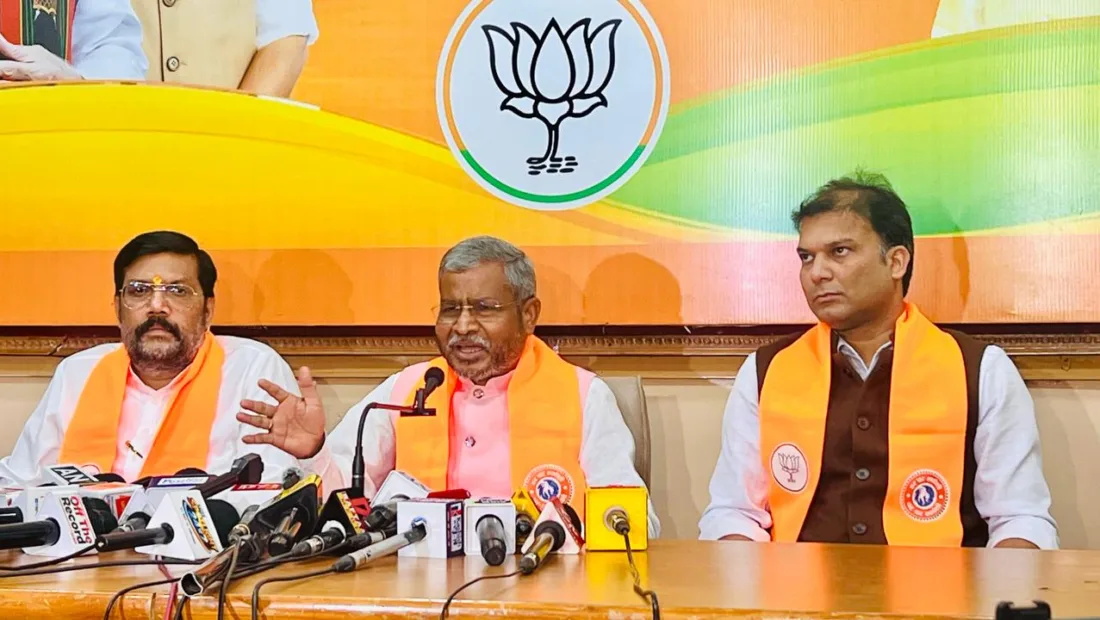
Addressing a press conference at the BJP state office, Marandi strongly defended the MMDR Amendment Bill passed by Parliament and alleged that the Hemant Soren government was spreading confusion and misinformation about its provisions.
He urged the Jharkhand government, JMM and Congress to stop “politics based on confusion” and focus instead on addressing the concerns of students protesting over alleged irregularities in recruitment examinations.
Marandi: Centre Not Taking Away Jharkhand’s Mineral Revenue
Marandi rejected the state government’s allegation that the MMDR amendment would deprive states of mining revenue.
He said the states’ share from royalties, District Mineral Foundation (DMF), National Mineral Exploration Trust (NMET), auction premiums and GST would remain unchanged. According to him, states would continue to receive around 90% of the payments generated from the mining sector.

Citing mineral revenue data, Marandi said the revenue received by states increased by nearly 354% between 2014-15 and 2024-25, rising from ₹25,206 crore to ₹1,14,549 crore.
He added that the states’ share of total mineral revenue increased from around 60% in 2014-15 to more than 88% in 2024-25.
“Claiming that the Centre is taking away the states’ mineral revenue is an attempt to mislead the people,” he said.

‘Jharkhand Failing to Utilise Its Mineral Wealth’
Marandi said the bigger issue for Jharkhand was the state’s own mineral policy and its failure to operationalise auctioned mines.
He criticised the state government’s decision to impose a flat ₹600 per tonne cess on iron ore, comparing it with the ₹22.50 per tonne cess in neighbouring Chhattisgarh.
He claimed the higher cess had affected iron ore production and marketability, particularly for low-grade ore.
Marandi also pointed to the increase in coal cess from ₹100 to ₹450 per tonne within 16 months. During the same period, he said, Bharat Coking Coal Limited (BCCL) production fell from 40.50 million tonnes to 35.52 million tonnes, a decline of around 12.3%.
Only Four Mines Auctioned in Six Years
The Leader of Opposition said Jharkhand needed to focus on putting mines into production rather than blaming the Centre for inadequate mineral revenue.
According to Marandi, Jharkhand auctioned only four mines in six years, but none of them became operational.
He contrasted this with Odisha, which he said operationalised 35 mines and earned around ₹87,000 crore in auction premiums. Jharkhand, he claimed, earned no revenue from auction premiums during the period.
He said the difference was also reflected in iron ore production. Between 2018-19 and 2024-25, Odisha’s production increased from around 120 million tonnes to 180 million tonnes, while Jharkhand’s production remained largely stagnant at around 23 million tonnes.
Despite Jharkhand accounting for nearly 40% of India’s mineral reserves, Marandi alleged that the state was failing to make adequate use of its mineral wealth.
DMF Funds Must Be Used for Mining-Affected Areas
Marandi also rejected the state government’s criticism of the Centre over the District Mineral Foundation (DMF).
He claimed that around ₹19,000 crore had accumulated under the DMF in Jharkhand, including approximately ₹3,700 crore in West Singhbhum.
He questioned why the funds had not been effectively used for the development of mining-affected areas and the welfare of local communities.
He also alleged that delays in lease renewals in West Singhbhum had adversely affected mining operations and employment.
‘MMDR Issue Being Used to Divert Attention from Students’
Marandi alleged that the JMM-Congress opposition to the MMDR amendment was intended to divert attention from the student movement.
He said students had been protesting over alleged irregularities in JPSC, JSSC and CGL recruitment examinations, with some protesters reportedly continuing their hunger strike for around 20 days.
According to Marandi, the government had remained inactive for several days but invited students for talks after they announced plans to gherao the Chief Minister’s residence.
He alleged that the government’s response showed that it was acting under pressure rather than addressing the students’ concerns proactively.
Marandi also questioned the absence of JMM and Congress MPs during the parliamentary debate on the MMDR amendment, arguing that their conduct raised questions about the seriousness of their opposition.
Questions Raised Over JPSC Chairman Appointment
Amid the student protests, Marandi also raised questions over allegations concerning the appointment of JPSC Chairman L. Khiangte.
He referred to media reports alleging that ₹70 crore was paid to secure the post and demanded that the state government clarify its position on the allegation.
Marandi called for an impartial inquiry into the matter.
He said the government should address the students’ demands instead of diverting public attention to other issues.
State media in-charge Yogendra Pratap Singh and state spokesperson Mrityunjay Sharma were also present at the press conference.