






KUMUD JENAMANI
Jamshedpur, January 12: The ‘killer’ tusker, blamed for the deaths of around 20 people in West Singhbhum, has gone traceless for the past 72 hours, even as the Jharkhand forest department has now launched a large-scale search operation.
The elephant was last seen on January 9 at Benisagar under the Majhgaon police station area, bordering Odisha, where it trampled three people to death. Since then, no fresh sightings or casualties have been reported.
Search Begins After Elephant Disappears
Significantly, the forest department swung into action only after the tusker disappeared from the area. Forest officials, supported by wildlife experts from Uttar Pradesh, Odisha and Vantara Zoo, have set up a camp at Benisagar to track the animal.

Drones have been deployed to locate the tusker, and search teams have also visited Simlipal National Park in Odisha’s adjoining Keonjhar district, suspecting that the elephant may have crossed over after being last spotted near the Jharkhand–Odisha border.
Tusker Likely Came Out of Musth
A senior forest official said the elephant was likely in musth since the New Year and may have calmed down after the turbulent phase ended.
“Once the musth period is over, such tuskers often rejoin their herd,” the official said, suggesting that the animal may no longer be aggressive.
Delay in Action Raises Questions
What has disturbed local residents is the delay in the forest department’s response. Had officials acted promptly after the first casualty on January 2, many lives could have been saved, locals alleged.
In total, 20 people, including children, were killed by the tusker. Among the victims was a professional elephant driver from a Bengal-based team.
Elephant Driver Killed While on Duty
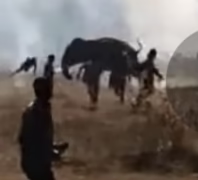
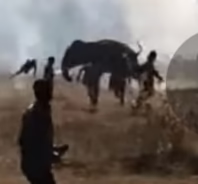
When the tusker surfaced initially, the trained driver and his team were deployed to control it. However, during an encounter at Benisagar on January 9 afternoon, the elephant flung the driver nearly 25 feet with its trunk.
The driver suffered multiple fractures and was rushed to a hospital in Odisha, where he died the same night. Earlier that morning, the same tusker had killed two people at Benisagar, including a 10-year-old boy.
Though no fresh trampling deaths have been reported in the past 72 hours, fear continues to grip the affected villages. Forest officials believe the elephant’s aggressive behaviour subsided after its mating drive was satisfied.
Most senior forest officials remained inaccessible. Regional Chief Conservator of Forests (RCCF), Kolhan, Smita Pankaj, and Kolhan DFO Aditya Narayan did not respond to calls. Jamshedpur DFO Saba Alam Ansari spoke briefly, but his responses reflected helplessness.
Forest Encroachment Blamed
Locals and sources pointed to indiscriminate distribution of Ban Patta (forest land rights) as a major reason behind the human–elephant conflict.
Political leaders, particularly Manoharpur MLA Joba Majhi, were accused of encouraging forest cultivation for vote-bank considerations. Residents, in turn, clear forest land for farming to strengthen their claims for pattas.
Neither political leaders nor forest officials have openly opposed this practice, worsening the crisis.
