







KUMUD JENAMANI
Jamshedpur, January 8: Fear of landmines and Naxal presence has prevented forest officials from entering deep forest areas in the Kolhan region of West Singhbhum, resulting in the forest department’s failure to track a lone musth tusker responsible for a series of elephant-trampling deaths.

Since the night of January 2, at least 17 villagers have been killed by the tusker in forest areas falling under the Goelkera and Nuamundi police station limits.
Lone Musth Tusker Behind Killings
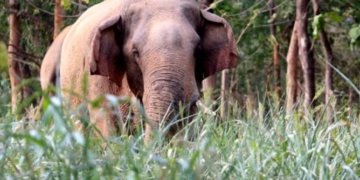
Forest officials confirmed that the deaths were caused by a single male elephant in musth condition. A musth elephant is known to be extremely aggressive and often separates itself from the herd.

Despite the rising number of fatalities, forest officials did not enter the affected forest stretches or visit the sites of deaths, raising serious concerns over preventive action.
No Tracking, No Awareness Drive
Ideally, after an elephant-related death, the forest department conducts ground verification and gathers information from villagers or survivors to assess the animal’s condition and movement.
Officials could have easily identified that the tusker was in musth and tracked its movement to warn villagers and prevent further casualties. However, no such exercise was undertaken.
In all the incidents, villagers themselves recovered the bodies and brought them home, after which forest officials completed formalities and released initial compensation.
ALSO READ: MBBS 2025 student caught with fake SC certificate at SNMMCH Dhanbad
Officials Cite Security Threats
Sources said forest officials avoided entering the deep forest areas due to the presence of landmines planted by Naxals across large parts of the Kolhan division.
Repeated attempts to contact Kolhan DFO Aditya Narayan for comments failed.
However, Jamshedpur DFO Saba Alam Ansari, who is also holding additional charge as Conservator of Forest, admitted that a musth tusker was responsible for the deaths.
“We are concerned as a lone tusker in musth condition continues to rampage,” Ansari told The Jharkhand Story, but did not elaborate on steps being taken to prevent further incidents.
Over 100 Sq Km Area Under Fear
As a result, people living across over 100 square kilometres in Kolhan forest division continue to live in fear.
A male elephant enters musth during a heightened mating drive, a phase that lasts for weeks. During this period, the animal becomes highly aggressive, its eyes turn red, and it may attack humans as well as other elephants.
Forest Patta Holders Most Vulnerable
Significantly, all those killed were inside forest areas where they had been allotted land under government forest patta schemes for cultivation.
Since these patta lands are located far from villages, cultivators face a high risk of encounters with wild elephants, especially aggressive musth tuskers.
In such situations, the forest department is expected to play a crucial role by monitoring elephant movement and issuing timely warnings to patta holders.
However, officials admitted that fear of landmine explosions has discouraged forest staff from entering the affected forest zones, hampering monitoring and awareness efforts.
