Libraries in digital age: IIT (ISM) Dhanbad trains experts in new tech
Dhanbad, April 27: Highlighting how technology is reshaping the way knowledge is stored and shared, IIT (ISM) Dhanbad on Monday inaugurated…
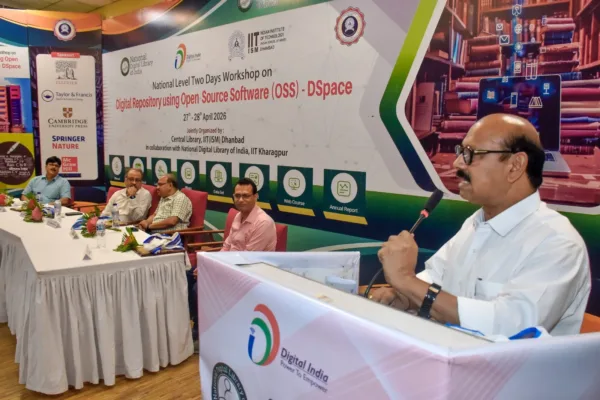
Dhanbad, April 27: Highlighting how technology is reshaping the way knowledge is stored and shared, IIT (ISM) Dhanbad on Monday inaugurated a two-day national workshop on digital repositories, focusing on modern tools used in libraries.
Libraries Adapting to Technology
Director Prof. Sukumar Mishra, who attended the inaugural session as chief guest, said that libraries are no longer limited to physical books and must evolve with changing technology. He stressed that digitisation and tools like artificial intelligence are becoming essential to make information more accessible and useful.
Training in Digital Tools
The workshop, titled “Digital Repository using Open Source Software (DSpace),” aims to train participants in managing digital libraries. Prof. Ajay Mandal, PIC of the Central Library, said that the role of libraries is expanding towards research support and digital services, making such training important.
Librarian Partha De explained that digital repositories help preserve and share institutional knowledge, and the programme is designed to give participants practical skills to handle these systems.
ALSO READ: Jharkhand salary scam: Fraud found in 14 treasuries, police personnel drew double pay
National Initiative and Support
Dr. B. Sutradhar from IIT Kharagpur spoke about the National Digital Library of India (NDLI) and said institutions are being supported with technical tools and cloud services to build their own digital repositories.
Deputy Librarian Satish Kumar was also present, and Assistant Librarian Sourav Debnath conducted the session.
Hands-on Learning for Participants
Participants from across the country are attending the workshop, where they are receiving both theoretical knowledge and hands-on training. The sessions cover topics such as how digital repositories are built, how data is organised, and how institutions can store and share information online using platforms like DSpace.

The workshop reflects a growing shift towards digital systems in libraries, making them more accessible and efficient in the modern, technology-driven world.