Nari Shakti Vandan Adhiniyam: From Parliamentary Defeat to Political Destiny
DR RACHNA K PRASAD The defeat of the Nari Shakti Vandan Adhiniyam in the Lok Sabha on April 17, despite securing a…
DR RACHNA K PRASAD
The defeat of the Nari Shakti Vandan Adhiniyam in the Lok Sabha on April 17, despite securing a majority of votes, has sparked one of the most consequential debates in recent Indian politics. While the opposition celebrated its ability to block the constitutional amendment, the government has swiftly reframed the setback as a rallying cry for women’s empowerment and a defining issue for the 2029 elections. What unfolded in Parliament was not the end of the story, but the beginning of a new chapter in India’s democratic journey.
A Majority That Fell Short
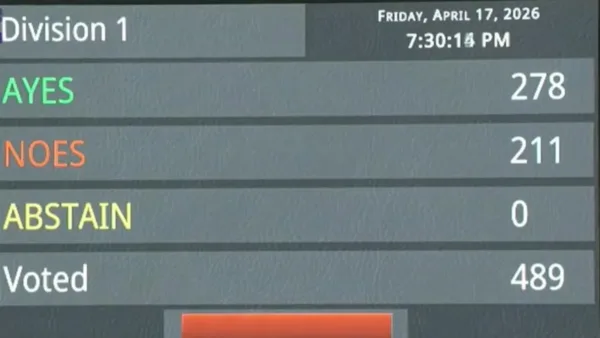
On April 17, 298 Members of Parliament voted in favour of the bill, while 230 opposed it. By ordinary legislative standards, this was a clear victory. But constitutional amendments require a special majority: two‑thirds of members present and voting. With 528 MPs in attendance, the threshold stood at 352. Falling short by 54 votes, the bill was declared defeated.
This arithmetic, rooted in Article 368 of the Constitution, turned a majority into a minority. Yet the government’s decision to press for a vote, rather than allow the bill to lapse quietly as in previous decades, was deliberate. By forcing the opposition to go “on record,” the ruling party has ensured that the defeat will resonate far beyond the chamber walls. Union Home Minister Amit Shah captured the sentiment: “Rejecting the bill that would grant 33 per cent reservation to women, celebrating it, and raising victory cries over it was truly reprehensible and beyond imagination.”
A Thirty‑Year Struggle
The women’s reservation bill has haunted Indian politics since 1996. Introduced under Prime Minister H.D. Deve Gowda, it has faced repeated lapses and disruptions. The Vajpayee government attempted in 1998 and 1999, only to see the bill collapse amidst uproar. In 2010, the Rajya Sabha passed a version, but the Lok Sabha never voted, leading to its quiet expiration in 2014.
What makes 2026 unique is the formal rejection. For the first time, the bill was not allowed to fade into obscurity but was brought to the floor and defeated. This marks a strategic shift: the government has chosen confrontation over consensus, clarity over ambiguity. By doing so, it has ensured that the opposition cannot hide behind procedural lapses. The defeat is now a matter of record, and the ruling party is determined to make it a matter of electoral reckoning.

Government’s Case: Correcting a Democratic Deficit
The government has consistently argued that the Nari Shakti Vandan Adhiniyam is not a concession but a correction. Women currently hold only 14–15% of Lok Sabha seats, far below global averages. The bill guarantees 181 seats for women in a 543‑member Lok Sabha, ensuring that policymaking reflects women’s lived realities.
Prime Minister Narendra Modi has described the bill as “a precious gift to my sisters.” For the government, the measure is about completing the Republic’s promise of equality. Policies on health, sanitation, education, and safety are lived experiences for women, yet laws have historically been debated in Houses where men comprised 85% of the room. The bill changes the composition of power.
Economic Rationale: Nari Shakti as GDP Shakti
Beyond representation, the government has emphasised the economic rationale. India’s female labour force participation remains among the lowest in emerging economies. Studies show that advancing gender equality could add hundreds of billions of dollars to GDP. Evidence from Panchayati Raj institutions, where women have held one‑third of seats since 1993, demonstrates that women leaders prioritise investments in drinking water, sanitation, and education, with measurable improvements in outcomes.

Scaling that experience to Parliament, the government argues, is not symbolism but a growth strategy. When women frame budgets and design schemes, expenditure patterns shift toward human development. The bill, therefore, is as much about economic modernisation as social justice.
Opposition’s Objections and Government’s Response
Opposition parties have cloaked their resistance in the language of caste and regional balance. OBC‑centric parties demand a “quota within a quota,” fearing that upper‑caste women would dominate the reservation. Southern states worry that delimitation tied to the bill would favour northern states, diluting their representation. Critics also raise concerns about rotation of constituencies, which could destabilise women MPs’ careers.
The government’s response has been firm. Reservation benefits all women, and delimitation will expand SC/ST seats, ensuring inclusivity. Expansion of seats will be proportional, safeguarding federal balance. Implementation design can ensure stability over multiple election cycles. For the ruling party, these objections are excuses to stall progress, not genuine concerns.
The Delimitation Legacy
The debate over delimitation is not new. Since the 42nd Amendment of 1976, India has grappled with the challenge of redrawing constituencies to reflect population changes. The government has argued that the women’s reservation bill is inseparable from this process. By blocking the bill, the opposition has also blocked an increase in SC/ST‑reserved seats, perpetuating inequalities that delimitation could correct.
Amit Shah’s fiery intervention in Parliament underscored this point: “The same forces that stalled delimitation during the Emergency are now using ‘ifs and buts’ to block reforms.” The government’s framing is clear: the opposition is clinging to outdated fears, while the ruling party is championing modernisation and fairness.
From Parliament to the People: The Political Fallout
If April 17 was a legislative defeat, April 18 marked the beginning of a political campaign. BJP leaders convened urgent meetings to pivot from parliamentary arithmetic to electoral messaging. The narrative is simple yet powerful: the opposition has “betrayed Nari Shakti.”
The ruling party has already launched a visual campaign, circulating sketches of Prime Minister Modi holding aloft the flag of women’s empowerment while the Leader of Opposition attempts to pull it down. Women MPs are preparing to march to Rahul Gandhi’s residence, dramatizing the opposition’s rejection as a betrayal of India’s daughters. This transformation of defeat into strategy is emblematic of the government’s approach: every setback is reframed as a rallying cry, every obstacle as an opportunity to mobilize public sentiment.
Global Standing: India’s Voice on Gender
The government has also linked the bill to India’s global standing. At the G20 Summit in 2023, India projected itself as the voice of the Global South. Yet global indices on gender repeatedly placed India low. The Nari Shakti Vandan Adhiniyam changes that narrative. It aligns India with the Beijing Declaration of 1995, SDG‑5 on gender equality, and the African Union’s Agenda 2063. When India speaks on women‑led development, it now speaks with the credibility of constitutional action.
A Question for 2029
The defeat of the Nari Shakti Vandan Adhiniyam cements its place as one of the most stalled reforms in Indian history. Yet, unlike past failures, this one has created a clear political fault line. The government has positioned itself as the champion of women, while the opposition stands accused of blocking progress.
As the nation moves toward the 2029 elections, the question is no longer whether the bill will pass in Parliament but whether the electorate will punish those who opposed it. The Home Minister has warned of the “wrath of women” at the ballot box. If history is any guide, thirty years of delay may finally give way to decisive action—not through legislative consensus but through electoral mandate.
Conclusion: Turning Defeat into Destiny
The paradox of April 17 lies not in the numbers but in the narrative. A majority was not enough, but the government has ensured that the defeat will not be forgotten. By forcing a vote, by framing the opposition’s rejection as betrayal, and by linking the bill to broader issues of caste and delimitation, the ruling party has transformed a legislative setback into a political weapon.
In the coming years, the Nari Shakti Vandan Adhiniyam will not be remembered as a bill that failed, but as a cause that galvanised. The government has made sure of that. And as India marches toward 2029, the question is not whether women will be reserved seats in Parliament, but whether they will reserve their votes for those who stood with them—or against them.
(Dr Rachna K Prasad is Asst Professor of Political Science at the University of Delhi. She can be contacted at drrachnaprasad24@gmail.com)