National Immunisation Days begin in Palamu; 3.97 lakh children targeted in anti-polio drive
Daltonganj, June 28: Although India was certified wild polio-free in 2014, the country continues to conduct intensive anti-polio campaigns to prevent any…
Daltonganj, June 28: Although India was certified wild polio-free in 2014, the country continues to conduct intensive anti-polio campaigns to prevent any re-emergence of the disease.
Public participation in the Pulse Polio programme remains overwhelmingly strong, in sharp contrast to the HPV vaccination programme against cervical cancer among adolescent girls, where coverage in Jharkhand has remained at just 3 to 4 per cent.
Nearly 4 lakh children to receive polio drops
Palamu district has received more than 4.83 lakh doses of oral polio vaccine for an estimated target population of 3.97 lakh children in the 0-5 years age group, Civil Surgeon Dr Anil Kumar Srivastava said.
The district has received more than 24,000 vaccine vials, each containing 20 doses.
However, Dr Srivastava pointed out that around 10 per cent vaccine wastage is expected, reducing the effective yield to about 18 usable doses per vial.
Special focus on transit points and village haats
The Civil Surgeon said vaccination at transit locations such as bus stands, railway stations, auto-rickshaw stands and village haats is more prone to vaccine wastage because of operational challenges.

As many as 49 village haats have been identified for the three-day National Immunisation Days campaign.
“There is no resistance to the polio vaccine now. Parents are overwhelmingly accepting polio vaccination for their children,” Dr Srivastava said.
Campaign aimed at strengthening herd immunity
Explaining the need for another large-scale campaign despite India’s polio-free status, Dr Srivastava said, “The campaign is meant to strengthen herd immunity. Neighbouring countries Afghanistan and Pakistan are still fighting to eliminate polio. Migration of the virus remains a possibility. Hence, this campaign is aimed at strengthening herd immunity against polio.”

5,000 schools and anganwadi centres to participate
Around 5,000 schools and anganwadi centres across Palamu will conduct vaccination sessions on Sunday. Educational institutions have been asked to cooperate with vaccination teams during the drive.
House-to-house vaccination of eligible children will be carried out on the following two days, June 29 and 30.
A total of 1,882 vaccination teams have been constituted for the campaign, Dr Srivastava said.
Lack of shoulder straps on vaccine carriers poses challenge
Responding to concerns over a large number of vaccine carriers being supplied without shoulder straps, the Civil Surgeon said, “We have advised vaccinators to arrange local support for carrying the vaccine carriers by hand wherever necessary.”
According to World Health Organisation specifications, portable vaccine carriers are designed with an adjustable shoulder strap of about one metre to ensure balanced and safe transportation.
A senior health official acknowledged that many vaccine carriers across Jharkhand are currently without straps, making them difficult for field vaccinators to carry.
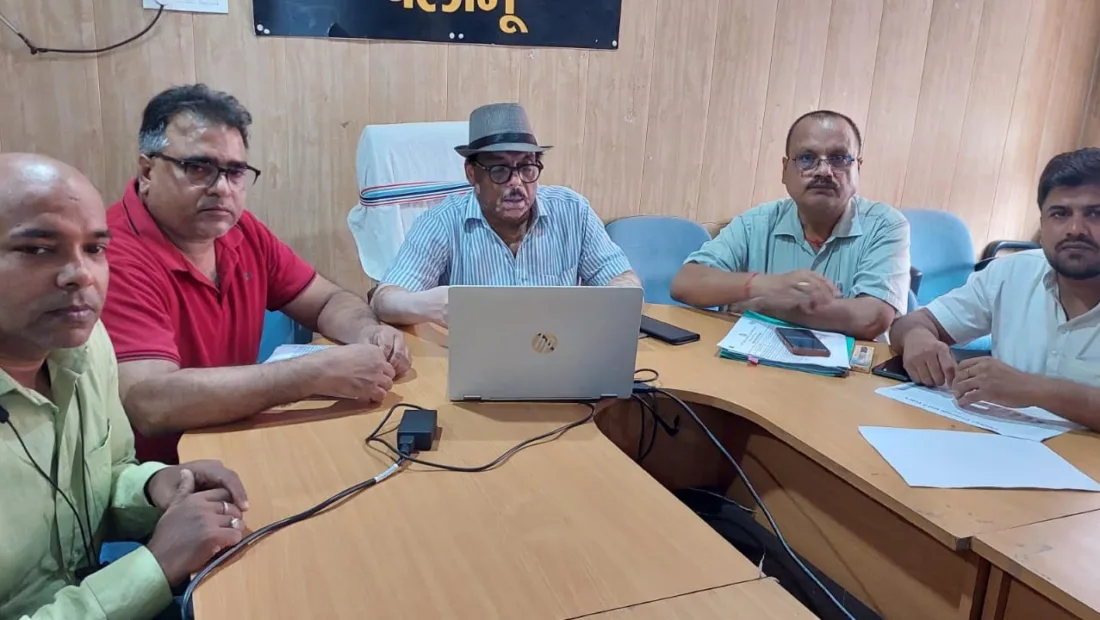
Palamu District Reproductive and Child Health Officer (DRCHO) Dr S.K. Ravi said all preparations have been completed to achieve the district’s National Immunisation Days target successfully.