






SUMAN K SHRIVASTAVA
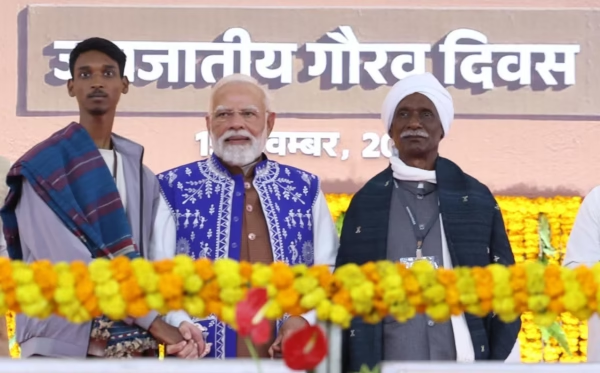
 Ranchi, Nov 17: Prime Minister Narendra Modi’s Janjatiya Gaurav Diwas address in Gujarat — where he highlighted Adivasi links to Lord Ram and accused the Congress of historical neglect of tribal communities — has drawn political attention across India’s tribal regions. Delivered on Birsa Munda Jayanti, which also marks Jharkhand’s statehood day, the speech gains additional symbolism with Modi felicitating two descendants of Birsa Munda on the occasion.
The gesture, made during a public event in Gujarat, was seen as an effort to underline the government’s recognition of Adivasi icons and to connect tribal identity to national narratives.

The remarks follow his earlier criticism during the Bihar elections, when he said the Congress did not visit Ayodhya for Ram’s darshan, and quipped that if it had “issues with Lord Ram,” it could at least visit the Nishad temple there.
His reference to Nishads, a community with a central figure in the Ramayana, adds another layer with electoral implications in states where Nishad/Mallah communities have political relevance.
Modi Highlights Adivasi Role in Ramayana, Calls Out ‘Historical Neglect’
In Gujarat, Modi said that Adivasis “stood with Ram throughout his journey in the forests,” describing them as communities that offered moral and physical support to Ram during his exile. He said earlier governments failed to give Adivasis the respect and national recognition they deserved.
He instituted Janjatiya Gaurav Diwas in 2021, when Arjun Munda was tribal affairs minister in the Centre, as a day meant to honour tribal legends, with Birsa Munda at the forefront of India’s freedom struggle narrative. The felicitation of Birsa Munda’s descendants reinforced this message, symbolically linking tribal heritage with national commemoration.
Jharkhand: Birsa Munda’s Legacy and the BJP’s Search for Lost Adivasi Support
Modi’s message holds special weight in Jharkhand for several reasons:
Birsa Munda was born in Jharkhand and remains the strongest symbol of tribal identity and resistance.
Jharkhand was created on November 15, Birsa Munda’s birth anniversary, in recognition of the state’s tribal character.
The BJP has faced a decline in Adivasi support since the 2019 Assembly elections, where tribal votes shifted sharply to the JMM-Congress alliance.
Adivasi voters, once a strong BJP base, moved away due to:
Proposed changes to the CNT/SPT tenancy laws
Concerns over land rights and displacement
Reduced Adivasi leadership visibility in state politics
Strong grassroots mobilisation by the JMM
Against this backdrop, Modi’s cultural messaging and public honouring of Birsa Munda’s descendants appears aimed at rebuilding trust.
Sarna Code: A Central Issue in Jharkhand’s Tribal Politics
Modi’s emphasis on integrating Adivasi history into the broader Indic tradition intersects with the political debate over the Sarna religious code.
The JMM-Congress alliance strongly supports a distinct Sarna code, arguing that tribal faith practices are independent and should be formally recognised in the census.
The BJP, while supportive of tribal welfare, tends to frame Adivasi traditions as connected to the broader Indic civilizational story.
Modi’s portrayal of Adivasis as part of the Ramayana narrative aligns with this cultural approach, offering a counter to the separate-identity argument advanced by Sarna code supporters.
Birsa Munda Jayanti as a National Platform for Tribal Outreach
By speaking on Birsa Munda Jayanti, felicitating members of the Munda family, and invoking tribal cultural heritage, Modi used the occasion to:
Reinforce Adivasi pride and national recognition
Emphasise the centrality of tribal leaders in India’s freedom narrative
Present Janjatiya Gaurav Diwas as a national celebration transcending regional boundaries
This symbolic outreach is seen as part of the BJP’s broader strategy in tribal-dominated states including Jharkhand, Chhattisgarh, Odisha, and parts of Gujarat and Madhya Pradesh.
Impact on Jharkhand: Symbolism vs. Ground Realities
Whether Modi’s tribal messaging and gestures like honouring Birsa Munda’s descendants will influence political dynamics in Jharkhand remains uncertain. Variables include:
Adivasi leadership within the BJP
Policy positions on land and forest rights
JMM’s organisational strength in Adivasi districts
Public sentiment around the Sarna code
How cultural outreach translates to grassroots political support
What is clear is that Modi’s Janjatiya Gaurav Diwas speech — though delivered in Gujarat — was crafted with a broader national tribal audience in mind, especially states where Adivasi votes are decisive.