Ranchi protests, rallies now require prior permission amid month-long student agitation
THE JHARKHAND STORY NETWORK Ranchi, August 23: Those planning to organise sit-ins, protests, gheraos, processions, rallies or public meetings in Ranchi will…
THE JHARKHAND STORY NETWORK
Ranchi, August 23: Those planning to organise sit-ins, protests, gheraos, processions, rallies or public meetings in Ranchi will now have to obtain prior permission from the district administration.
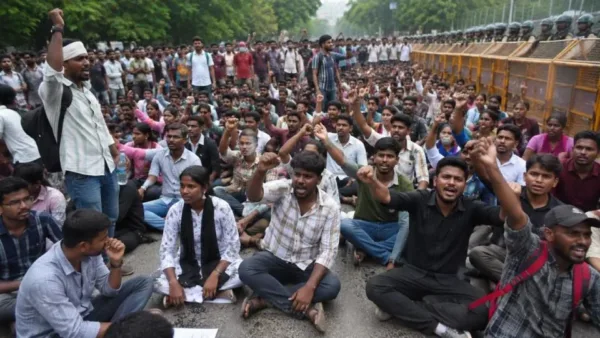
The new guidelines issued by the Ranchi district administration on Sunday come at a time when the state capital has witnessed massive and prolonged student protests for nearly a month, with students and job aspirants holding demonstrations over recruitment examinations and demanding action from the government.
The administration has said organisers of public events must inform it in advance and follow the prescribed procedure to ensure public safety, maintain law and order and minimise disruption to traffic.
Route, timing and participant details mandatory
According to the guidelines, organisers planning events in public spaces must follow the procedure prescribed by the Sub-Divisional Officer (SDO), Ranchi Sadar or Bundu.
For processions and rallies, organisers will have to provide details of the proposed route, date, starting and ending times and the estimated number of participants. Where necessary, details of key individuals participating in the event may also have to be submitted to the administration.

The move assumes significance in view of the increasing number of public demonstrations and gatherings in Ranchi in recent weeks, particularly the sustained student agitation.
Administration cites traffic and law-and-order concerns
The district administration said sit-ins, protests, processions and rallies are frequently being organised at different locations without prior notice. Such events can disrupt traffic, inconvenience the general public and create challenges related to law and order and public safety, it said.
Ranchi has seen large gatherings of students and job aspirants over the past month, with demonstrations continuing for several weeks and drawing significant public attention.

While the administration has not said that the new guidelines are specifically aimed at the ongoing student agitation, the timing of the order comes against the backdrop of this prolonged phase of protests in the capital.
‘Peaceful protests are a constitutional right’
The administration acknowledged that peaceful sit-ins, protests and demonstrations are a constitutional right of citizens.
It said, however, that this right must be exercised in accordance with the law while taking into account public order, safety, traffic management and the rights of other citizens.
The administration clarified that the requirement for prior permission is not intended to stop peaceful or democratic events.
Instead, it said, the objective is to ensure the safety of participants, maintain law and order and facilitate smooth movement of traffic during public gatherings.
Appeal to political parties, organisations and students
The district administration has appealed to political parties, social organisations, institutions and members of the public to comply with the prescribed procedure before organising any public event.
Organisers have been urged to provide the required information to the administration in advance and cooperate with officials in maintaining traffic flow and law and order.
The administration has also appealed to students and the general public to verify the authorisation of organisers and the conditions prescribed by the administration before participating in any event.
People have been advised not to act on rumours or misleading information that could cause public inconvenience or disrupt law and order.
Student protests put Ranchi administration under pressure
The new guidelines come as Ranchi has emerged as the centre of a sustained mobilisation by students and job aspirants, who have remained on the streets for nearly a month over recruitment-related issues.
The prolonged protests have brought the question of public demonstrations and their impact on traffic, administration and everyday life into sharper focus.
Against this backdrop, the administration’s emphasis on advance information, designated routes, participant details and coordination with officials is likely to have a direct bearing on how future protests, rallies and public gatherings are organised in the state capital.