Supreme Court Judge flags ‘witch-hunting’, seeks strict action in Jharkhand
Ranchi, April 25: Amid growing concern over crimes against women, a high-level colloquium at the Jharkhand Judicial Academy on Saturday called…
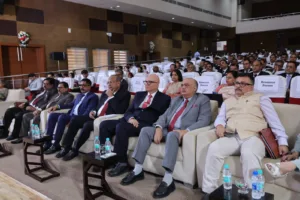
Ranchi, April 25: Amid growing concern over crimes against women, a high-level colloquium at the Jharkhand Judicial Academy on Saturday called for strict action against the practice of ‘witch-hunting’ and a stronger focus on victim rehabilitation across the state.
The event, held at the Dr A.P.J. Abdul Kalam Auditorium, brought together members of the judiciary, legal services institutions, and policymakers to deliberate on gender-based violence and access to justice.
Top Judiciary Voices Concern Over Rising Crimes
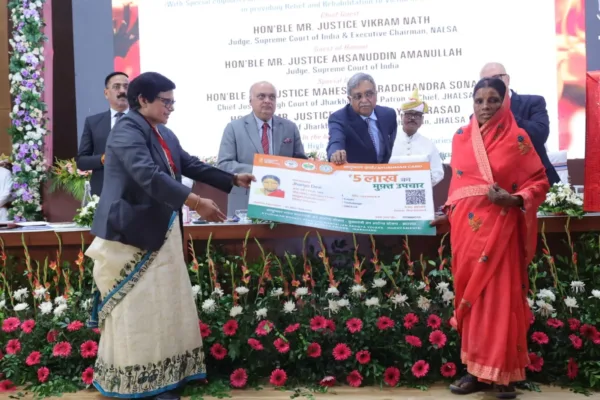
Supreme Court judge and Executive Chairman of the National Legal Services Authority (NALSA), Justice Vikram Nath, attended as the Chief Guest, while Justice Ahsanuddin Amanullah was the Guest of Honour. Jharkhand High Court Chief Justice M.S. Sonak and Justice Sujit Narayan Prasad were also present.
Addressing the gathering, Justice Vikram Nath underlined that despite constitutional guarantees under Articles 14, 15, and 21—ensuring equality, non-discrimination, and dignity—there remains a wide gap in their implementation on the ground.
He said crimes against women stem from “deep-rooted structural issues” in society, where violence has increasingly become normalised.

‘Witch-Hunting’ Linked to Social Inequality
Justice Nath described witch-hunting, which continues to be reported in parts of Jharkhand, as an inhumane and extreme form of gender-based violence. He emphasised that the issue goes beyond superstition and is closely tied to social inequality, patriarchy, and local power structures.
ALSO READ: BJP flexes muscle with massive women’s ‘Akrosh March’, fires salvo at INDIA alliance

He called for a multi-pronged approach involving education, improved healthcare access, and a more sensitive and responsive law enforcement system to effectively tackle the problem.
Focus on Rehabilitation, Not Just Punishment
A key theme of the colloquium was the need to go beyond punitive action and prioritise the rehabilitation of victims. Speakers stressed that justice must include access to legal aid, compensation, and long-term support for survivors.
Legal Services Institutions were urged to strengthen their outreach at the grassroots level, ensuring that victims in rural and remote areas are aware of their rights and can access timely assistance.
Implementation Gap Remains a Major Challenge
Justice Ahsanuddin Amanullah highlighted that the challenge in addressing crimes against women lies less in the absence of laws and more in their effective implementation.
Referring to Supreme Court guidelines in cases such as mob lynching, he said that proper enforcement and proactive functioning of district-level legal bodies could significantly reduce such incidents.
He stressed the need for institutional accountability and impartial functioning, adding that the judiciary must also work towards faster disposal of pending cases. He cautioned against a reactive “firefighting” approach and called for systemic improvements to prevent crimes before they occur.
Assistance Distributed to Victims and NGOs
The programme also included discussions by experts on legal and technical aspects related to victim support systems. Financial assistance was distributed to women associated with voluntary organisations, families of accident victims, and women battling serious illnesses such as breast cancer.
The vote of thanks in the first session was delivered by Umashankar Singh, Secretary, Department of Women and Child Development and Social Welfare.