Jharkhand HC rejects insurer’s appeal, upholds comprehensive insurance cover for injured scooter rider
Ranchi, July 18: The Jharkhand High Court has ruled that an insurance company cannot avoid liability under a comprehensive motor insurance policy…
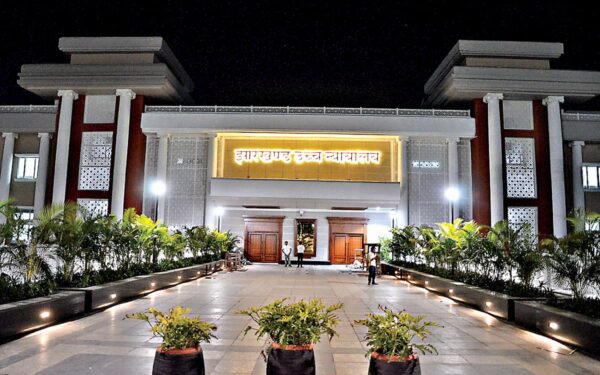
Ranchi, July 18: The Jharkhand High Court has ruled that an insurance company cannot avoid liability under a comprehensive motor insurance policy without establishing negligence on the part of the claimant or specifically pleading a policy exclusion. Dismissing an appeal filed by United India Insurance Company, the Court upheld compensation awarded to a man injured while riding his son’s insured scooter and enhanced the award from ₹1,32,724 to ₹1,82,724, along with 6% annual interest from the date of filing of the claim petition.
Chief Justice M.S. Sonak passed the judgment while deciding two connected appeals arising from a 2014 award of the Motor Accident Claims Tribunal (MACT), Ranchi. While the insurer sought to be absolved of liability, the claimant appealed for enhancement of compensation. The High Court dismissed the insurer’s appeal and partly allowed the claimant’s plea.
Insurer Failed to Prove Claimant Was Negligent
The insurance company argued that the claimant himself caused the accident through rash and negligent driving and, therefore, was not entitled to compensation under the Motor Vehicles Act. It also contended that the insurance policy did not cover the driver of the insured vehicle in such circumstances and relied on several Supreme Court decisions to support its stand.
The High Court, however, found that the insurer had failed to produce any evidence establishing negligence. It observed that the entire defence was based on an incorrect assumption that the claimant had admitted fault, whereas neither the claim petition nor the evidence contained any such admission.
The Court also held that the insurer had not specifically pleaded that the claim was excluded under the terms of the insurance policy. Such a defence, the Court said, could not be raised for the first time during the appeal.
Comprehensive Policy Covered the Claim
Examining the insurance documents, the Court noted that the scooter was insured under a comprehensive package policy. The proposal form and the certificate of insurance showed that the insurer had collected premium for comprehensive coverage and that the policy extended protection to persons, including the insured, holding a valid driving licence.
In these circumstances, the Court ruled that the insurer could not escape liability by disputing coverage after failing to properly raise the issue before the Tribunal. It also relied on recent judicial precedents supporting compensation under comprehensive insurance policies in similar situations.
Accident Was Not Caused by Rash Driving
According to the evidence on record, the claimant lost control of the scooter after suddenly applying the brakes to avoid a dog and an elderly pedestrian who unexpectedly came onto the road. The scooter skidded, resulting in serious injuries.
The High Court held that such circumstances did not establish rash or negligent driving. It observed that attempting to avoid an unexpected obstacle on the road could not, by itself, amount to negligence and distinguished the Supreme Court judgments cited by the insurer on the ground that those cases involved proven negligence by the victim.

Compensation Increased After Review of Medical Evidence
While considering the claimant’s appeal, the Court examined medical records showing that he suffered a comminuted intra-articular fracture of the proximal tibia, underwent surgery and remained hospitalised for nearly two months.
The Court found that the Tribunal had inadequately compensated the claimant for attendant charges, pain and suffering, and loss of amenities.
It enhanced compensation by ₹20,000 towards attendant charges, increased damages for pain and suffering from ₹10,000 to ₹25,000, and similarly enhanced compensation for loss of amenities from ₹10,000 to ₹25,000.
However, the Court declined to award compensation for future loss of earnings, observing that there was no evidence of permanent disability. With the additional ₹50,000 awarded under various heads, the total compensation was enhanced to ₹1,82,724.
Interest Payable From Date of Claim Petition
The High Court also modified the Tribunal’s direction regarding interest. It held that there was no valid reason to grant interest only from the date of the award and directed that 6% annual interest be paid from the date on which the compensation claim was originally filed until the amount is realised.
The insurance company has been directed to deposit the enhanced compensation, after adjusting amounts already paid, within six weeks. The Registry has been instructed to transfer the amount directly to the claimant’s bank account through regular banking channels after verification.