Jharkhand News: Dhanbad DC orders asset assessment of LTH residents in Jharia fire zone
Dhanbad, Dec 20: Dhanbad Deputy Commissioner (DC) Aditya Ranjan has directed the Jharia Rehabilitation Development Authority (JRDA) to assess the valuation…
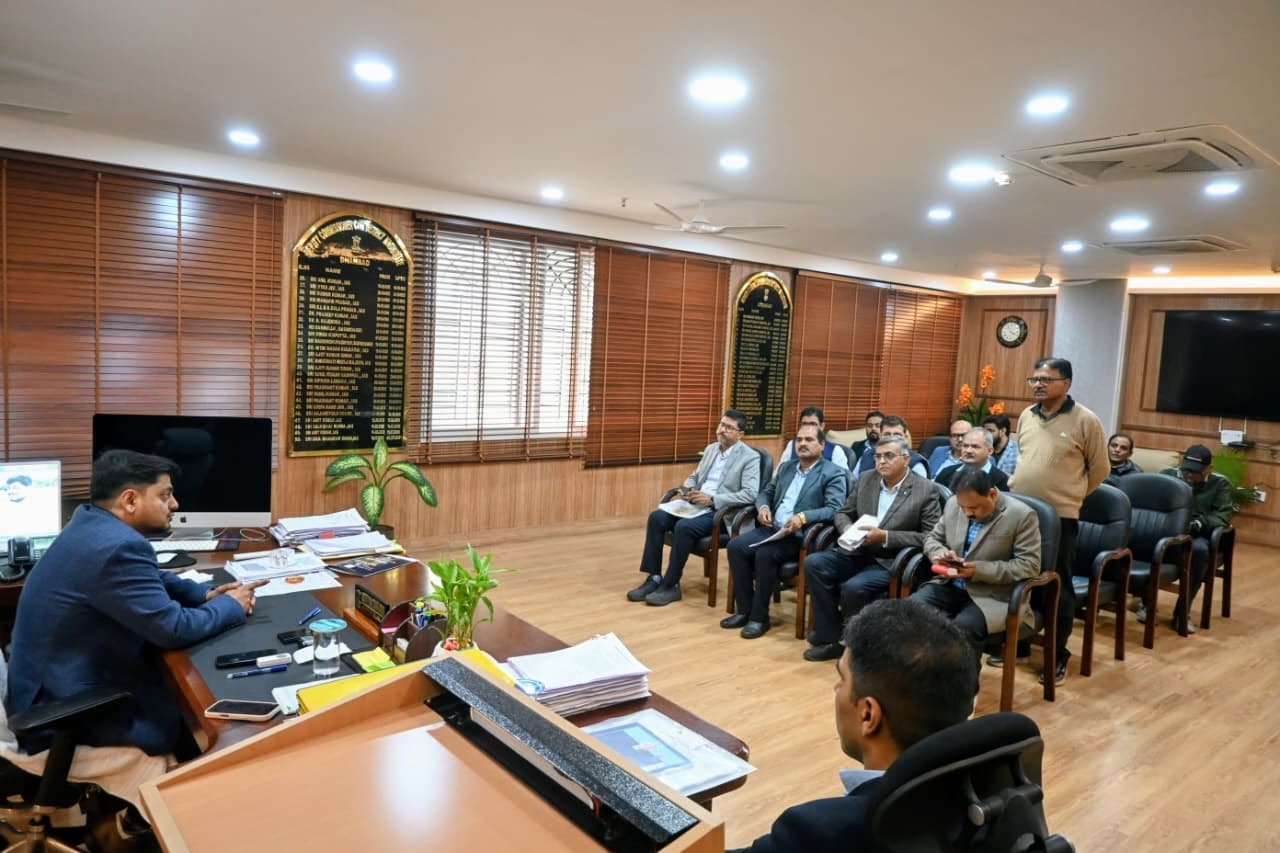
Dhanbad, Dec 20: Dhanbad Deputy Commissioner (DC) Aditya Ranjan has directed the Jharia Rehabilitation Development Authority (JRDA) to assess the valuation of land and property of Legal Title Holder (LTH) residents living in the hazardous fire zones of Bharat Coking Coal Limited (BCCL) within 10 days.
Verification Completed, Asset Assessment to Follow
Chairing a review meeting of JRDA, the DC stated that since the verification of Legal Title Holders in five BCCL colliery areas—Putki Balihari (PB), Eastern Jharia (EJ), Bastakola, Lodna, and Kusunda—has been completed, the next step is to assess the land and property structures of these residents by December 30 at any cost.
Also Read- IndiGo flags Ranchi flight disruptions as dense fog forces 66 cancellations at Delhi Airport
According to a 2019 official survey, a total of 1.4 lakh 946 families were identified in 595 fire-affected mines across Jharia Coalfield. Among them, 32,064 were recognized as Legal Title Holder (LTH) landowners, while 72,882 were unauthorized residents living on coal company land (Non-LTH).
Compensation to Be Fixed for Rehabilitation
The land and asset valuation of LTH residents in the danger zones is being conducted to determine their compensation for relocation to safer areas.
Verification of LTH residents has now been completed, and the DC has directed JRDA to move forward with asset assessment immediately.

A senior BCCL official said that DC Aditya Ranjan has decided to relocate selected families living in the most hazardous fire zones by December 31.
Also Read- Supreme Court grants interim bail to Vinay Singh in Hazaribag land mutation case
Govt Push for Relocation
Over the past month, Coal Secretary Vikram Dev Dutt, Coal India Limited (CIL) Chairman, and other central government officials have emphasized the urgent need to shift residents from dangerous zones to safer locations.
The official added that 15,080 families living in the 81 most dangerous fire zone spots of Jharia Coalfield are expected to be resettled in safe areas by 2028.